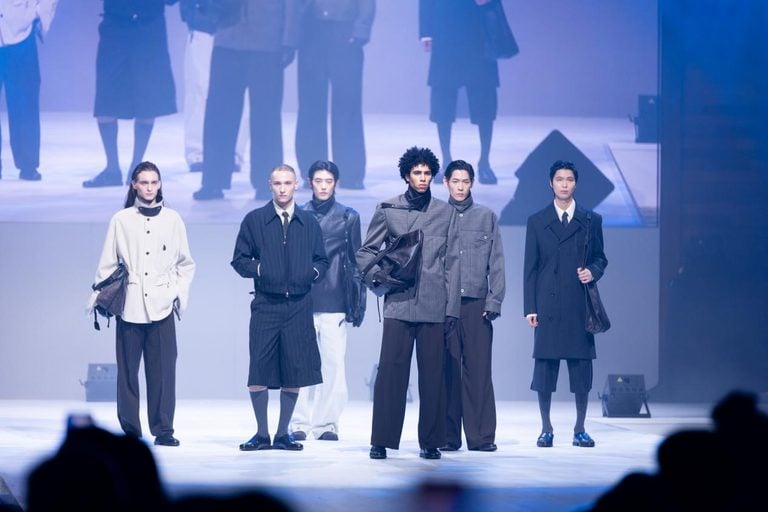
From a Peanuts collaboration to a fresh take on Ivy Style, ImagineX Group is helping the 208-year-old American heritage brand find new relevance in China’s evolving fashion market.
On Shanghai’s Julu Road, Brooks Brothers has found an unconventional setting for its latest collection.
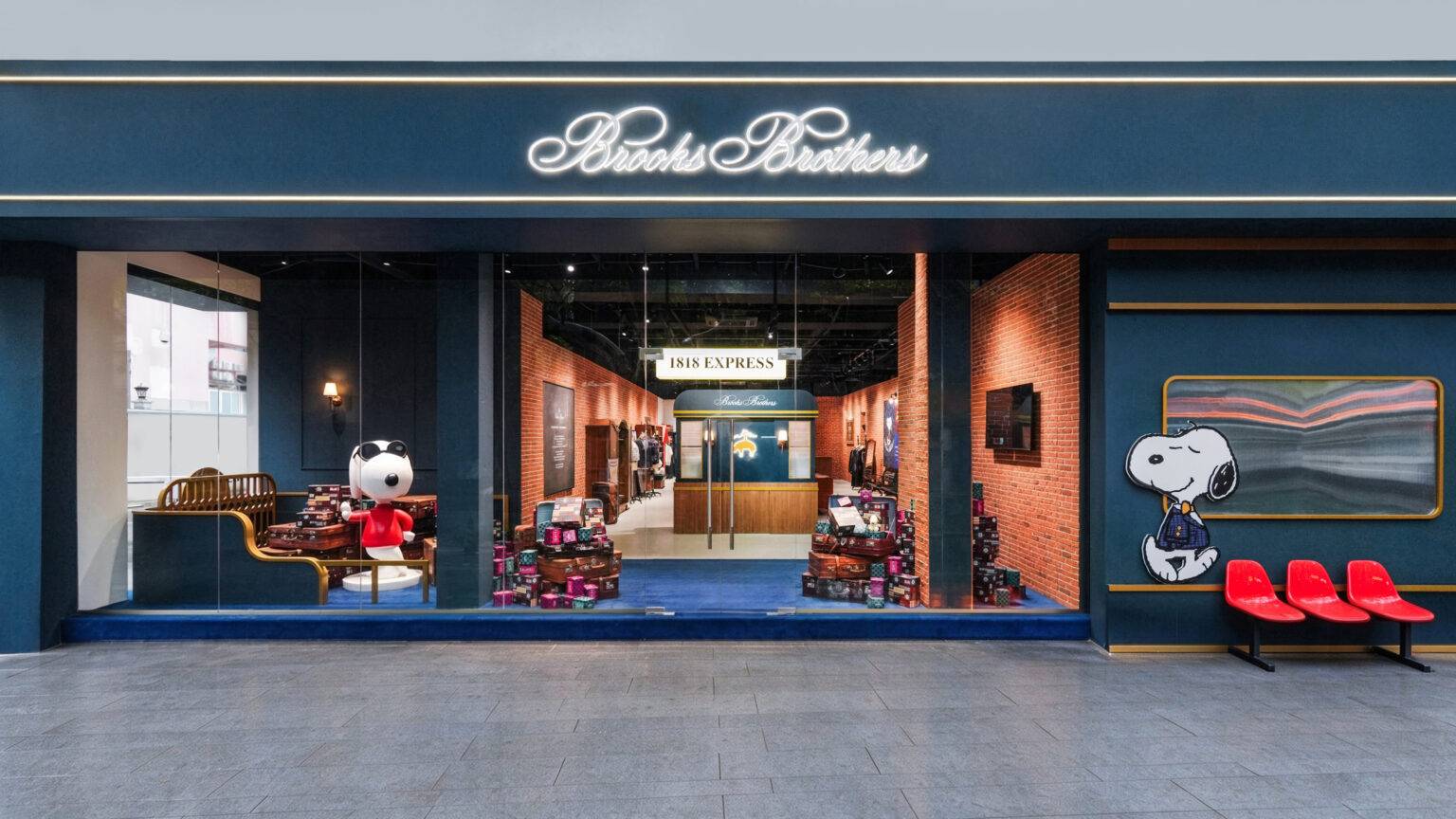
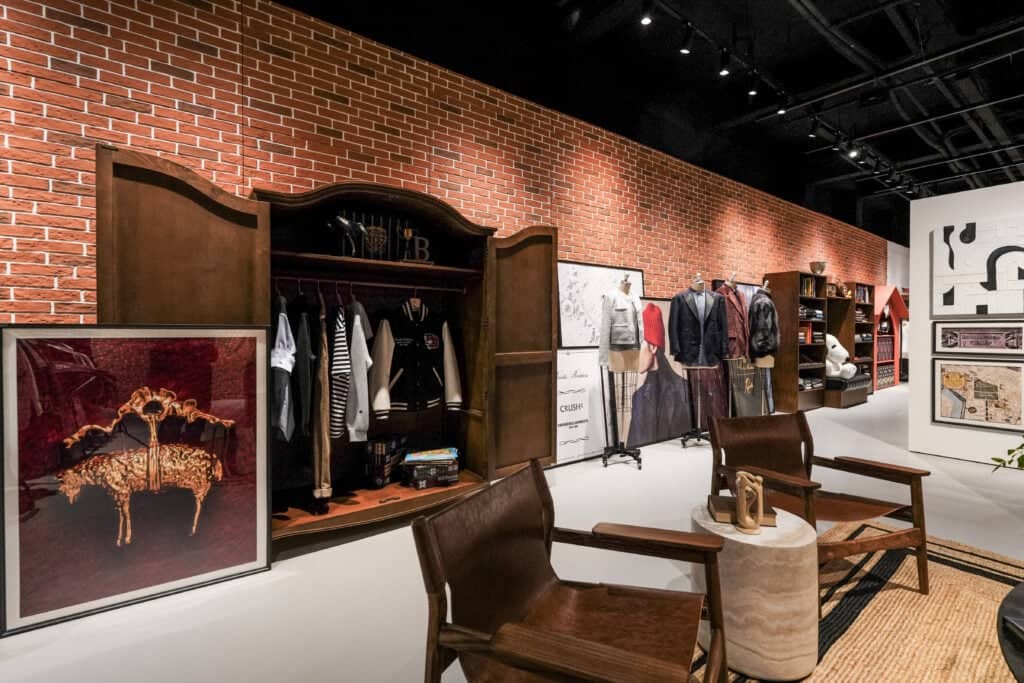
On November 5, the American heritage brand unveiled its first China-market collaboration with Peanuts, bringing Snoopy to signature pieces including Oxford shirts and herringbone suits. The collection adds a playful dimension to Brooks Brothers’ classic wardrobe, offering a fresh interpretation of its New Ivy style.
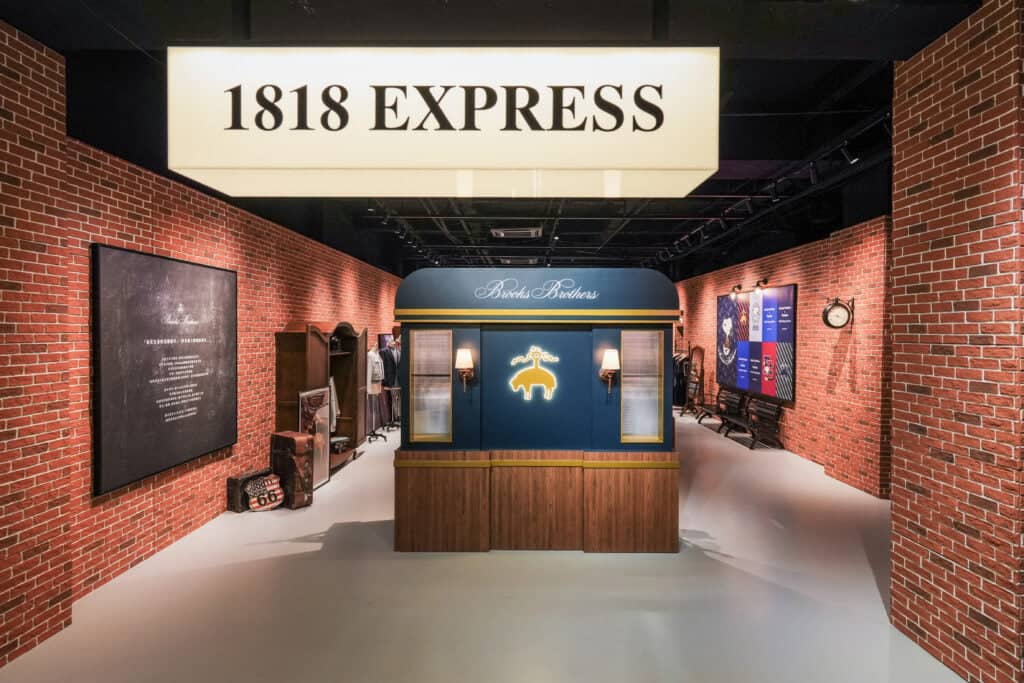
Rather than introducing the collection through its established retail network, the brand opened a dedicated pop-up at 758 Julu Road. Just 600 meters away stands its boutique at Jing’an Kerry Centre, yet the two locations attract different audiences and offer markedly different retail environments.
The choice was deliberate. Under the local management of ImagineX Group, Brooks Brothers is seeking to challenge its longstanding association with formal business attire and reach consumers who might not otherwise consider the brand part of their everyday wardrobes.
“The inclusiveness of New Ivy is that the style isn’t limited by age,” says Alice Wong, President of ImagineX Group, which oversees Brooks Brothers’ management and distribution in Greater China.
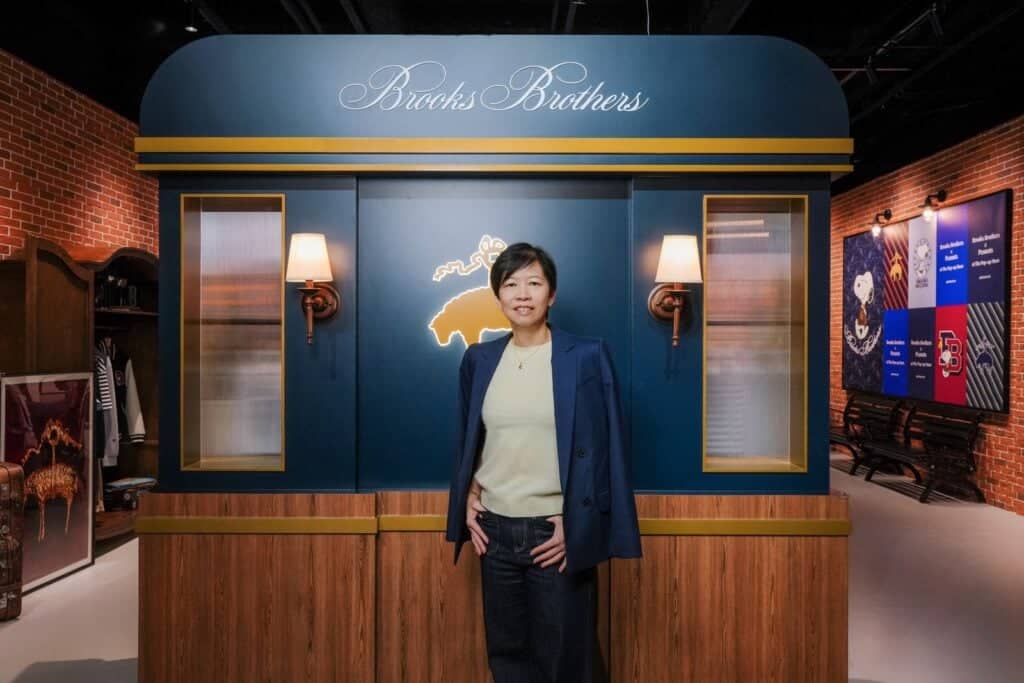
Part of The Lane Crawford Joyce Group, ImagineX has more than three decades of experience managing international brands in Asia. Its operations span 42 cities across Greater China and Southeast Asia, with a portfolio of more than 20 brands. An early participant in China’s luxury market, the group helped introduce houses including Gucci and Prada to Chinese consumers.
Today, its expertise extends beyond distribution to encompass retail operations, merchandising, marketing and brand development tailored to local markets.
In conversation with Jingzhi Chronicle, Wong discusses how a centuries-old American brand can remain relevant to Chinese consumers, why local decision-making matters, and how ImagineX is redefining its own role in an increasingly sophisticated market.
From Ivy Style to New Ivy: Rethinking American Classics
Founded in 1818, Brooks Brothers occupies a distinctive place in American fashion history. The company pioneered ready-made suits in 1849 and is credited with inventing the button-down Oxford shirt. Its striped ties, argyle socks and tailored clothing helped establish the wardrobe that would eventually become synonymous with Ivy Style.
Its influence has extended well beyond traditional menswear. Brooks Brothers has dressed American presidents and political figures, while Andy Warhol famously favored its white button-down shirts. Decades later, the preppy aesthetic popularized by the television series Gossip Girl introduced elements of Ivy-inspired dressing, including striped repp ties, to another generation.
These associations give Brooks Brothers a heritage that younger brands cannot easily replicate. But they can also narrow perceptions of its contemporary relevance.
Wong recalled that when Brooks Brothers’ Greater China operations first transitioned to ImagineX, much of the conversation centered on the brand’s historical achievements.
“When we first took over the brand, we talked a lot about American presidents and Brooks Brothers being the originator of the button-down shirt,” she says. “Now we’ve redefined our style as New Ivy. The conversation has shifted to what these classic pieces and ways of dressing mean to people today.”
For Wong, China offers a particular opportunity to reconsider how American classics are worn.
Unlike Japan and South Korea, where school uniforms have helped establish enduring associations between blazers, ties and institutional dress, China has a different relationship with Western-style tailoring. Nor does it share quite the same longstanding corporate dress conventions found in certain Western industries, particularly finance.
“Chinese customers tend to be more relaxed,” Wong explains. “Blazers sell very well for us, and people are comfortable wearing them with jeans, what we call smart casual.”
In her view, Chinese consumers evaluate clothing not simply on quality or price, but on how well it fits their lifestyles.
“Value for money isn’t just about the quality of a product. It’s also about choosing clothes that suit your own lifestyle. And people’s lifestyles today are generally more relaxed.”
Outside certain government institutions and traditional professions, strictly formal suits are often associated with professional obligations rather than personal expression. This gives Brooks Brothers room to reposition its classics as a more versatile everyday wardrobe.
New Ivy therefore represents more than an adjustment in styling. It broadens the occasions and identities associated with the brand’s existing clothing.
In China, Ivy Style is commonly translated as a collegiate style, a term that can imply a predominantly youthful audience. Wong argues that its appeal is much wider. Students, professors and working professionals can all embrace Ivy-inspired dressing, connected less by age or occupation than by an appreciation of quality, detail and thoughtful style.
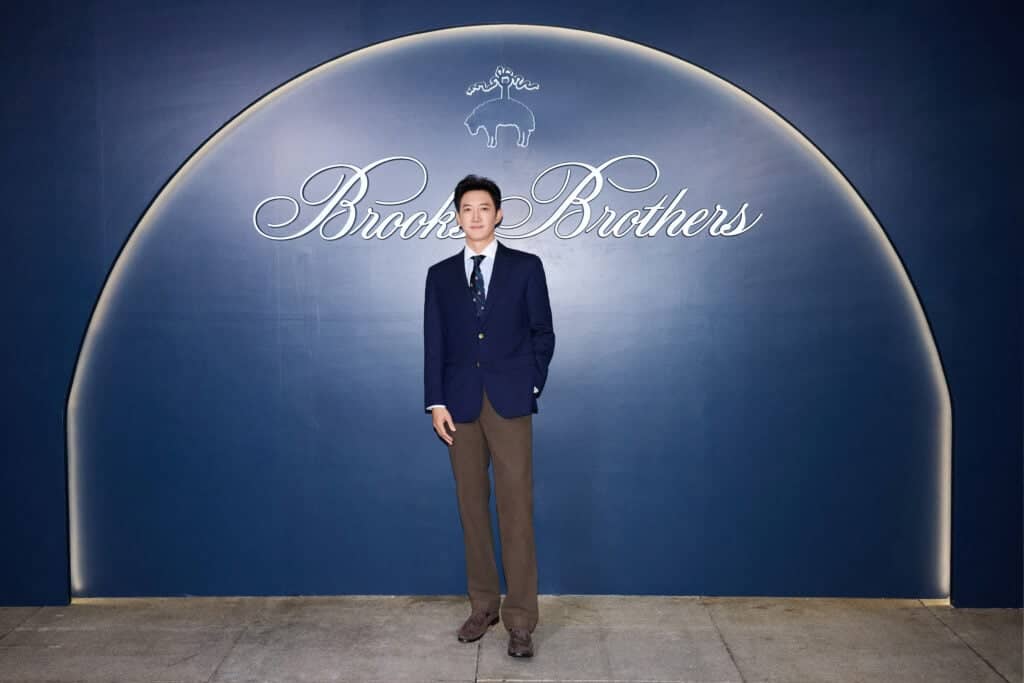
This perspective also informed the appointment of Chinese actor Wang Yang as Brooks Brothers’ brand ambassador in September 2026.
Known for portraying accomplished professionals and corporate executives, Wang brings a natural connection to the brand’s tailored heritage. Yet Wong was equally drawn to his relaxed demeanor, humor and professional credibility.
Rather than selecting an ambassador primarily for social media popularity, she emphasized Wang’s reputation as an actor whose recognition has developed through his performances.
His appointment reflects the broader direction of New Ivy: making traditional American style feel more approachable without abandoning the qualities that have sustained its appeal.
The Peanuts collaboration brings that positioning into a different cultural setting. By incorporating Snoopy into familiar wardrobe staples and presenting them in a neighborhood pop-up, Brooks Brothers is introducing its classics to consumers who may previously have regarded the brand as too formal.
How ImagineX Localizes International Brands in China
Brooks Brothers’ partnership with ImagineX dates back to a joint venture established in 2016. The relationship has since evolved alongside the brand’s market positioning and retail operations.
Today, Brooks Brothers operates more than 80 stores across Greater China.
Beyond the store network, the partnership illustrates ImagineX’s broader approach to brand management, which relies on adaptable commercial structures rather than a single distribution model.
Depending on a brand’s needs, ImagineX may combine locally managed operations with brand-operated stores, allowing international headquarters to maintain closer contact with Chinese consumers and participate more directly in market decisions.
For Wong, the essential question is whether both parties are willing to adapt as the business develops.
“Ultimately, it isn’t about what I think alone. We work together to determine the best approach,” she says. “If they’re willing to change, we’re certainly willing to change as well.”
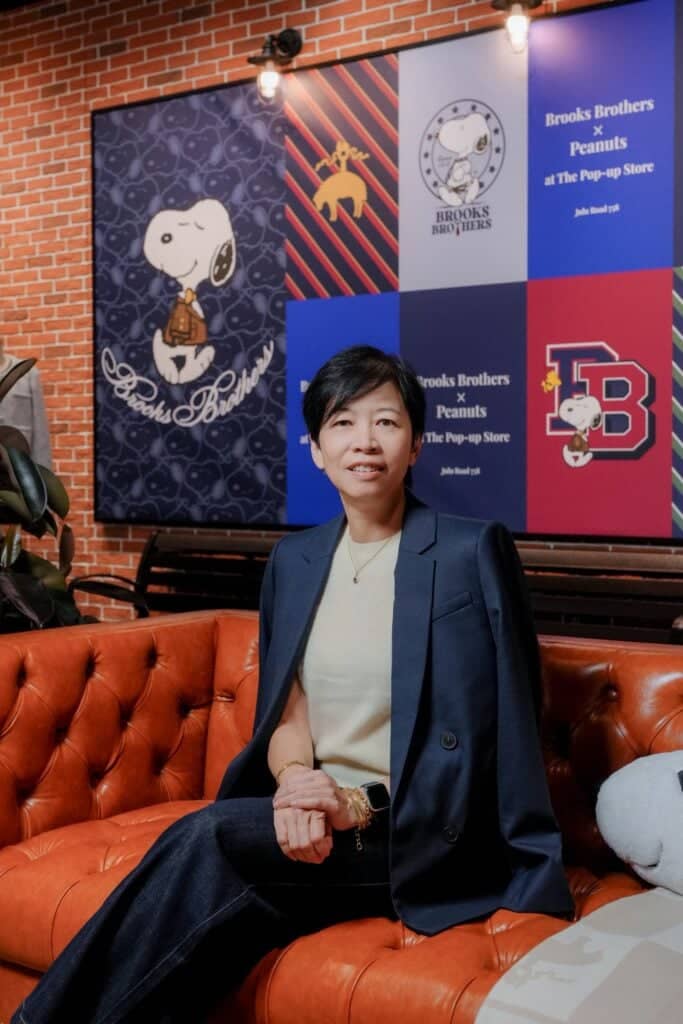
This flexibility also shapes how ImagineX evaluates potential partners. Wong identifies three considerations: the speed of decision-making at headquarters, openness to local adaptation, and a shared willingness to invest over the long term.
The group’s partnership with German footwear brand Birkenstock offers another example.
ImagineX took over Birkenstock’s China operations in April 2024, beginning with a small retail counter at Nanjing Jiuguang Department Store rather than a large flagship.
The partnership subsequently developed through joint investment and shared team-building, with both sides working to introduce Birkenstock’s “Walk Naturally” philosophy to Chinese consumers.
According to Wong, the brand has expanded its retail network at a pace of more than ten new stores annually, supported by a willingness to commit resources and give local teams meaningful decision-making authority.
Brooks Brothers presents a different set of challenges. Its American heritage provides a recognizable identity, but translating that identity into contemporary Chinese consumer culture requires room for local interpretation.
The Peanuts collaboration illustrates how these decisions are made.
Brooks Brothers has previously partnered with designers and labels including JUNYA WATANABE in 2025 and Needles and sacai in 2026, with those collaborations introduced primarily in Japan and international markets.
For its first China-focused collaboration, the brand chose Snoopy, a character already familiar to Chinese consumers.
The decision also drew on the positive reception of Peanuts in Japan, offering a reference point for exploring a different creative direction in China.
Rather than introducing an entirely new visual identity, the collection combines recognizable Brooks Brothers designs with a cultural property that makes them feel more accessible.
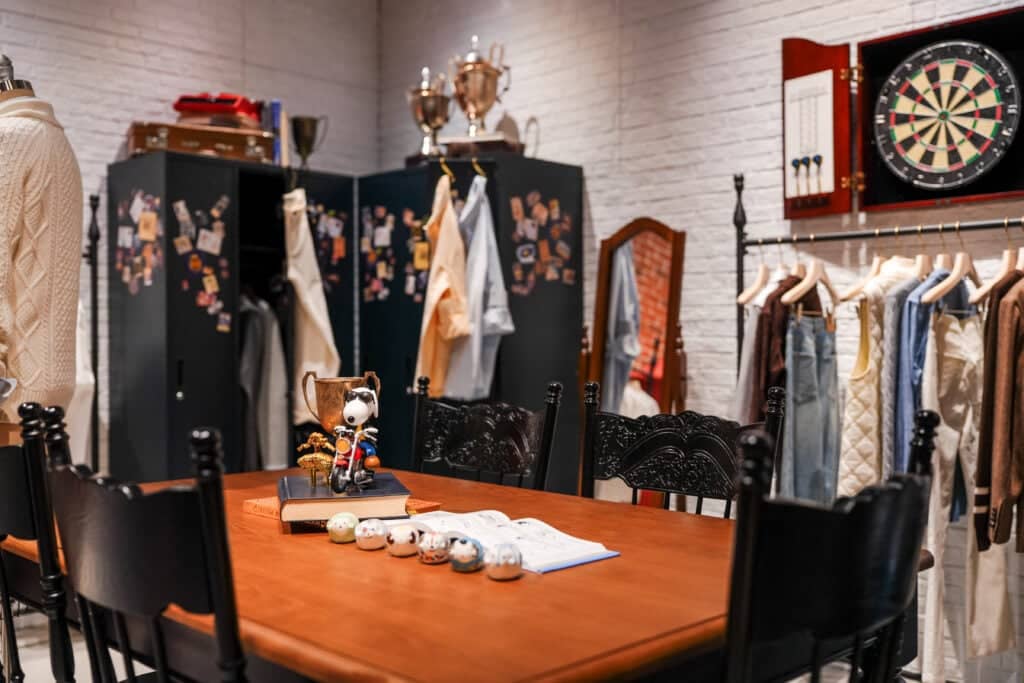
For ImagineX, such collaborations demonstrate the value of local decision-making. International brands can retain their established identities while adapting how those identities are expressed in different markets.
The challenge is to understand which elements of a brand’s heritage remain essential, and where reinterpretation can make them more meaningful to consumers.
Beyond Distribution: ImagineX’s Next Chapter
To understand ImagineX’s longer-term ambitions, Wong points to the company’s name.
ImagineX combines “Imagine” with “X,” reflecting the idea of imagine the next. She explains that the letter X originally symbolized the meeting of Eastern and Western cultures, closely connected to the company’s early role in bringing international brands into Asian markets.
“At the time, the idea was to bring Western brands into Hong Kong, mainland China and Asia,” Wong recalls. “What we’re doing now is trying to make that X bigger and more complete.”
The distinction reflects how ImagineX’s business has evolved.
Having spent decades introducing and managing international brands in the region, the group is placing greater emphasis on collaborative brand development, applying its understanding of local consumer behavior to merchandising, retail formats and marketing strategies.
Brooks Brothers remains an important example.
Over the past decade, ImagineX has worked to give the brand a more contemporary identity in Greater China, introducing initiatives ranging from ambassador partnerships to collaborations with recognizable cultural properties.

The next phase will extend further into product development and retail experience.
Wong says Brooks Brothers is investing more attention in premium materials, including cashmere, as well as technical apparel for outdoor use. Further collaborations and lifestyle-oriented offerings are also part of the development plan.
Retail expansion remains on the agenda, although Wong believes improving the existing mainland China network is becoming increasingly important.
One project is scheduled for April 2027, when Brooks Brothers plans to relocate and upgrade its boutique at Shanghai’s HKRI Taikoo Hui, introducing a new design concept.
The changes will include a greater allocation of space to womenswear. Although Brooks Brothers remains predominantly associated with menswear, women currently account for approximately 25% of its customers, suggesting room to broaden the brand’s appeal.
Online, ImagineX is taking a similarly differentiated approach.
Wong notes that Brooks Brothers has avoided becoming heavily dependent on the deep discounting common during China’s major e-commerce promotions, giving the brand greater flexibility in its pricing and channel strategy.
Rather than offering identical assortments everywhere, the company is exploring exclusive products for different platforms, including Tmall and JD.com, two major e-commerce marketplaces; Douyin, China’s short-video and social commerce platform; and Xiaohongshu, a lifestyle-focused platform where product discovery is shaped by community recommendations.
Each attracts consumers with different shopping habits and expectations, creating opportunities to adapt merchandise to individual channels.
Previous themed events and media partnerships have also helped communicate the New Ivy identity beyond conventional advertising, while upcoming store upgrades will provide more space to present the brand’s evolving lifestyle proposition.
Together, these initiatives reflect how ImagineX is translating Brooks Brothers’ heritage into products and experiences suited to different consumer groups, without depending on a single definition of American classic style.
Asked what she ultimately hopes consumers will associate with Brooks Brothers, Wong offers a straightforward answer.
“I want customers to feel that Brooks Brothers offers them something they can’t replace.”
For a company whose history stretches back more than two centuries, that sense of distinction has long been tied to its clothing and the traditions behind it. ImagineX’s task is to make those qualities meaningful to consumers whose lifestyles and wardrobes continue to change.
The work underway at Brooks Brothers, alongside partnerships with brands such as Birkenstock, illustrates how ImagineX’s role has evolved from bringing international labels into China to participating more directly in their development.
What began as a bridge between Western brands and Asian consumers is becoming a broader effort to shape how those brands establish their place in the markets they enter.