

From skin longevity to advanced formulations, global beauty trends are creating new opportunities for Chinese brands. But Mintel’s research suggests that international success will depend on how well those innovations respond to local consumer needs.
Chinese beauty brands have become increasingly adept at identifying emerging ingredients, developing new formulations and bringing products to market at speed. Yet as more companies look overseas, the next growth opportunity may not come from another trending ingredient or a successful domestic bestseller. It may begin with a more fundamental question: what do consumers in different markets actually need?
Across the global beauty industry, those needs are becoming more specific. Interest in healthy aging is shifting attention toward skin longevity, repair and overall well-being. Familiar active ingredients are being reconsidered through advances in formulation and delivery technology, while purchasing decisions remain shaped by local expectations around efficacy, safety and brand credibility.
Recent research from Mintel, including Beauty & Personal Care Landscape: Asia Pacific 2026, Global Beauty Ingredient Trends 2026 and Consumption in an Era of Divergence – The Chinese Consumer 2026, offers insight into these developments.
As part of its research for Amazon’s global growth guide for Chinese beauty and personal care brands, to which BeautyMatter contributed content support, BeautyMatter also spoke with Mintel experts about changing consumer expectations in overseas markets.
Together, the findings highlight opportunities for C-beauty, while raising a question about how China’s product innovation capabilities can translate into international growth.
From Skin Longevity to Advanced Formulations
Beauty’s expanding relationship with health and well-being is reshaping product development.
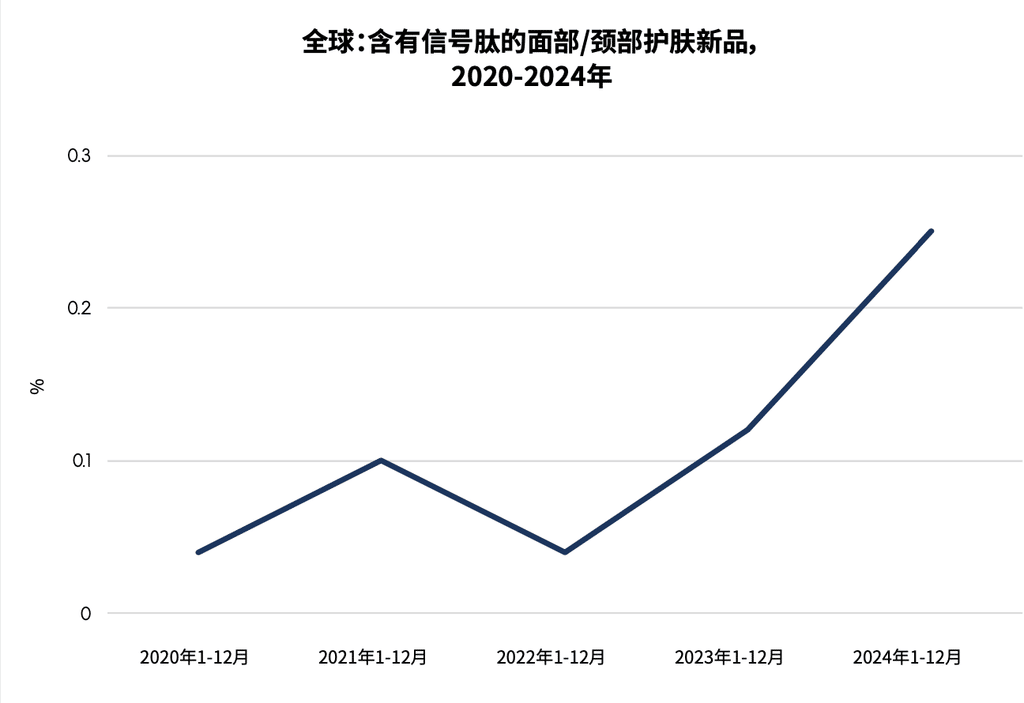
According to Mintel, the proportion of new global facial and neck care products carrying longevity-related claims increased from 1.0% in 2022 to 1.7% in 2024. Although still a relatively small category, the growth reflects rising interest in maintaining skin health over time rather than simply correcting visible signs of aging.
Concepts such as skin resilience, barrier health and repair are gaining prominence, alongside a broader understanding of beauty as part of everyday wellness. In Japan, for example, 54% of older consumers believe sleep helps maintain their appearance, while 59% of Japanese women use beauty or personal care products to relax or relieve stress.
In the United States, Mintel identifies growing interest in recovery-related skincare associated with aesthetic treatments, exercise and postpartum care. Body care is also attracting attention as the increasing use of GLP-1-based weight management treatments introduces concerns related to skin laxity and changes in body appearance.
As consumer needs become more specialized, ingredient innovation is entering a new phase.
PDRN, or polydeoxyribonucleotide, illustrates the growing convergence of professional aesthetic treatments and everyday skincare. According to Mintel, the share of new facial skincare products in Asia Pacific referencing PDRN or salmon extracts rose from 0.3% between March 2023 and February 2024 to 1.2% in the following 12 months.
Other emerging ingredients, including NAD+ and NMN, are benefiting from interest in longevity-related research. Although products carrying NAD+-related claims still account for less than 1% of global beauty and personal care launches, the segment is growing, particularly in markets including the United States, China, South Korea and the United Kingdom.
For established actives such as niacinamide, vitamin C and peptides, meanwhile, differentiation increasingly depends on formulation, stability and delivery technology rather than the ingredient alone.
Spicule-based skincare is one example. In 2024, Asia Pacific accounted for 96% of tracked global skincare launches featuring spicule-related claims, according to Mintel, reflecting the region’s rapid adoption of new delivery concepts.
These developments create opportunities for manufacturers capable of combining ingredient research, advanced formulations and product development. They also raise the bar for substantiating efficacy claims, particularly when scientific terminology becomes part of product marketing.
China’s Beauty Innovation Advantage
China’s domestic beauty market has helped establish many of the capabilities its brands are now seeking to bring overseas.
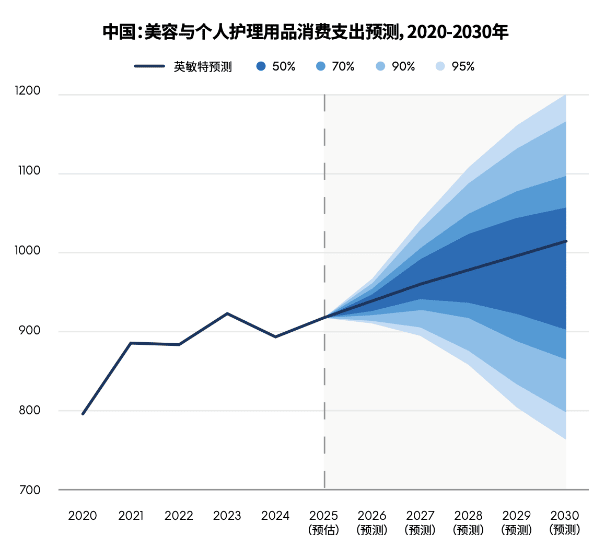
According to Mintel’s The Chinese Consumer 2026, beauty and personal care spending reached RMB 915.1 billion in 2025, up 2.5% year over year. Growth was particularly evident in frequently used categories including body care, oral care and bathing products, while mature skincare categories increasingly depend on replenishment and repeat purchasing.
Consumer preferences are also encouraging new product formats. Mintel finds that 54% of Chinese makeup consumers prioritize foundations containing skincare ingredients, reflecting demand for products combining cosmetic performance with functional benefits.
This environment has encouraged experimentation across ingredients, textures and hybrid formulations. Chinese brands can draw on a domestic market where consumers are familiar with ingredient-led marketing and quick to engage with emerging product concepts.
Ding Ding, General Manager of Mintel Greater China, attributes much of this speed to China’s interconnected digital ecosystem. Social content, consumer insights, e-commerce transactions and manufacturing capabilities are closely linked, allowing brands to identify emerging preferences and respond through product development.
Artificial intelligence is adding another layer to this process, with applications across data analysis, content production and operational decision-making.
For Chinese beauty companies, these capabilities offer an advantage in testing concepts and refining products. Yet domestic success does not necessarily translate into international acceptance.
A formulation that appeals to China’s ingredient-conscious consumers may encounter a different level of awareness overseas. Product formats, pricing expectations and perceptions of safety can also vary considerably between markets.
The opportunity lies in applying China’s development capabilities to consumer needs that may be quite different from those at home.
What Global Consumers Expect from C-Beauty
The distinction becomes clearer when examining consumer expectations in different markets.
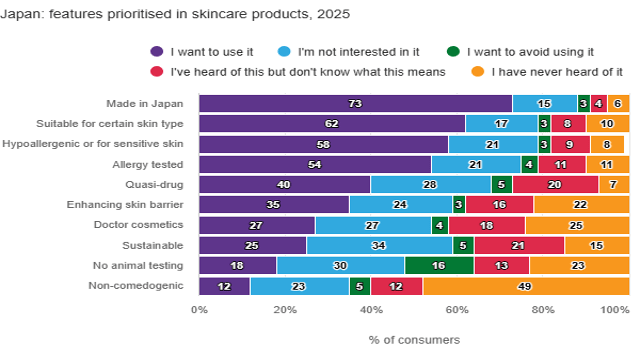
Mintel finds that 40% of Japanese consumers identify suitability for their individual needs as an important consideration when buying beauty products, while quality and price are each cited by 37%. In the United Kingdom, quality is the leading consideration, at 52%.
In the United States, efficacy and professional credibility play an important role. Clare Hennigan, a US-based analyst at Mintel, told BeautyMatter that American consumers are willing to pay for products when they believe the benefits justify the price. Clinical research, expert partnerships and credible evidence of performance can help reinforce that perception.
Japan presents a different challenge. Chinese makeup brands including Florasis, Judydoll, Joocyee, Flower Knows and Perfect Diary have gained attention among younger consumers through platforms such as TikTok, Instagram, LIPS and Qoo10, alongside retailers including LOFT and PLAZA.
Yet familiarity with individual brands has not necessarily translated into broader recognition of C-beauty, particularly in skincare.
Kaori Kawabata, a Mintel analyst covering Japan, noted that safety, consistent quality, product authenticity and long-term reputation remain important considerations for Japanese consumers. While distinctive ingredients or creative product concepts may generate initial interest, unfamiliar skincare brands face a higher threshold of trust.
Kawabata sees potential for Chinese brands in scientific ingredients, delivery technologies and personalization, as well as Eastern botanicals, fermentation and Traditional Chinese Medicine-inspired approaches. The challenge is communicating those advantages in ways that address local consumer needs rather than relying on novelty or cultural identity alone.
The differences between markets suggest that Chinese brands cannot assume a successful domestic product proposition will resonate internationally without adaptation.
From Consumer Insight to Product Selection
Understanding these differences has direct implications for product selection.
A domestic bestseller may demonstrate strong execution in China without addressing an equally compelling need overseas. Brands therefore need to identify local demand before deciding which products to introduce or develop.
This approach is central to Amazon’s global growth guide for Chinese beauty and personal care brands, developed with content support from BeautyMatter.
The guide examines how consumer searches, reviews, conversion behavior and returns data can help companies identify demand and refine their offerings. Search patterns may reveal unmet needs, while reviews and returns can show where product performance differs from consumer expectations.
For brands with responsive development and manufacturing operations, these signals can inform subsequent product decisions.
Ding Ding also emphasizes that product quality is only one component of international growth. Regulatory capabilities, supply-chain transparency and brand credibility are equally important to establishing a sustainable overseas presence.
China’s beauty industry has developed considerable strengths in formulation, manufacturing and rapid innovation. As global consumers become more discerning about ingredients, product performance and well-being, these capabilities offer opportunities across emerging categories.
For C-beauty, the next international bestseller may not be the product that succeeds most quickly at home, but the one developed with a clearer understanding of the consumers it hopes to reach.