
Chinese beauty brands have become increasingly adept at developing products quickly, manufacturing at scale and responding to emerging consumer trends. Those capabilities have given many companies the foundations for international expansion. But getting a product overseas is only the beginning.
The harder question is what happens once it arrives: what local consumers actually need, how they decide what to buy, and why they should choose an unfamiliar brand.
That challenge was at the center of Amazon Global Selling’s Evolution of Great Products: China Beauty and Personal Care Global Growth Accelerator, held on Sept. 17 in Shenzhen. At the event, Amazon Global Selling released The Evolution of Great Products: A Global Growth Guide for Chinese Beauty and Personal Care Brands, bringing together representatives from Amazon Ads, Amazon Web Services and Chinese consumer brands to discuss international market opportunities, product development, marketing and regulatory compliance.
Across the discussions, a broader shift was evident. China’s advantages in supply-chain execution and product development remain powerful, but sustainable global growth increasingly depends on whether brands can connect those capabilities with local consumer expectations.
A Global Market, but Not a Single Consumer
The opportunity is substantial. According to the Guide, the global beauty and personal care market was valued at approximately $674.9 billion in 2025 and is projected to reach $792.3 billion by 2030.
But the market is far from uniform.
The United States remains the world’s largest single-country beauty and personal care market, while Europe and Japan have mature consumer bases of their own. Purchasing priorities, however, differ. American consumers tend to place greater weight on efficacy, product quality and value for money; European consumers show stronger interest in sustainability, environmental considerations and products suitable for sensitive skin; Japanese consumers place particular importance on whether a product meets their individual needs.
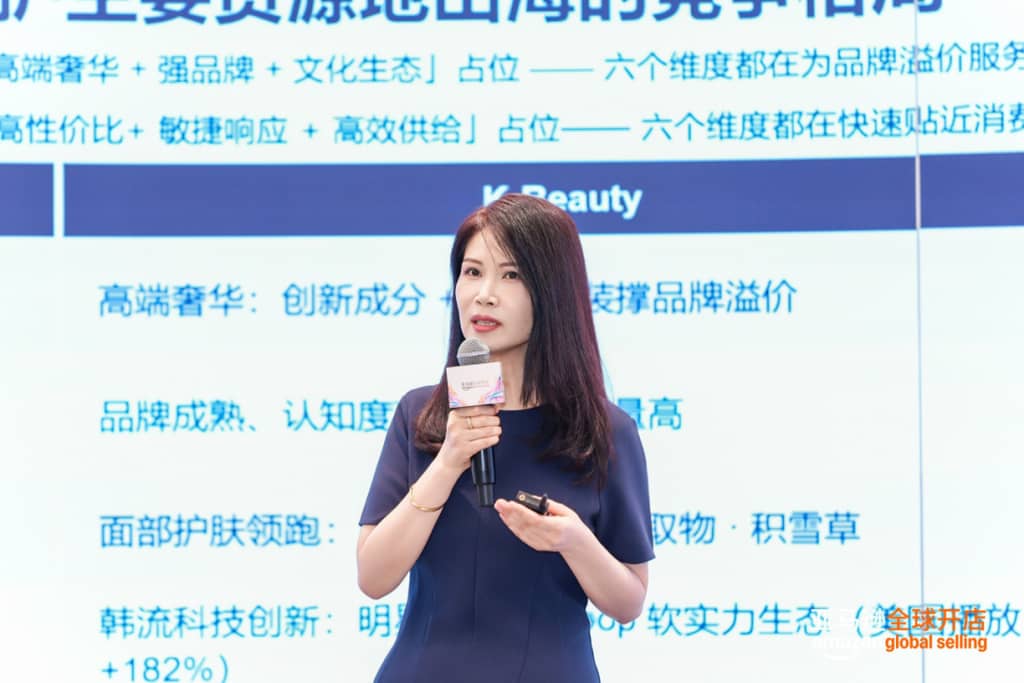
Opening the event, Ivy Shen, Senior Director of Amazon Global Selling’s Paid Seller Management team, argued that Chinese brands already possess mature supply-chain and product development capabilities. The next step is to develop a more granular understanding of overseas consumers and bring those insights back into both product decisions and brand communication.
The challenge is not only geographic. Consumer discovery itself has become fragmented across platforms.
“Consumers rarely complete the entire journey from discovery and validation to purchase on a single platform,” said Charlie Gu, founder and CEO of Jingzhi Media Group.
A consumer may first encounter a product through social media, a creator or personal recommendation, turn to search engines and tutorials to understand how it works, consult reviews or online communities for validation, and finally purchase through an e-commerce platform or physical retailer.
For brands, those touchpoints perform different jobs. Visibility may initiate interest, but trust is built through a combination of product safety, demonstrated efficacy, credible reviews, reliable delivery and after-sales service.
The implication is that selecting an attractive overseas category is no longer enough. Brands also need to understand the sequence of decisions that turns an unfamiliar product into a credible choice.
Laifen: Making Local Insight Part of Product Development
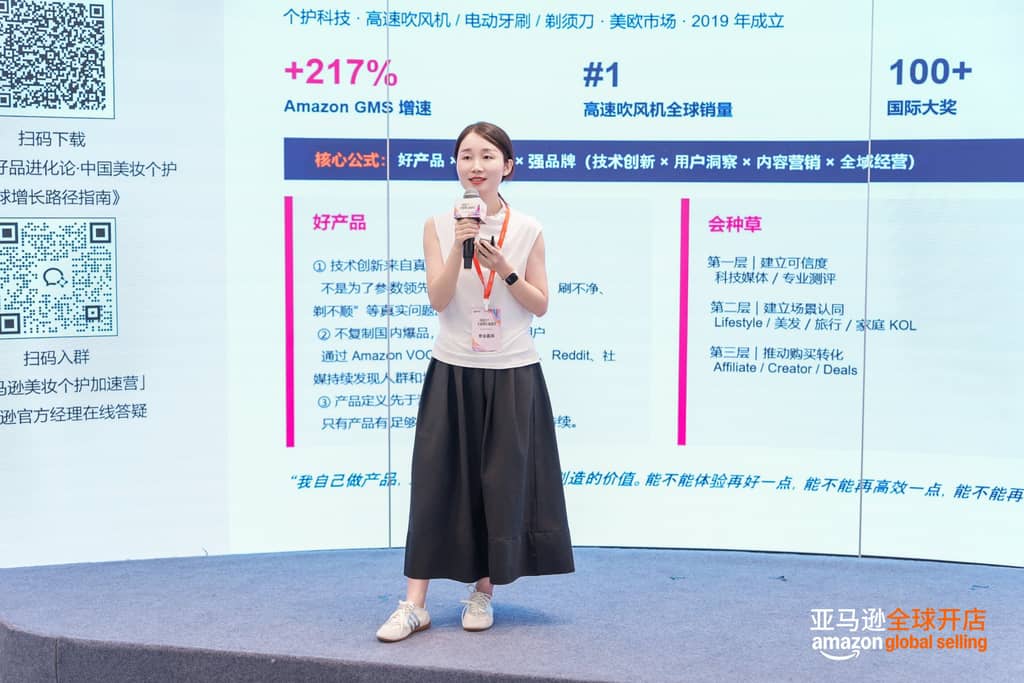
Chinese personal care technology company Laifen offers one example of how consumer insight can feed directly back into product development.
Founded in 2019, Laifen began expanding overseas in 2021 with its high-speed hair dryers and has since broadened its portfolio to include electric toothbrushes, electric shavers, fans, curling irons and beauty mirrors.
As its international business grew, the company began drawing on Amazon search terms, customer reviews, Voice of the Customer feedback, Reddit discussions, social media and after-sales information to identify emerging needs and product pain points.
Rather than treating those signals simply as marketing or customer-service data, Laifen channels them back into its product teams.
“Products can be global, but consumer insights must be local,” said Kong Qin, who oversees Laifen’s overseas online e-commerce business.
That distinction is particularly relevant for Chinese companies accustomed to leveraging common technology and manufacturing platforms across markets. A motor technology, engineering capability or design principle may travel well internationally; the way consumers judge its usefulness may not.
For Laifen, localization therefore does not mean rebuilding every product for every country. It means identifying which capabilities can be scaled globally and which consumer expectations need to be understood market by market.
It is also a different application of China’s traditional speed advantage. Rapid development becomes more valuable when it enables a company to respond to specific consumer signals, rather than simply reproducing a product that succeeded at home.
From Creator Reach to Brand Trust
Even a product built around a genuine consumer need still has to make itself understood.
For emerging Chinese brands, creators have become important intermediaries between technical product capabilities and consumer comprehension. But the mechanisms can look different from the influencer-driven commerce familiar to brands in China.
Chloe, Overseas Business Director at hair styling brand Wavytalk, said the company encountered a practical problem when it began developing TikTok content in 2022: some overseas creators were unfamiliar with the formats and production processes the brand wanted to pursue.
Wavytalk responded by providing scripts and creative briefs while leaving creators room to preserve their own voices. It also developed a tiered creator network. Major influencers help establish visibility and cultural relevance; mid-tier creators provide more detailed reviews and support purchase consideration; smaller creators and user-generated content build repetition through demonstrations and everyday recommendations.
“The kind of top-tier influencer-led selling common in China doesn’t exist overseas,” Chloe said.
In Wavytalk’s experience, influence is distributed across a wider network. Mid-sized and smaller creators can be particularly effective at showing how a product works, placing it in real-life contexts and accumulating the word-of-mouth credibility that eventually supports a purchase.
The larger challenge is what happens after that initial product discovery. Repeated exposure may make a product recognizable, but recognition alone does not create a brand.
During the panel Good Products × Effective Product Discovery × Strong Brands, moderated by Tang Hao, Senior Director of Amazon Global Selling’s Seller Management team, Cai Xuan argued that an important turning point comes when consumers are willing to pay for a product’s original value rather than judging it primarily on function or price.
“Culture is our foundation. It is what we build on,” she said.
For Chinese brands, cultural identity can be a source of differentiation, but translating it internationally does not necessarily mean relying on overt Chinese symbols. The more difficult task is making a brand’s design philosophy, values and point of view legible to people outside the cultural context in which it originated.
A Wavytalk representative placed that challenge in a broader context: “A single brand can break through, but building category recognition for an entire country takes a collective effort by many brands.”
Individual successes can gradually influence how consumers perceive Chinese brands more broadly. But that reputation will ultimately be determined less by the volume of exposure than by the accumulated experience consumers have with the products themselves.

The Infrastructure Behind Global Growth
Behind product development and brand communication sits another layer of international expansion that consumers rarely see: advertising measurement, marketplace operations and regulatory compliance.
Jessica Wu, Marketing Manager at Amazon Ads, outlined how beauty and personal care brands can connect marketing activity across Amazon and external channels. Rather than relying only on search keywords, brands can draw on signals related to browsing, purchasing and content engagement.
Tools including Performance+, Amazon Marketing Cloud, Amazon Attribution and Creator Connections are designed to address different parts of that process, from campaign optimization and audience analysis to measuring external marketing activity and working with creators.
Their significance reflects the same fragmented consumer journey confronting brands elsewhere. Discovery may happen on one platform, validation on another and conversion somewhere else entirely. Measuring those connections becomes increasingly important as brands try to distinguish activity that generates attention from activity that contributes to sales.
Regulation presents a different kind of localization challenge.
Gan Yujuan, Seller Compliance Manager at Amazon Global Selling, warned that the way a beauty product is described can influence how it is classified in overseas markets. Expressions common in Chinese beauty marketing — including “anti-aging,” “whitening” and “acne treatment” — can carry different regulatory implications when translated and used internationally.
“When we translate these expressions into English, we may inadvertently turn a cosmetic into a drug,” she said.
Gan’s warning underscores why regulatory compliance needs to be considered early in product development, rather than treated as a final step before entering an overseas market.
For Chinese beauty brands, international expansion is no longer simply a question of bringing products to new markets. Increasingly, success depends on understanding local consumers, adapting to their expectations and earning their trust.