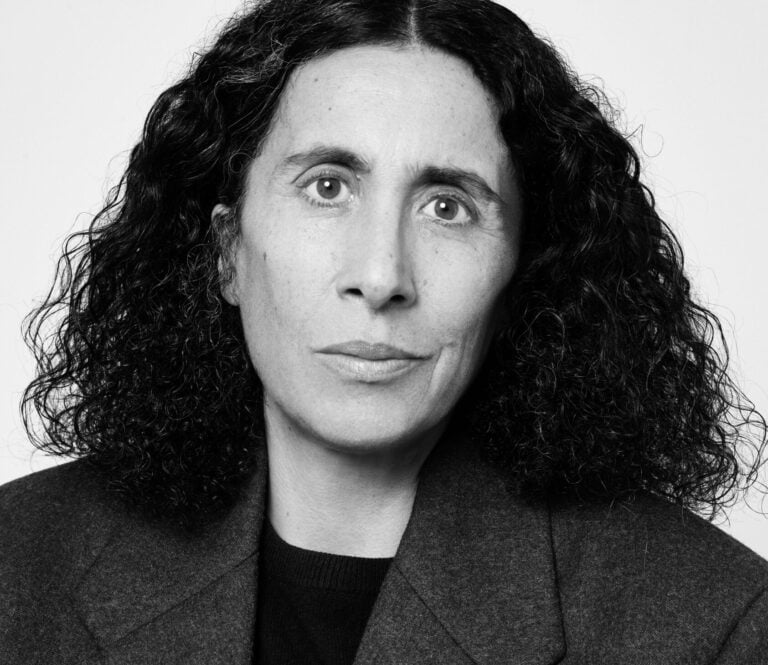

As China’s fragrance culture grows more sophisticated, the KAYALI founder is bringing a playful approach to perfume—one shaped by her passion for collecting, the pleasure of gourmand scents, and the freedom to experiment.
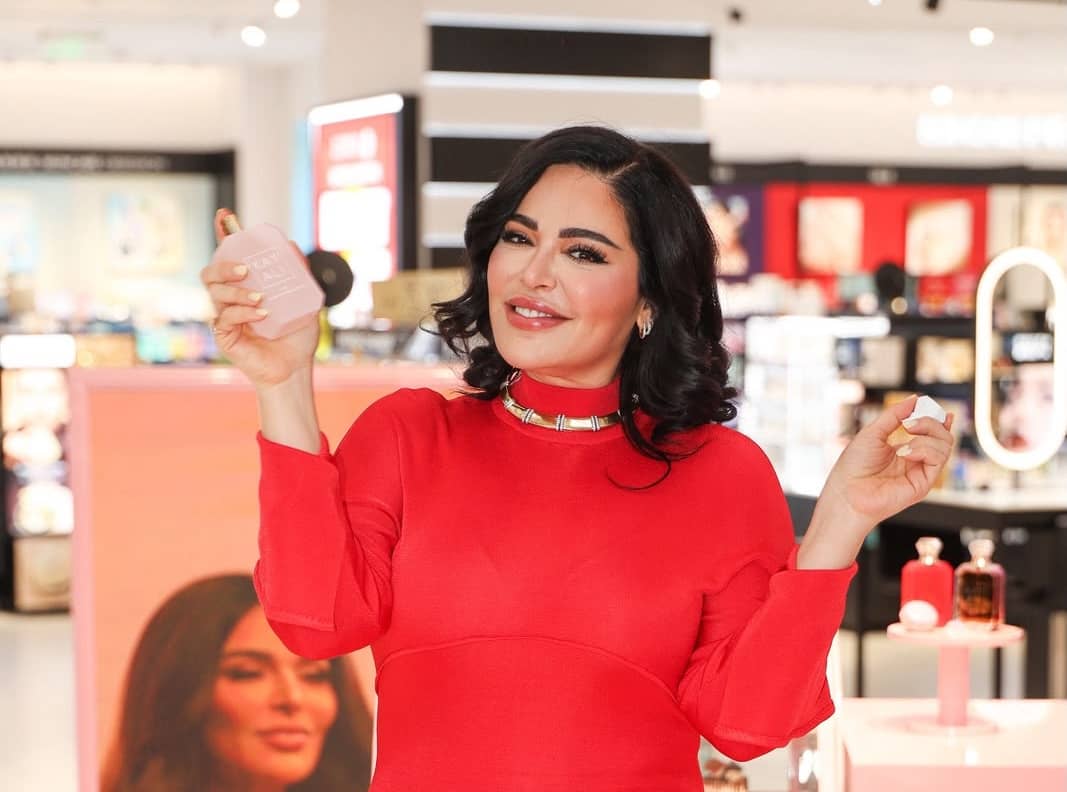
By the time Mona Kattan reaches for another perfume bottle, my fingers have become an impromptu fragrance testing ground. There is KAYALI’s Vanilla 28, rich with brown sugar and tonka bean; Yum Boujee Marshmallow | 81, an airy confection of strawberry and marshmallow; and the forthcoming Yum Vanilla Cupcake 108, which recalls freshly baked dessert. She enthusiastically sprays each onto my skin, describing the notes and textures while encouraging me to notice how differently they make me feel.
“I’m going to be turning into a feast,” I joke as she reaches for another bottle.
“You will,” she replies, before moving on to a juicy apple fragrance and a creamy matcha scent.
Asked why gourmand fragrances have become so popular, Kattan offers an immediate explanation: “Happiness. When you smell something gourmand, you instantly feel happy.”
The exchange captures much of what makes KAYALI distinctive. Founded in 2018, the Dubai-born fragrance brand has built an international following with its colorful presentation, indulgent compositions and emphasis on layering. Behind that playful personality, however, is a woman who has spent years collecting and studying perfume.
Now, Kattan is bringing that philosophy to China. On October 15, KAYALI officially entered the market through an exclusive partnership with Sephora, launching across more than 300 stores and the retailer’s digital channels. Its arrival comes as Chinese consumers are developing increasingly individual tastes, exploring independent perfume houses and discovering a broader range of scent profiles.
For Kattan, herself a devoted collector, the opportunity is not simply to introduce another fragrance brand to a discerning audience. She wants more people to experience the pleasure of perfume, whether they are seasoned enthusiasts or discovering fragrance for the first time.
The Collector Behind the Creator
Kattan’s ambition to create a fragrance brand predates KAYALI by nearly a decade. After studying finance and briefly working in banking, she started a public relations agency in 2009. One of her earliest clients was the French niche fragrance house, which she approached out of personal admiration for its perfumes. The experience planted the idea that she might one day develop a fragrance brand herself.
By 2010, she had created an initial concept, developed samples and pitched potential investors. An investment opportunity fell through, but the ambition remained. Over the following years, she established a beauty salon and helped build the family cosmetics business, gaining the commercial experience that would eventually support her return to fragrance.
When she began working on KAYALI in 2017, her personal collection had grown to nearly 1,000 bottles. Her years as a collector and early fragrance content creator had also given her a clear sense of what she wanted to do differently.
Price was one frustration. Kattan recalls spending around $300 on niche fragrances she loved but could scarcely afford, making her reluctant to use them freely. “I was spraying very carefully, and I was stressed out when I’d spray,” she says. From the outset, she wanted KAYALI to offer what she describes as near-niche quality at a more approachable price.
Another frustration was the language surrounding perfume. As a content creator, she often received descriptions from fragrance houses filled with elaborate French terminology and a handful of notes that communicated little to her English-speaking audience. At KAYALI, she adopted a simpler approach: most fragrances are named after a recognizable hero note, giving consumers an immediate idea of what to expect. Vanilla 28, Eden Juicy Apple 01 and Freedom Musk Santal 34 communicate their olfactory direction before a customer even picks up the bottle.
The third defining influence came from Dubai, where she discovered the Middle Eastern tradition of layering fragrances. Combining different scents, she found, could create greater complexity, projection and longevity while allowing the wearer to develop something distinctly personal. Layering became central to KAYALI, whose name means “my imagination” in Arabic.
“When I moved to Dubai and discovered layering, I was like, wow, this is life-changing,” she recalls.
She believes a fragrance can be worn alone or layered with another, depending on the mood or simply the pleasure of discovering something unexpected.
Where perfume advertising once relied heavily on glamorous imagery and the promise of sexual appeal, the rise of fragrance content creators has encouraged conversations about how scents actually make people feel. The pandemic, she suggests, further demonstrated how something as simple as lighting a candle or wearing a favorite perfume could transform the atmosphere of a room.
“It’s not something you wear for a date. It’s not something you wear for other people. It’s for yourself first,” she says.
Some KAYALI fragrances are intended to feel sensual and bold, others comforting or understated. Musk 12, which Kattan sprays early in our conversation, has an effortless, freshly showered quality. Vanilla 28 is warmer and more indulgent, while her gourmand creations lean unapologetically into sweetness.
Behind those compositions are often personal memories. Eden Juicy Apple 01, for instance, recalls Kattan’s childhood in the 1990s, when her father would give her an apple to take to school. The familiar smell became a way of revisiting that period of her life.
Yet the same ingredient can evoke very different memories for someone growing up in another culture. As KAYALI enters China, those differences are becoming a new source of fascination for its founder.
China’s Growing Appetite for Gourmand
China’s growing interest in gourmand fragrance comes amid a broader evolution in how consumers appreciate perfume. Independent houses and niche brands have cultivated an audience interested in perfumers, ingredients, olfactory compositions and distinctive storytelling. At the same time, food-inspired scents are gaining traction, with local creators drawing increasingly on familiar desserts, regional ingredients and childhood memories.
According to Xiaohongshu’s 2025 Perfume & Fragrance Industry Trend Inspiration Report, searches for gourmand fragrances increased 46% year-on-year in 2024, while searches for food-inspired scent notes rose 78% year-on-year between March 2024 and March 2025, as reported by Beauty Matter.
For KAYALI, whose gourmand creations often draw on vanilla, marshmallow and other sweet indulgences, China’s expanding fragrance vocabulary offers familiar territory as well as new creative possibilities.
During her Shanghai visit, Kattan has been sampling local sweets and fruits, finding inspiration in unfamiliar flavors. “I’m definitely taking notes,” she tells me, adding that she has also been surprised by the city’s greenery and natural surroundings.
Our conversation turns to lychee, a fruit already featured in KAYALI’s Eden Sparkling Lychee 39. Kattan explains that the fragrance emerged from the development of the Eden collection, inspired by bright, fruity florals and the nostalgia of her childhood. She is intrigued when I share the well-known Tang dynasty tale of fresh lychees being transported over great distances for the imperial consort Yang Guifei.
“Tell my husband he needs to work harder,” she laughs.
Although the fragrance was not created with that Chinese cultural reference in mind, Kattan is delighted by the story and eager to discover more. Asked whether she might eventually create fragrances inspired by Chinese ingredients or exclusively for the market, she expresses enthusiasm, while acknowledging practical considerations such as production minimums.
For someone whose creative journey began with an obsession for discovering other people’s perfumes, China is offering an entirely new repertoire of scents, flavors and memories.
A New World to Discover
KAYALI’s playful personality also finds a natural complement in Sephora China’s emphasis on experiential beauty retail. The brand’s launch was followed by its debut at SEPHORiA Shanghai, held October 23–25 at Zhangyuan under the theme Beauty Metropolis. Featuring more than 60 beauty brands, the event invited consumers to explore products through immersive installations, interactive experiences and masterclasses.
KAYALI brought its gourmand fragrances and layering philosophy to SEPHORiA, while its separate KAYALI Café retail activations extended the experience to selected Sephora stores. The brand’s colorful visual presentation and hands-on approach offered an inviting introduction to perfume, particularly for consumers less familiar with fragrance terminology or traditional scent classifications.
Kattan was especially taken with the playful presentation at a Sephora store she visited in Shanghai, including the incorporation of Chinese imagery and visual references. She mentions the teddy bears, Hello Kitty items and unicorns decorating her own office, finding something familiar in the store’s cheerful atmosphere.
“I feel like I’m home, kind of,” she says.
She was equally interested in how seriously Chinese consumers approach learning about beauty products. Their enthusiasm for studying ingredients and understanding different compositions reminded her of her own habits as a collector.
“I love how much Chinese people are very studious, and they like to learn,” she says. Yet when asked what she most wants Chinese consumers to know about KAYALI, her answer has little to do with mastering perfume terminology.
“Just experiment. Don’t think too much about it, just play.”
Despite KAYALI’s established international following and eight-year partnership with Sephora, China presents a new challenge. The social platforms through which Kattan has built relationships with fragrance enthusiasts elsewhere do not operate in the same way, requiring her team to establish a local community through different channels.
“We’re starting from scratch,” she acknowledges.
Kattan has opened personal accounts on WeChat and Xiaohongshu and is still learning how the platforms work. She speaks enthusiastically about the creative content she hopes to discover there and the opportunity to connect directly with Chinese consumers.
“I want to learn. I want to take our time. I really want to do things the right way,” she says.
Kattan is approaching the market patiently, describing KAYALI’s China expansion as a long-term commitment. She hopes to build a community around fragrance discovery, much as the brand has done in other markets, while learning from the preferences and ideas of Chinese consumers.
Her curiosity also extends beyond her own business.
During her Shanghai visit, Sephora introduced her to the founder of Chinese fragrance house DOCUMENTS, an encounter that reflected the retailer’s role in connecting fragrance creators and fostering cross-cultural exchange. Impressed by the brand’s creativity and entrepreneurial spirit, Kattan expressed admiration for China’s emerging fragrance talent.
“I think this brand should go global,” she says, suggesting that Sephora could one day help bring more Chinese fragrance brands to international audiences.
Having arrived in Shanghai to introduce her own fragrance creations to Chinese consumers, Kattan found herself equally excited by what another entrepreneur had created. For a founder whose journey began with collecting and discovering the work of other perfumers, that curiosity remains undiminished.