
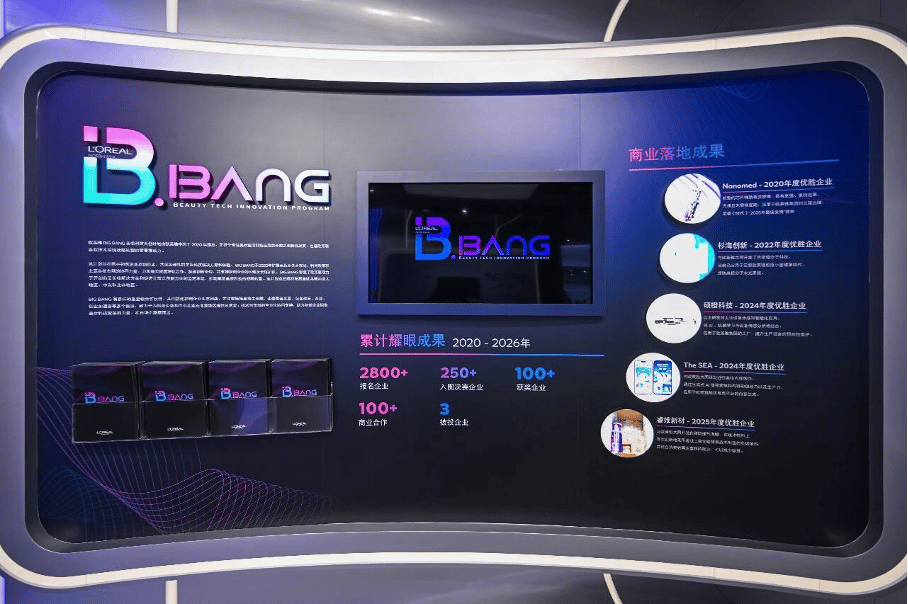
From supramolecular chemistry in skincare to biotechnology and sustainable packaging, L’Oréal’s Big Bang Beauty Tech Innovation Program is helping startups turn scientific breakthroughs into commercial applications and gain access to a wider global innovation network.
The next breakthrough in beauty may come from outside the beauty industry.
At the ninth China International Import Expo (CIIE) in Shanghai in November 2026, supramolecular technology featured in several new skincare products, including La Roche-Posay age repair regenerating cream and La Roche-Posay CICAPLAST B5 Supramolecular Advanced Repair Serum. Behind the technology was Shinehigh Innovation, a Chinese startup specializing in supramolecular chemistry.
How did a startup’s scientific breakthrough find its way into the research and innovation operations of a global beauty group and, eventually, into products sold to consumers?
The story began in 2022, when Shinehigh became a winner of L’Oréal’s BIG BANG Beauty Tech Innovation Program. In the years that followed, the relationship evolved from technology validation to collaborative research, investment and commercial product development.
Its journey reflects a broader challenge for the beauty industry. As advances in artificial intelligence, biotechnology and materials science open up new possibilities, how can established companies connect discoveries made outside their own laboratories with business needs and turn scientific potential into commercial value?
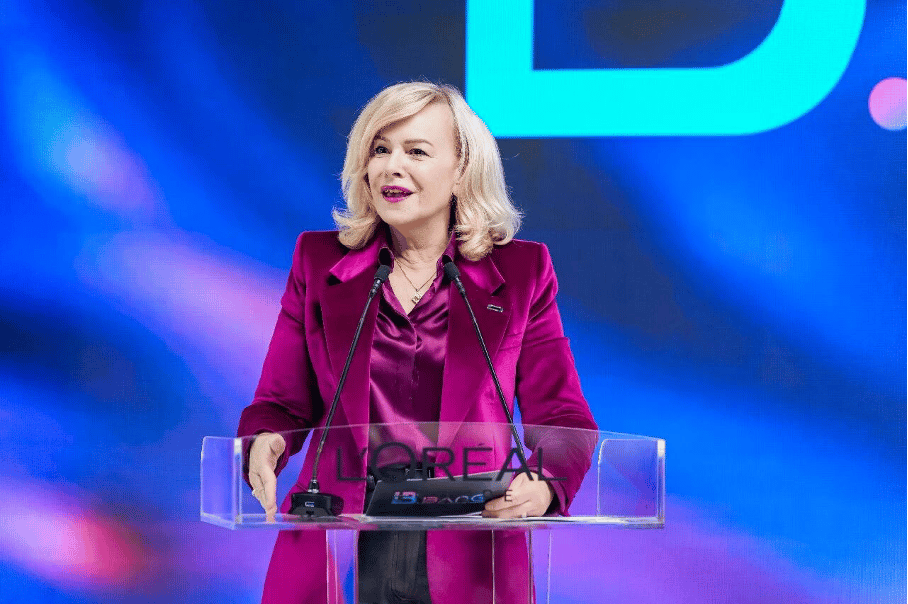
Speaking at the 2026 BIG BANG Awards Ceremony, Barbara Lavernos, Deputy Chief Executive Officer in charge of Research, Innovation and Technology at L’Oréal Group, emphasized the importance of looking beyond conventional industry boundaries.
“The boldest breakthroughs rarely come from one organization alone. They happen when different minds meet,” she said.
Lavernos also highlighted the complementary strengths of North Asia, describing the region as a “Beauty Triangle” shaped by Korea’s influence on beauty trends, China’s advances in AI and biotechnology, and Japan’s scientific expertise.
Launched in China in 2020, BIG BANG was designed to connect the beauty industry with technology startups from other fields, creating opportunities for external discoveries to enter L’Oréal’s research and business ecosystem.
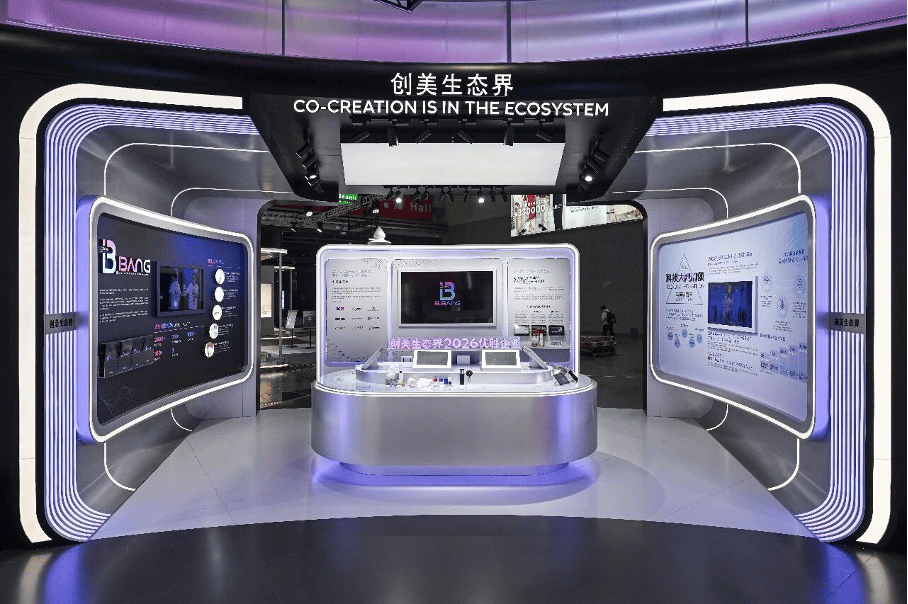
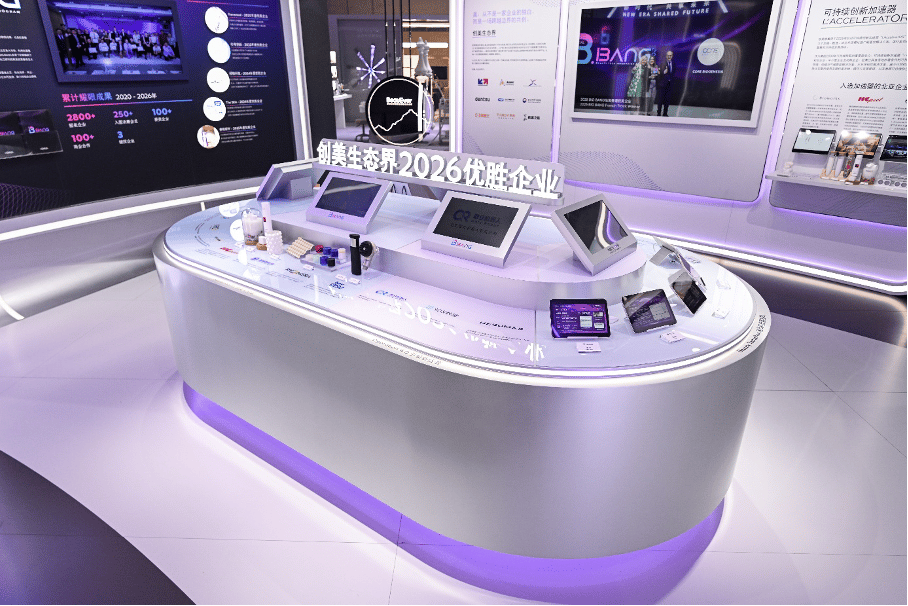
At CIIE 2026, more than 20 winning startups from North Asia and France showcased their work under the theme “Innovation with Impact,” reflecting the program’s growing reach across scientific research, consumer experience, operations and sustainability.
What began as an innovation competition is increasingly becoming a platform for bringing emerging technologies into commercial use.
When Beauty Innovations Moves Beyond Beauty
L’Oréal’s search for outside expertise builds on its broader Beauty Tech transformation, which began in 2018. As AI, synthetic biology, robotics and materials science advance, technologies originally developed for other sectors are finding potential applications in ingredient development, manufacturing, consumer experience and supply chains.
BIG BANG organizes that search through four tracks.
Future Science focuses on ingredient synthesis, formulation technologies and precision testing. Operation 4.0 explores robotics and AI-powered manufacturing, while Phygital Consumers Experience covers digital content, consumer insights and smart retail. Sustainability, introduced in 2025, addresses packaging innovation, water-related technologies and new business models supporting the industry’s environmental transition.
AI cuts across four main areas, with applications ranging from consumer-facing content to research, production and operational processes.
The program’s selection criteria reveal its commercial priorities. Solution innovativeness, technology frontier, scalability within L’Oréal and business impact each account for 25% of the evaluation. Individual challenges also reflect the group’s business needs, anticipated market developments over the next five to ten years and the technological strengths of participating startups.
Originality matters, but so does the ability to solve a specific problem at scale. Rather than limiting its search to companies already operating in beauty tech, BIG BANG looks for capabilities that could offer new solutions to the industry, wherever they originate.
Since its launch, more than 2,800 companies have participated, over 250 have reached the finals and more than 100 have won awards. According to L’Oréal’s program materials, BIG BANG has facilitated more than 100 commercial collaborations, with three startups receiving investment.
At CIIE 2026, winning companies presented technologies spanning ingredient research and innovation (R&I), smart manufacturing, sustainable packaging and intelligent marketing. The range reflected how closely scientific advances from different fields are becoming connected to the practical demands of the beauty industry.
Yet identifying promising technology is only the first step. For startups, the greater challenge often begins after the competition: how can a laboratory breakthrough become part of an established company’s products and operations?
From Scientific Potential to Commercial Products
A scientific breakthrough does not automatically translate into a viable business.
Before reaching the market, new technologies must find suitable applications, undergo further research and product validation, and fit within existing business systems.
This is where BIG BANG offers startups something beyond recognition. Participating companies can gain access to L’Oréal’s scientific expertise, consumer insights and real-world business environments, allowing them to test their technologies against industry needs and explore viable commercial applications.
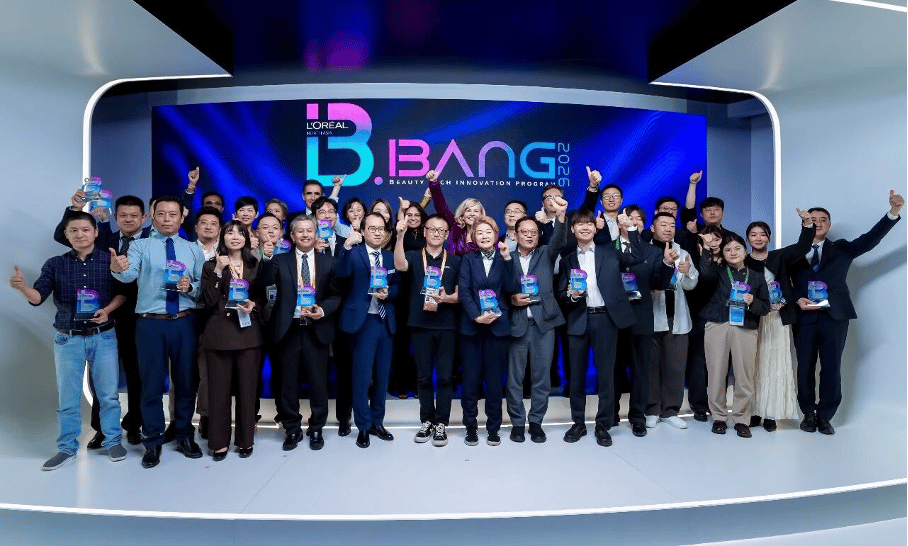
BIG BANG-winning startups and L’Oréal representatives gather at the 2026 awards ceremony during CIIE. Image: L’Oréal
Shinehigh Innovation offers one of the clearest examples.
A 2022 BIG BANG winner, the company specializes in co-assembly supramolecular technology. In 2023, it became the first BIG BANG-incubated startup to receive investment through Meicifang, L’Oréal’s China-based investment platform.
Its technology has since been incorporated into products across L’Oréal’s portfolio, including La Roche-Posay age repair regenerating cream, the fourth generation of L’Oréal Paris Age Perfect Collagen Royal, a CeraVe SupraSA Oil & Pores Cleanser, and La Roche-Posay’s CICAPLAST B5 SUPRAMOLECULAR Products.
What makes the partnership notable is not simply that the technology reached consumers, but that it found applications across different brands and product lines within the same group.
Shinehigh’s relationship with L’Oréal has progressed from initial discovery and testing to joint development, investment and product commercialization. Its experience illustrates how a scientific capability developed outside the beauty industry can become part of an established company’s product development pipeline.
Not every startup follows the same path.
Veminsyn, another Chinese company backed by L’Oréal, uses an AI and biotechnology platform to produce high-value ingredients through advanced biosynthesis. Its partnership with the group encompasses the co-development of innovative bioactive ingredients, production scale-up and the exploration of low-carbon biomanufacturing technologies for cosmetic raw materials.
For L’Oréal, the work contributes to research into future active ingredients. For Veminsyn, it provides access to scientific expertise, industrial knowledge and opportunities to validate its technology at greater scale.
Another example emerged during CIIE 2026.
L’Oréal announced that Shanghai Meicifang Investment Co., Ltd., with support from BOLD, the group’s strategic innovation venture capital fund, would make a minority investment in PAM2L, a Chinese biomaterials company and 2024 BIG BANG winner.
Combining synthetic biology and AI, PAM2L develops next-generation biomaterials through an integrated technology platform. The planned investment will be accompanied by a strategic Research and Innovation partnership to co-develop innovative bioactive ingredients and advance their application in beauty.
Shinehigh, Veminsyn and PAM2L represent different stages and forms of collaboration. Some technologies have already made their way into finished products, while others require longer research cycles, capital investment and sustained industrial partnerships.
What connects these companies is the changing relationship between startups and the beauty industry. Winning an innovation competition is no longer necessarily an isolated achievement. For selected participants, it can mark the beginning of a longer commercial relationship.
As more of these technologies find applications within L’Oréal’s business, another question comes into focus: can innovations originating in China and other Asian markets move beyond their home markets and become part of a wider global network?
From China to a Global Innovation Network
BIG BANG’s own development offers part of the answer.
Launched in China in 2020, the program expanded across North Asia in 2023, bringing together startups and ecosystem partners from China, Japan and Korea.
The expansion has enabled companies from different markets to exchange ideas, test new solutions and pursue joint development in real-world business settings, drawing on L’Oréal’s regional and global research capabilities, brands and market resources.
JeeSeon Park, Chief Sustainability Officer of L’Oréal North Asia and China, has described BIG BANG’s contribution in terms of three forms of scale: the number of innovations it supports, the knowledge it helps circulate and the breadth of the ecosystem it connects. From this perspective, the benefits extend beyond L’Oréal to the wider beauty industry.
CIIE has become an important meeting point for this network.
At the 2026 exhibition, startups from China, Japan, Korea and France gathered to present their technologies and connect with potential customers, investors and industry partners.
Organizations including The Oriental Beauty Valley, Business France and Korea’s Ministry of SMEs and startups have also participated in the broader ecosystem. The BIG BANGer Community Forum provides further opportunities for entrepreneurs, investors and startup accelerators to exchange ideas and build relationships beyond the annual competition.
The network is also extending beyond Asia.
At VivaTech in Paris in 2025, L’Oréal North Asia hosted an open innovation forum under the theme “New Frontiers of Beauty Powered by North Asia Open Innovation.” The event brought together BIG BANG winners from China, Japan and Korea alongside government, industry and innovation partners.
The program has since expanded its footprint into South Asia Pacific, the Middle East and North Africa.
Yet international expansion means more than appearing at overseas events. A more meaningful measure is whether technologies developed by Asian startups can find applications within L’Oréal’s global business and innovation network.
Nanomed illustrates one route.
A winner of the inaugural BIG BANG program in 2020, the startup developed chip-assisted epidermal management technology that has since been incorporated into Lancôme’s RÉNERGIE NANO-RESURFACER.
The device was recognized as TIME magazine’s “Best Inventions of 2025” list. According to L’Oréal’s CIIE materials, it has also launched in more than 20 countries, demonstrating how an innovation first identified through a China-based initiative can reach international markets through a global beauty brand.
Sustainability offers another path.
In 2026, HCpect, a winner in BIG BANG’s Sustainability track, was selected for the second round of L’Oréal’s global sustainability innovation accelerator program, L’AcceleratOR.
The Chinese company specializes in chemical recycling. Its CPDCC technology converts plastic waste into high-quality recycled polypropylene and polyethylene with performance comparable to virgin materials.
The technology has potential applications in beauty packaging components, including bottle caps, addressing challenges that extend beyond cosmetic formulation to the industry’s wider materials supply chain.
HCpect’s selection also illustrates how a startup can gain access to different parts of L’Oréal’s open innovation network, creating opportunities for collaboration beyond its initial participation in BIG BANG.
Together, these examples point to a broader shift in how Asian innovation contributes to the global beauty industry.
China and other Asian markets are no longer simply places where multinational companies look for promising technologies. They are increasingly home to startups whose expertise can contribute to global product development, scientific research and sustainability initiatives.
For L’Oréal, BIG BANG offers a way to draw on knowledge and capabilities beyond the conventional boundaries of the beauty industry. For startups, it provides access to the expertise, infrastructure and partnerships needed to move beyond the laboratory.
The significance of the program lies not only in identifying new ideas, but in what happens after they are discovered.
Turning scientific potential into commercial value requires more than an initial proof of concept. It depends on sustained research, industrial validation, investment and the ability to integrate new technologies into products and business operations. The paths taken by Shinehigh, Veminsyn, PAM2L, Nanomed and HCpect show how those requirements can be addressed through different forms of collaboration.
From supramolecular chemistry finding its way into a face cream to Asian startups entering global research and sustainability networks, BIG BANG offers a case study in how open innovation can connect scientific discovery with commercial application.
Ultimately, the challenge is not simply to identify promising ideas, but to build the conditions that allow them to develop, scale and reach markets beyond where they began.