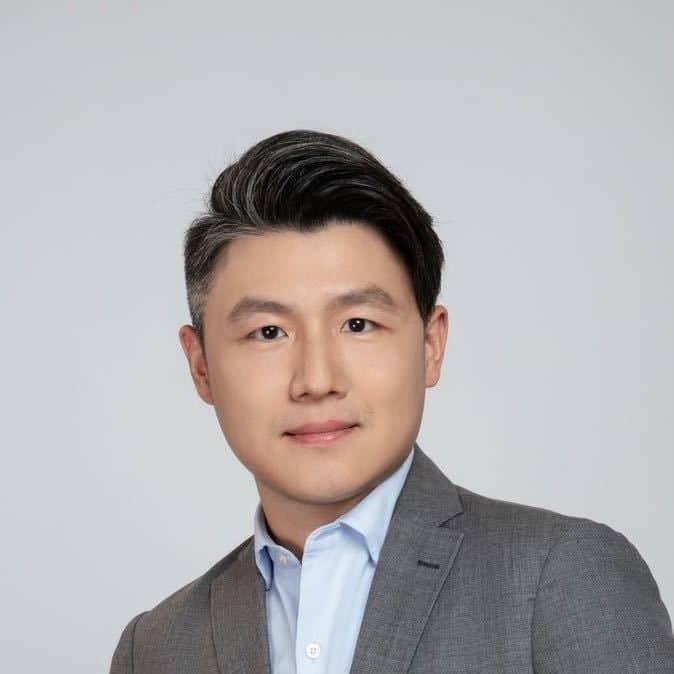

For Proya founder and chairman Hou Juncheng, building a global beauty company requires more than speed. Following a landmark achievement at the IFSCC Congress, he reflects on scientific innovation, international ambitions, and his vision for China’s beauty industry.
When Hou Juncheng traveled to Perth, Australia, in late September, he had plenty of reasons to celebrate. Proya Cosmetics, the Chinese beauty company he founded more than two decades ago, was making its strongest showing yet at one of the cosmetics industry’s most prestigious scientific gatherings. Its researchers had earned international recognition for work exploring how mitochondria influence skin aging, a field increasingly central to the global conversation about skin longevity.
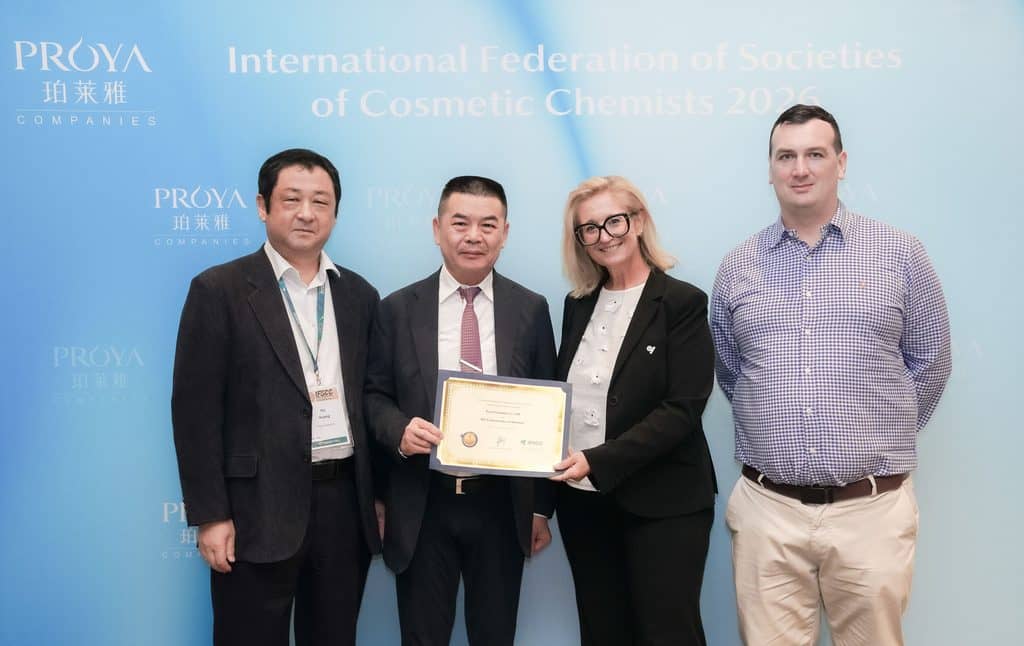
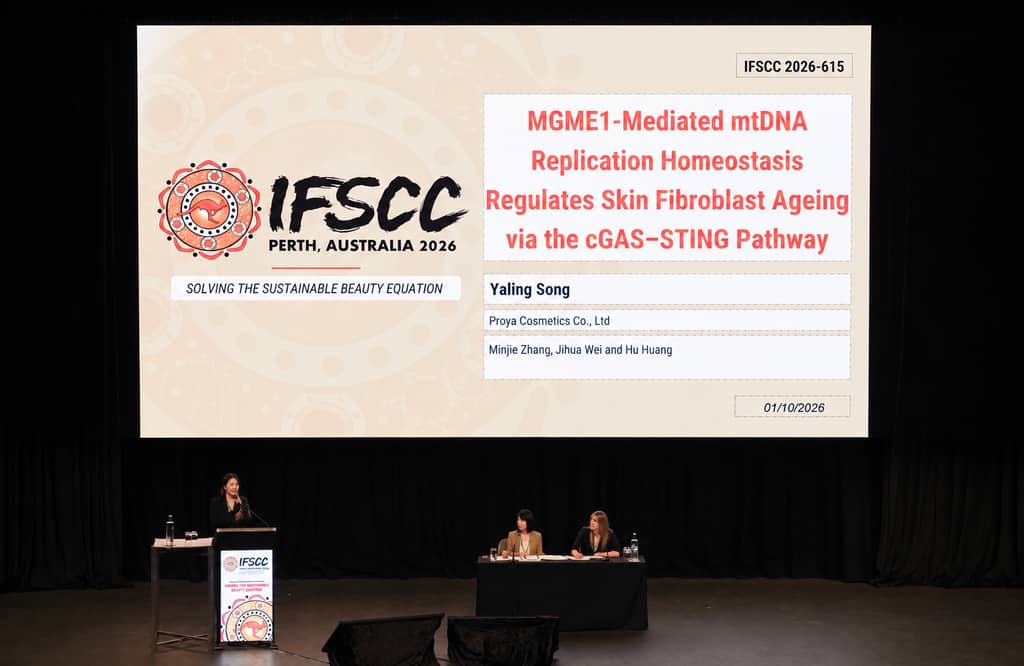
At the 36th Congress of the International Federation of Societies of Cosmetic Chemists (IFSCC), all 20 research projects submitted by Proya Cosmetics were accepted, including four selected for podium presentations. Song Yaling, a researcher at the company’s Hangzhou Longwu R&D Center, received the 2026 IFSCC Podium Fundamental Research Award for her study of mitochondrial DNA and skin aging. Another Proya Cosmetics study was named among the Top 10 finalists in the same category.
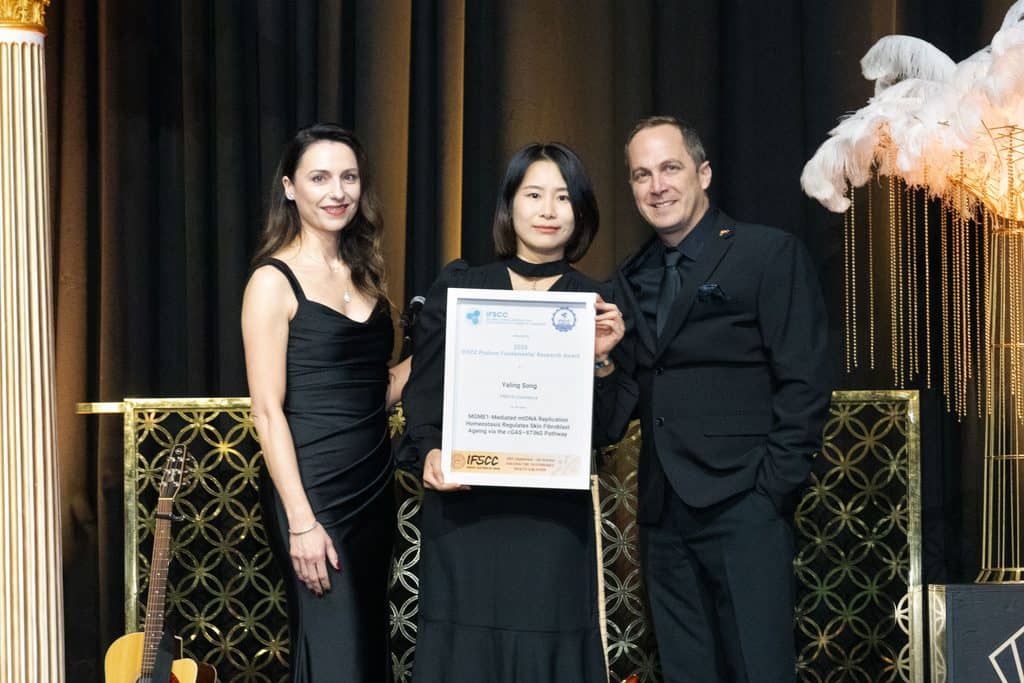
But in an interview on the sidelines of the congress, Hou spoke less about the awards than about the patience required to achieve scientific breakthroughs.
“Such investment may require a long period of sustained effort,” he said.
For an entrepreneur who has spent more than two decades building one of China’s leading beauty companies in a market defined by extraordinary speed, the emphasis on patience is revealing. Today, as Proya Cosmetics sets its sights on becoming one of the world’s top 10 cosmetics companies, Hou is increasingly focused on developing capabilities that cannot be built overnight.
From Premium Ingredients to Fundamental Research
More than twenty years ago, when Proya Cosmetics was still a young Chinese skincare company, an employee who had previously held management positions at other cosmetics businesses made a surprising discovery.
The company was already sourcing more than 95 percent of its raw materials from some of the world’s leading cosmetics ingredient and biotechnology suppliers. For a domestic brand still establishing itself in China’s emerging beauty market, it was an unusually expensive approach.
The employee found it astonishing. Hou, however, had a straightforward explanation.
“We spared no expense when it came to product quality,” he recalled.
Founded in 2003, Proya Cosmetics entered the market at a time when Chinese cosmetics companies were learning to compete with established international brands. Access to advanced ingredients, formulation technologies, and reliable suppliers offered a practical route to improving product quality.
Over the following two decades, China’s beauty market underwent a transformation. Domestic consumers became increasingly knowledgeable about skincare ingredients and product efficacy, while local brands began competing more directly with multinational companies in categories such as anti-aging, brightening, and skin repair.
For Proya Cosmetics, the growing sophistication of the market also raised new scientific questions. Understanding what an ingredient could achieve was no longer enough. The company wanted to understand the biological mechanisms behind those results and explore how scientific discoveries could be translated into new products.
The shift has been accompanied by sustained investment in research infrastructure.

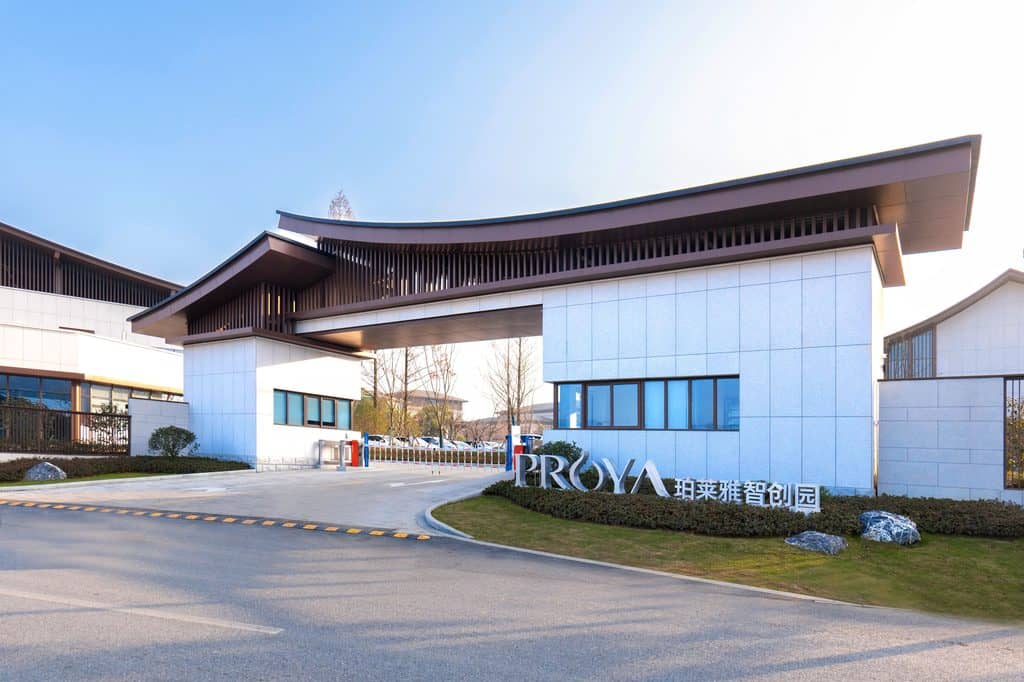
Proya Cosmetics currently operates R&D centers in Hangzhou and Shanghai, alongside its Europe Innovation Center in Paris, whose laboratory was officially inaugurated on 13 October, 2026.
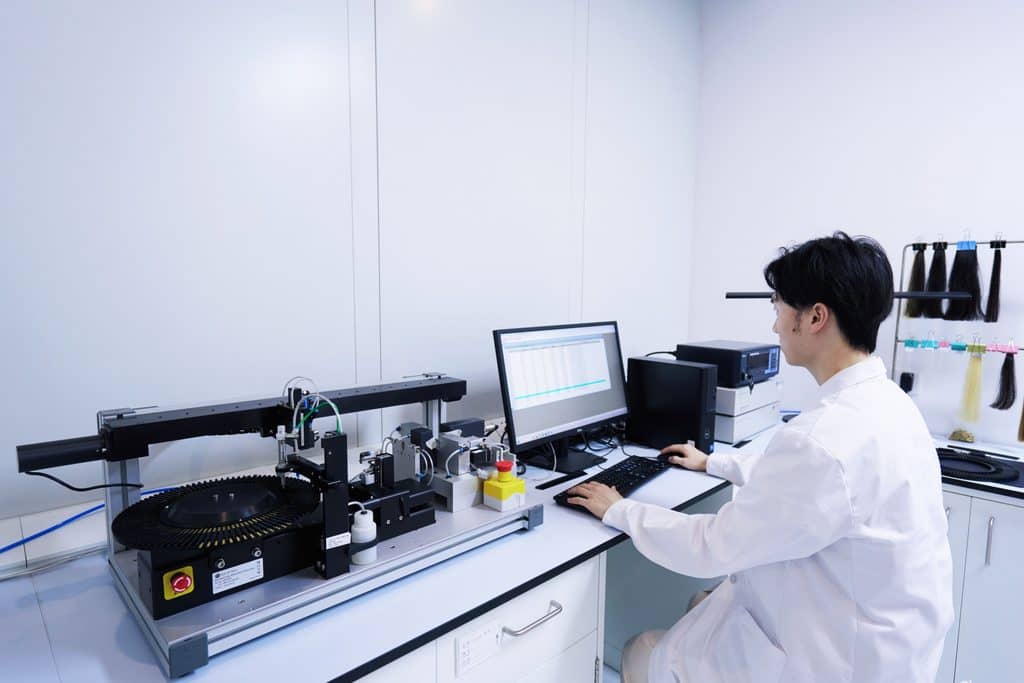
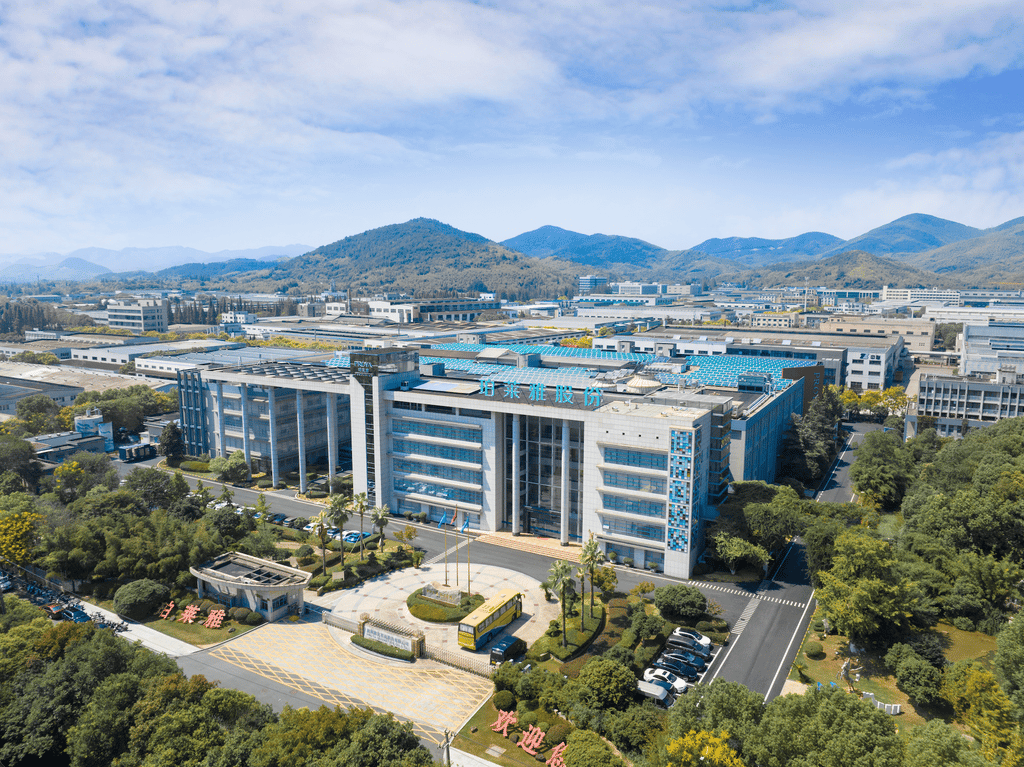
The Hangzhou Longwu facility focuses on fundamental skin research, ingredients, and formulation development, while the Shanghai center specializes in hair care and scalp science. The European operation connects Proya Cosmetics with international research institutions, biotechnology companies, and ingredient suppliers.
According to company disclosures, its R&D investment has increased substantially since 2020. The research organization now brings together hundreds of specialists across multiple scientific disciplines, with a growing proportion holding postgraduate qualifications.
For Hou, the company’s expanding research capabilities reflect a conviction he has maintained since its founding: strong products require a strong foundation.
He frequently invokes a Chinese saying, “To forge iron, one must first be strong oneself.”
“We have been making continuous efforts, from studying the mechanisms of skin biology to translating biosynthetic technologies into products,” he said.
That work increasingly extends beyond the formulation laboratory.

A New Frontier in Skin Longevity
On September 20 and 21, shortly before the IFSCC Congress, Proya Cosmetics hosted an international scientific forum on mitochondrial research in Hangzhou. Researchers from China, the United States, the United Kingdom, Italy, Japan, and other countries gathered to discuss mitochondrial biology and its implications for aging and human health.
During the event, Proya Cosmetics and Zhejiang University’s Institute of Genetics announced the establishment of the Joint Laboratory for Mitochondrial Medicine and Skin Health. Douglas C. Wallace, the American geneticist widely recognized for his pioneering research in mitochondrial genetics, was appointed chief scientific advisor.
The laboratory will investigate fundamental biological mechanisms, develop methods for scientific validation, and explore how mitochondrial research can inform new skincare ingredients and technologies.
Mitochondria, often described as the energy-producing structures within cells, play an important role in cellular metabolism and function. Changes in mitochondrial activity have been linked to biological aging, making them an increasingly active area of investigation in dermatology and cosmetic science.
Proya Cosmetics’s award-winning IFSCC research focused on MGME1, a protein involved in maintaining mitochondrial DNA stability. The study examined how mitochondrial DNA replication affects the aging of skin fibroblasts, cells that help maintain the skin’s structural integrity, and investigated the role of associated inflammatory signaling pathways.
Another research project, which reached the Top 10 finalists, examined connections between mitochondrial dysfunction, inflammation, and pigmentation.
The studies address scientific questions that are also attracting attention from major international beauty companies.
L’Oréal has expanded its work in skin longevity through its Longevity Integrative Science framework, which examines aging mechanisms at the molecular, cellular, and tissue levels. Estée Lauder has pursued long-term research into sirtuins, proteins involved in cellular health and aging, as part of its skin longevity research.
For Proya Cosmetics, the recognition in Perth followed another IFSCC milestone in 2025, when its research on mitochondrial anti-aging was named among the congress’s Top 10 fundamental research papers.
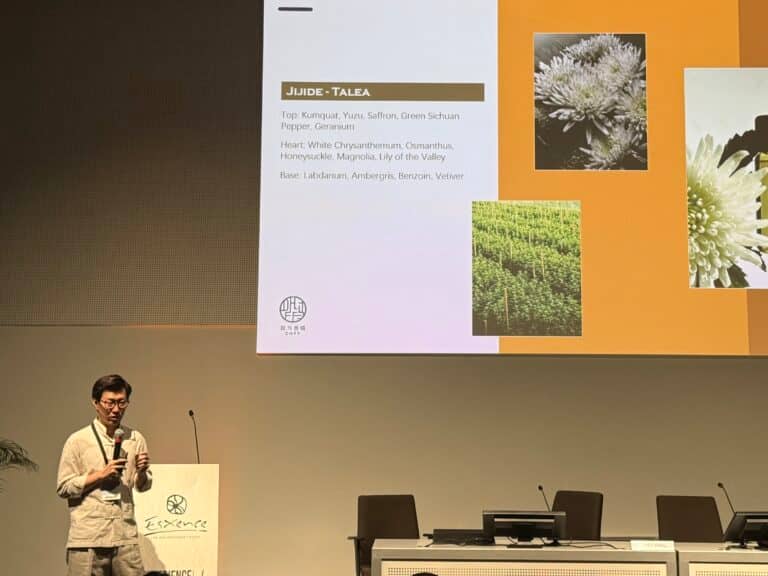
Hou sees international scientific conferences as opportunities for both recognition and collaboration. He wants Proya Cosmetics’s research team to “communicate and exchange ideas with the world’s leading scientists, learning from one another and improving together.”
The company’s research agenda has also expanded beyond mitochondrial biology.
Its 20 accepted projects at the 2026 congress covered subjects including pigmentation mechanisms, AI-assisted screening of active ingredients, and sunscreen formulation technologies.
Such research requires investment well before its commercial applications become clear.
Hou acknowledged that developing a scientific discovery into a product is a lengthy process. New ingredients and technologies must undergo testing and validation, while it often takes consumer communication to help people understand unfamiliar approaches to skincare.
These are costs that Proya Cosmetics has been willing to bear.
Building a Global Beauty Company
While Proya Cosmetics expands its scientific capabilities, Hou is also reshaping the company’s business.
Having established its position through its flagship PROYA skincare brand, the Shanghai-listed company is pursuing a broader portfolio strategy encompassing multiple brands, product categories, and international markets.
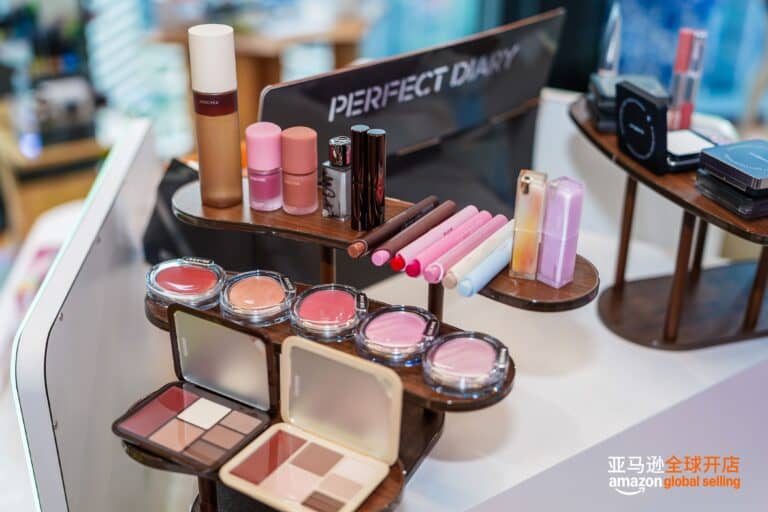
In May 2026, Proya Cosmetics increased its stake in Chinese makeup brand Flower Knows to 51 percent, gaining a controlling interest in a business known for its elaborate packaging, distinctive visual identity, and overseas presence.
The investment further diversifies a portfolio that already includes skincare, color cosmetics, and hair care brands.
The company’s international ambitions are also becoming more tangible.
In August, PROYA announced a partnership with Ulta Beauty, one of the largest beauty retailers in the United States. Products from the brand’s Advanced Firming and Original Repair collections are scheduled to launch in 400 Ulta Beauty stores and online in November.
The partnership will bring Proya Cosmetics’s flagship skincare brand into direct competition with established international prestige brands in the American market.
Hou has set an ambitious target for the coming decade.
“Within the next 10 years, we want Proya Cosmetics to become one of the world’s top 10 cosmetics companies,” he said.
He points to the development of established international beauty groups, many of which have expanded over decades through acquisitions, investments, and the creation of multiple brands. Proya Cosmetics, he believes, must pursue international growth while remaining open to opportunities to acquire and integrate new capabilities.
“We need to go out into the world, and we also need to bring others in.”
The company’s broader ambitions have influenced how it approaches research. Rather than developing technologies solely for individual products, Proya Cosmetics is building scientific capabilities that can support different brands and categories. Its research now spans fundamental skin biology, active ingredient discovery, formulation technology, and product efficacy evaluation.
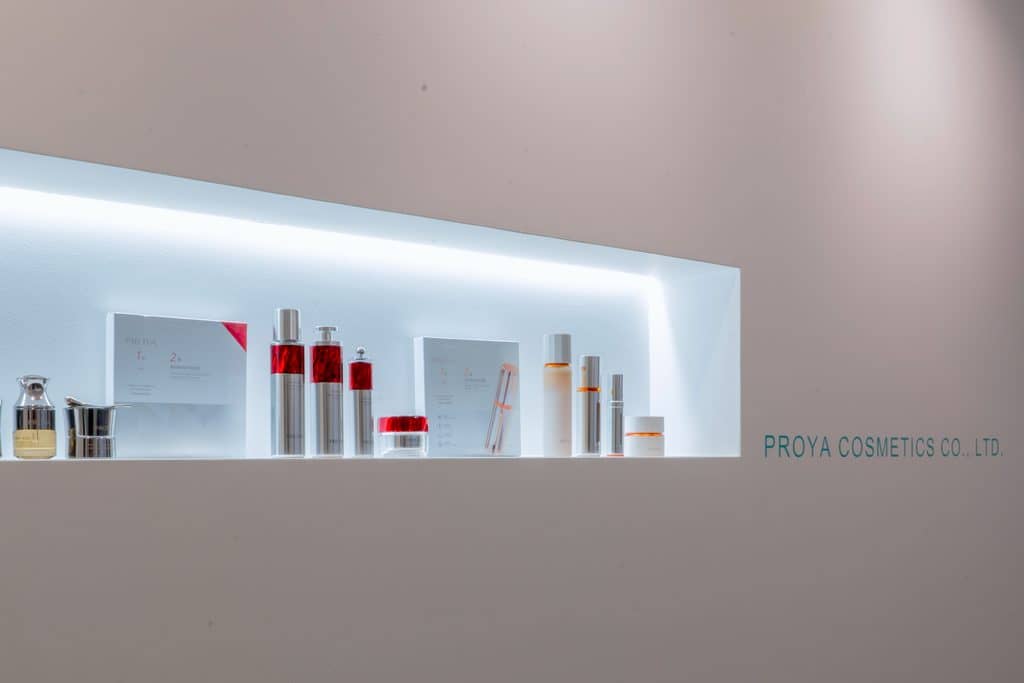
For a company seeking to operate across multiple markets and consumer segments, these capabilities will become increasingly important alongside brand development, distribution, and international partnerships.
Beyond Proya: Building an Industry
Hou’s involvement in China’s beauty industry extends well beyond his own company. He recalled how Proya Cosmetics began investing in and introducing new antioxidant and anti-aging ingredients and technologies around 2020, incorporating them into product lines including its Advanced Firming and Double Effect Brightening collections.
As the ingredients and technologies gained wider recognition, other Chinese brands began adopting similar approaches.
Hou welcomed the development.
“It also shows that we have helped advance China’s beauty industry as a whole,” he said.
He noted that introducing unfamiliar ingredients or skincare technologies required broad consumer communication. Helping consumers understand new scientific concepts demanded substantial resources, even when the benefits ultimately extended to competing companies.
Hou’s interest in industry development had already taken a more ambitious form years earlier.
Around 2015, he became involved in the development of China Beautéville, an industrial cluster in Huzhou, Zhejiang province, intended to bring together cosmetics manufacturers, ingredient suppliers, brands, and other businesses across the beauty industry.
The initiative was designed to build an integrated cosmetics ecosystem while creating opportunities for international collaboration. Hou envisioned a Chinese counterpart to Grasse, the French town renowned for its centuries-old perfume industry.
He called it the “Grasse of the East.”
Over the years, he invited industry leaders and representatives from France, Italy, Spain, Switzerland, Germany, and other countries to visit Huzhou. He also organized overseas visits for Chinese cosmetics companies, helping them establish relationships with international businesses and industry associations.
“Building a successful company while helping the entire beauty industry develop is also a responsibility and a mission,” he said. “It’s not simply about personal or corporate interests, but about contributing to the development of the industry as a whole.”
One encounter during the early development of China Beautéville remains particularly vivid in Hou’s memory.
He had invited a French industry executive to Huzhou and shared his ambition of creating a beauty manufacturing and innovation cluster modeled in part on Grasse. When the executive returned the following year, he was astonished by the progress. Factories had risen across what had recently been undeveloped land, and an extensive industrial infrastructure was taking shape. According to Hou, the visitor gave him a thumbs-up and remarked that what China had accomplished in little more than a year might have taken France twenty years.
“That is China speed,” Hou recalled.
It is a quality that has helped shape the development of China’s beauty industry, from manufacturing and supply-chain integration to product development and digital commerce.
Today, China’s ability to mobilize resources quickly is also supporting investment in more advanced scientific capabilities. Laboratories, international research partnerships, and specialist teams can be established at a pace that was once difficult for many domestic companies to imagine. Yet fundamental research demands a different kind of commitment.
When discussing the development of Proya Cosmetics’s early antioxidant and anti-aging technologies, Hou recalled how much time and money the company had spent not only developing products but also sharing the underlying science with consumers. For an entrepreneur accustomed to China’s rapid industrial development, the challenge is now to sustain that investment over a much longer period.
Seeing Is Believing
Toward the end of the interview in Perth, Hou was asked what he hoped to achieve in the future. Rather than returning to Proya Cosmetics’s international expansion plans or its ambition to become a top-ten global cosmetics company, he spoke about how China’s beauty industry is perceived overseas.
“We hope international media can present the development of China’s beauty industry from diverse and comprehensive perspectives,” he said.
For many years, international attention has focused primarily on China’s enormous consumer market, manufacturing capabilities, and fast-moving digital commerce ecosystem. Hou hopes the industry’s scientific achievements, research talent, and growing international collaborations will also become part of that conversation.
His own efforts to encourage international exchange have taken different forms over the years, from inviting overseas executives to visit China Beautéville to bringing scientists together in Hangzhou and supporting Proya Cosmetics’s participation in international research conferences.
He sees these exchanges as opportunities for international partners to develop a more direct understanding of China’s beauty industry.
“Many things have to be seen to be believed,” he said.
“You can tell someone ten thousand things, but it’s better to invite them to come and see for themselves.”