
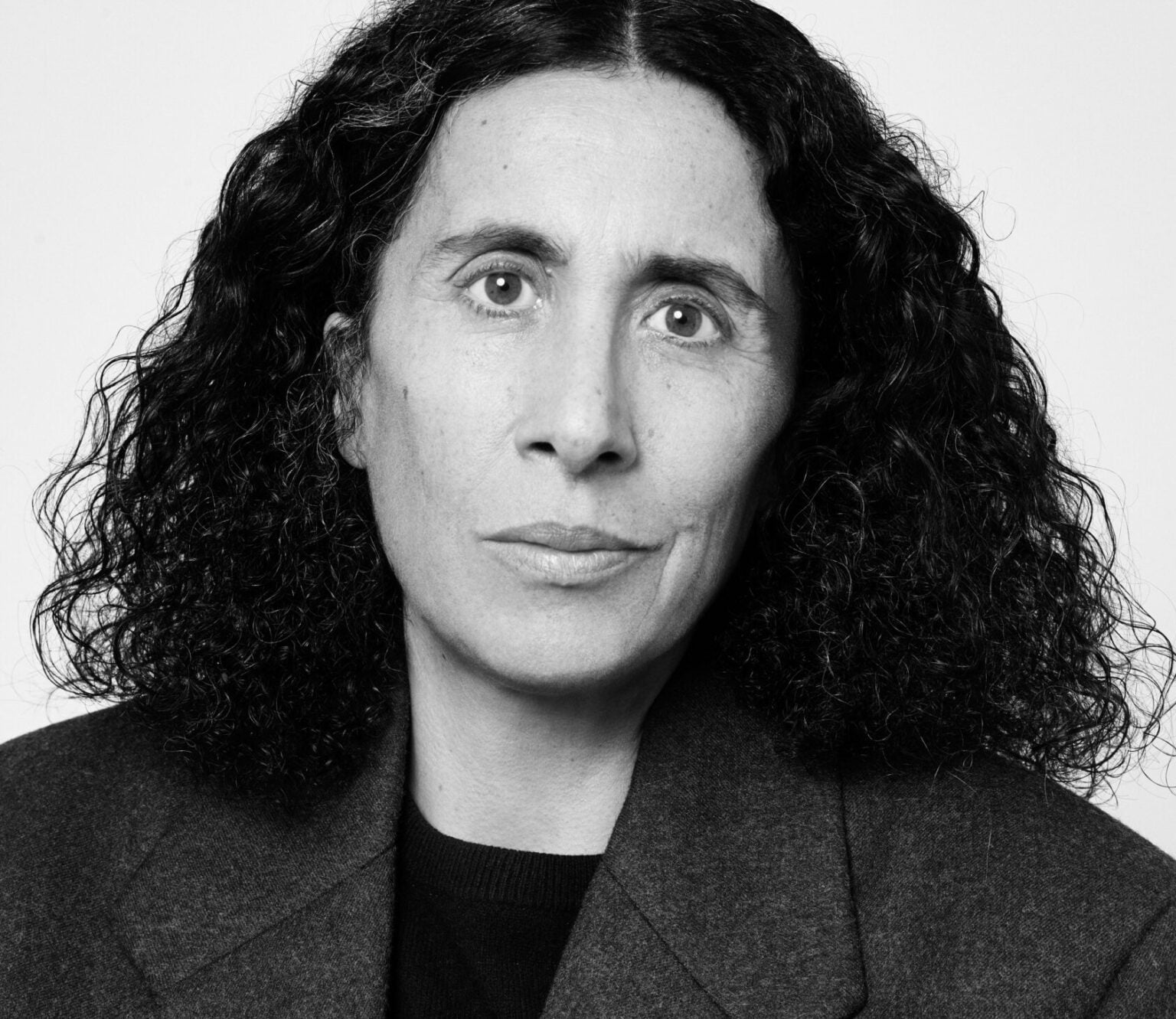
After decades of championing emerging designers, Sara Sozzani Maino believes fashion’s future depends on more than discovering new talent. During this year’s Fashion Asia Hong Kong, she reflects on the changing meaning of craftsmanship, the importance of cultural exchange and why investing in the next generation matters more than ever.
For Sara Sozzani Maino, discovering talent has never been confined to the established fashion capitals. Over the past three decades, she has travelled across continents in search of emerging designers, building connections between creative communities often overlooked by the wider industry. Her conviction remains straightforward: talent exists everywhere, but finding it requires curiosity and the willingness to look beyond familiar places.
“Talent is everywhere, but you have to search for it and seek it, not just on a screen,” she tells Jingzhi Chronicle.
That philosophy has shaped a career dedicated to supporting young creatives. Having spent decades at Vogue Italia, where she co-founded Vogue Talents with Franca Sozzani in 2009, Sozzani Maino is the Creative Director of Fondazione Sozzani and International New Talent and Brands Ambassador for Camera Nazionale della Moda Italiana (CNMI).
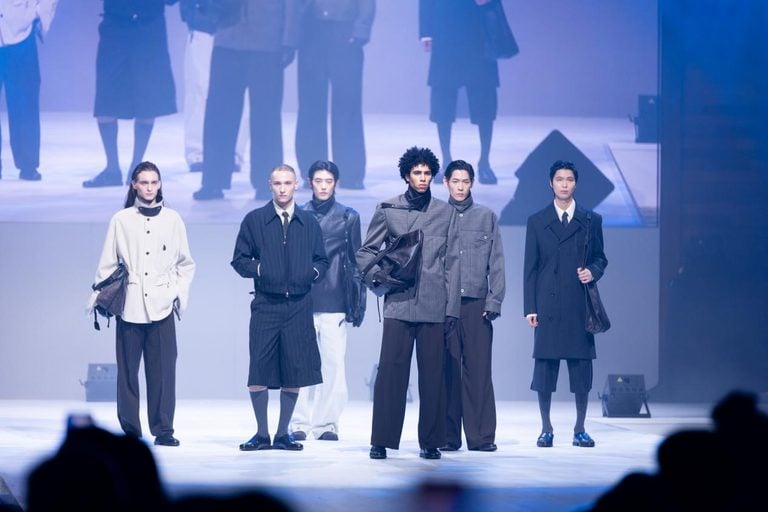
Her latest curatorial project brought her to Hong Kong, where Future Threads: Menswear’s New Waves Between Italy and Hong Kong presented the work of five emerging designers from Italy and five from Hong Kong. Organized by Hong Kong Design Centre in collaboration with CNMI, the exhibition explored contemporary menswear through the theme of Inflection, examining how a new generation is challenging conventions while drawing on distinct cultural traditions.
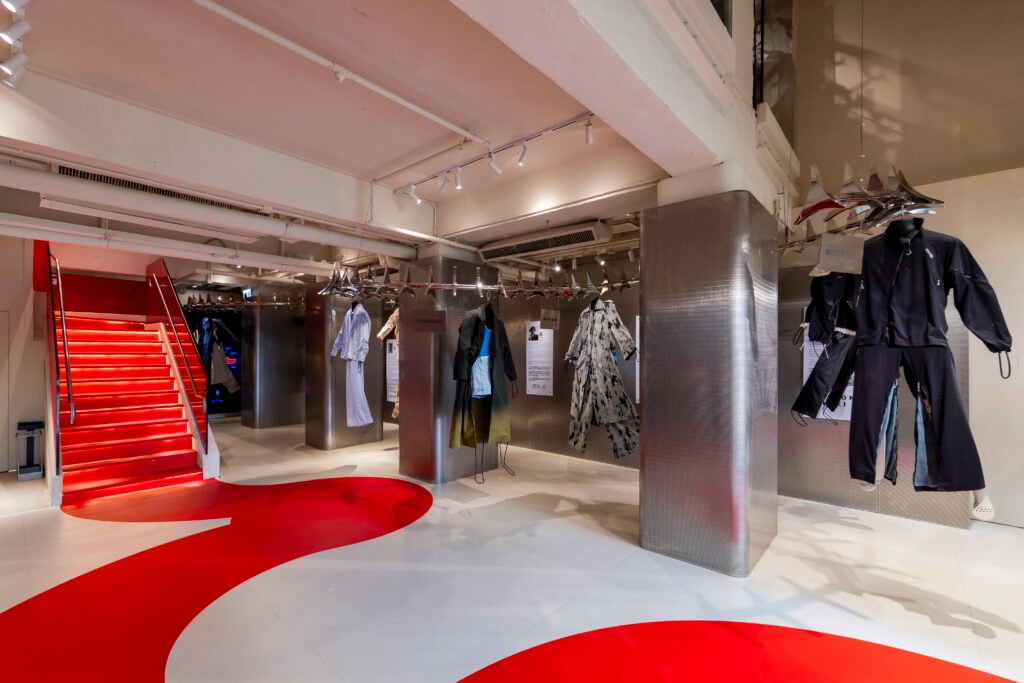
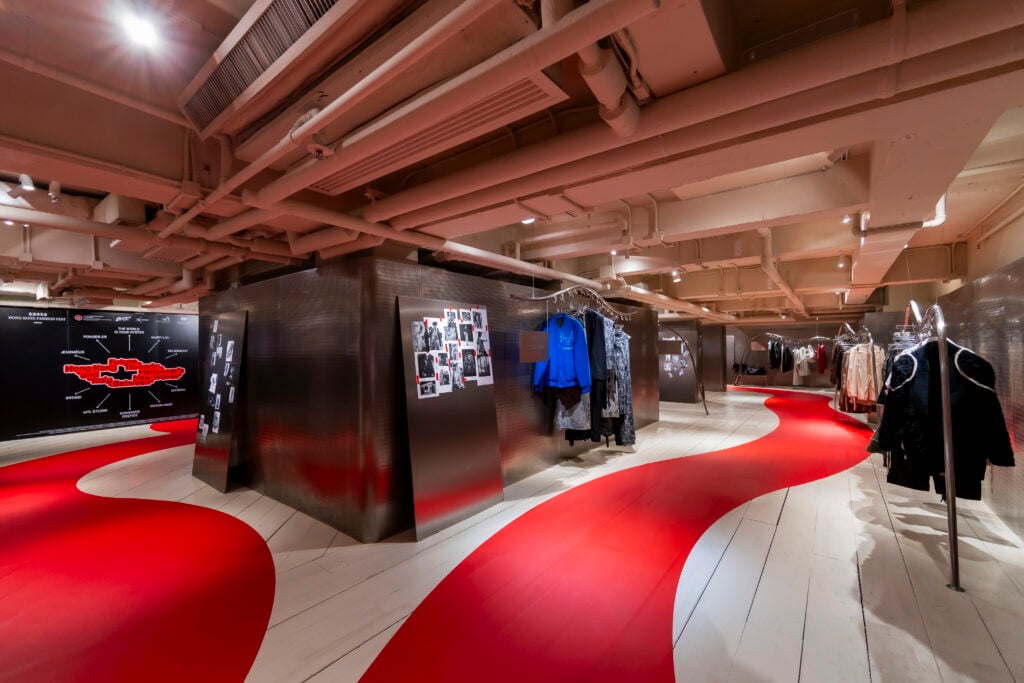
For Sozzani Maino, however, the significance of the exhibition extends beyond the collections themselves. Bringing designers from different creative ecosystems together creates opportunities for relationships and exchanges that may continue long after the event concludes.
“Platforms such as this are important because they bring together journalists, buyers and different audiences, creating broader support and visibility,” she explains. “But it’s also very important to give continuity.” She hopes the collaboration will continue, potentially bringing participating Hong Kong designers to Milan.
Finding Talent Beyond the Familiar
After years of evaluating young designers, Sozzani Maino resists defining talent through a fixed set of aesthetic preferences. Personal taste, she argues, is hardly an adequate starting point for discovering something genuinely different.
“It’s not about taste, for sure, because that wouldn’t be the best way to begin,” she says. “What I look for is when there is a story behind it. It’s not just about clothing. Especially right now, there can also be social impact, and there has to be value.”
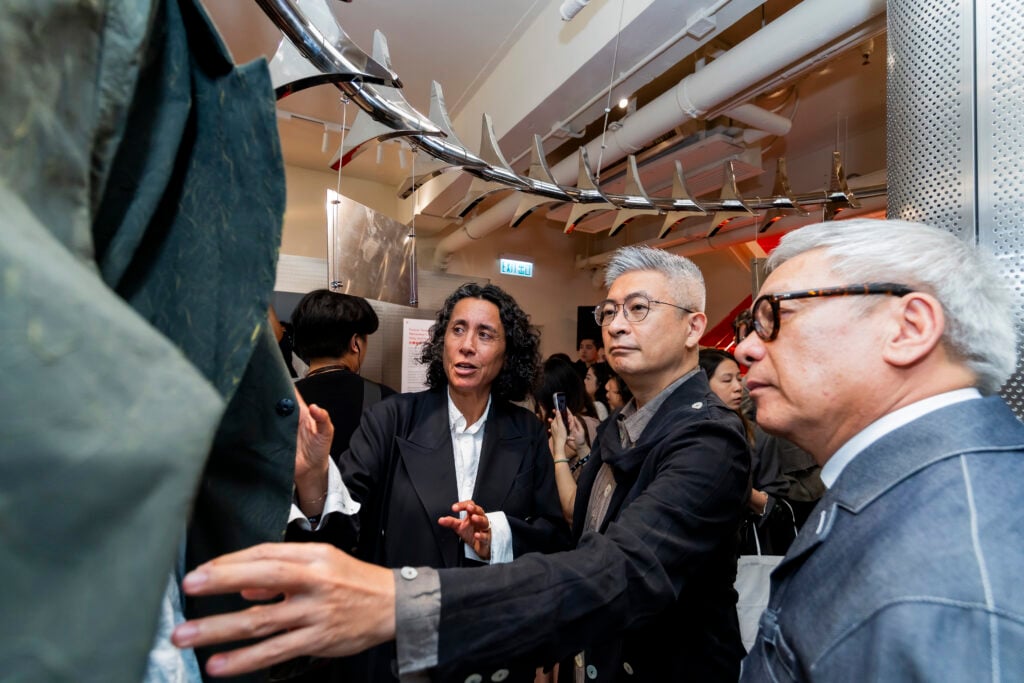
Quality remains essential, but she is equally interested in a designer’s motivations, cultural references and the ideas that inform their work. Among the ten designers selected for Future Threads, she identifies a shared concern with responsibility, although their approaches differ considerably. For some, responsibility is reflected in production practices; for others, it involves social inclusion, political expression or individual rights.
“They each have a story behind their work, whether it’s personal or something broader,” she explains. “They want their projects to have an impact, not just to sell and become visible.”
The exhibition offered an opportunity to observe how these values take shape across different design traditions.
“With Italian designers, you can see a very meticulous way of making clothes because of the tradition of craft and tailoring,” she says. “With Hong Kong designers, you see how strongly culture, heritage and roots influence their work. These are two different ways of approaching design, but eventually they come together.”
One example is Italian designer Francesco Saverio Matera, whose approach to outerwear incorporates adaptive design for people with different physical abilities. A former football player, Matera draws on his sporting background to reconsider how garments interact with the body.
“He wants to create clothing that everyone can wear, whether they have different physical abilities or not,” Sozzani Maino explains. “It’s about inclusion, and that is also a social value.”
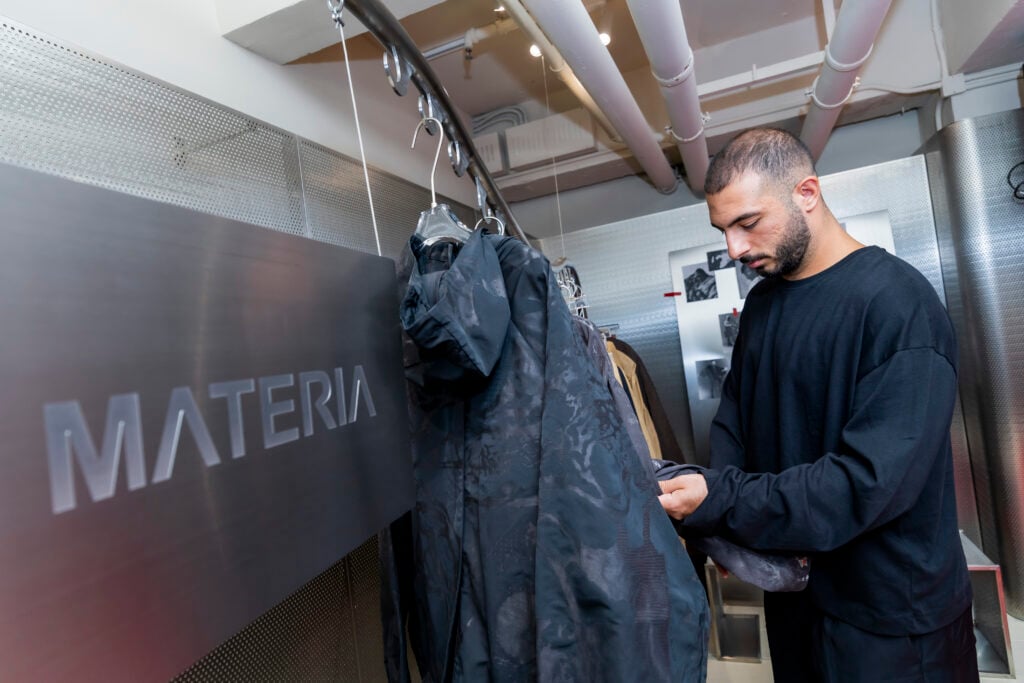
Such projects reflect a broader shift in menswear. While traditional tailoring remains central to Italian fashion, younger designers are increasingly willing to challenge established silhouettes and conventional ideas of masculinity. Influences now extend beyond the familiar relationship between formalwear and streetwear, drawing on sport, music, K-pop and contemporary youth culture.
“There is a much freer spirit of creativity,” she observes. “They are not afraid to see the silhouette of a man in a different way. There are no more barriers. The new generation feels free to create menswear as they want to see it, without having to fit into boxes.”
For Sozzani Maino, these different expressions of creativity also demonstrate why cross-cultural exchange matters. Beyond the formal programme, she imagines designers learning from one another through conversations, sharing techniques and experimenting with unfamiliar ideas.
“I think sharing is really important because it’s how people learn new things,” she says.
She sees particular potential for Hong Kong to strengthen its position in the international fashion landscape. While the city has long been recognised by European businesses as a centre for trade and finance, its creative identity has received less attention. Initiatives such as Future Threads, she believes, can help broaden that perception and give international audiences another reason to discover the city’s design talent.
“Creativity and talent are everywhere,” she says. “I think Hong Kong can become a central hub.”
The Value of Time and Craftsmanship
For Sozzani Maino, one of the most meaningful developments among emerging designers is their renewed engagement with craftsmanship. Yet this return to artisanal practices is not necessarily driven by nostalgia. It often begins with the practical realities of building an independent label.
“When a designer starts, it’s not easy to produce big numbers, and they don’t necessarily want to,” she explains. “So they prefer to do things slowly, sometimes working with artisans to make just ten pieces. It comes naturally from the need to manage costs, but at the same time, they want to give value to the clothing.”
This approach is helping bring renewed attention to artisanal skills that have struggled to survive within an increasingly accelerated fashion system. For Sozzani Maino, the value of craftsmanship lies not simply in rarity, but in the time, expertise and human labour behind an object.
“The fact of having something that not everyone has is not because it’s too expensive, but because it takes time,” she says. “The value of time, of slowness, becomes the real value.”
It also informs her understanding of luxury.
“I think luxury is not about the cost, but about the time, the quality,” she says.
For Sozzani Maino, the questions that follow are equally important: who made the garment, how was it produced, and can its origins be traced? The value of a piece should reflect not only its design or the label attached to it, but also the skills, labour and fair compensation of the people involved in making it.
The discussion carries particular relevance in China, where renewed interest in intangible cultural heritage has encouraged designers and brands to incorporate traditional techniques into contemporary products. Yet such collaborations also raise questions about whether the artisans themselves receive sufficient recognition and benefit.
When asked how the industry might create more meaningful relationships with craftspeople, Sozzani Maino emphasises the importance of attribution and visibility.
“Many people use artisans, but many people don’t know who they are,” she says. “We need to give visibility and value to these people, to tell the story of the man or woman who actually made something.”
For her, exhibitions and other creative platforms have a role to play not only in showcasing the final product, but also in helping younger generations understand the people and knowledge behind it.
Beyond Visibility: Investing in the Next Generation
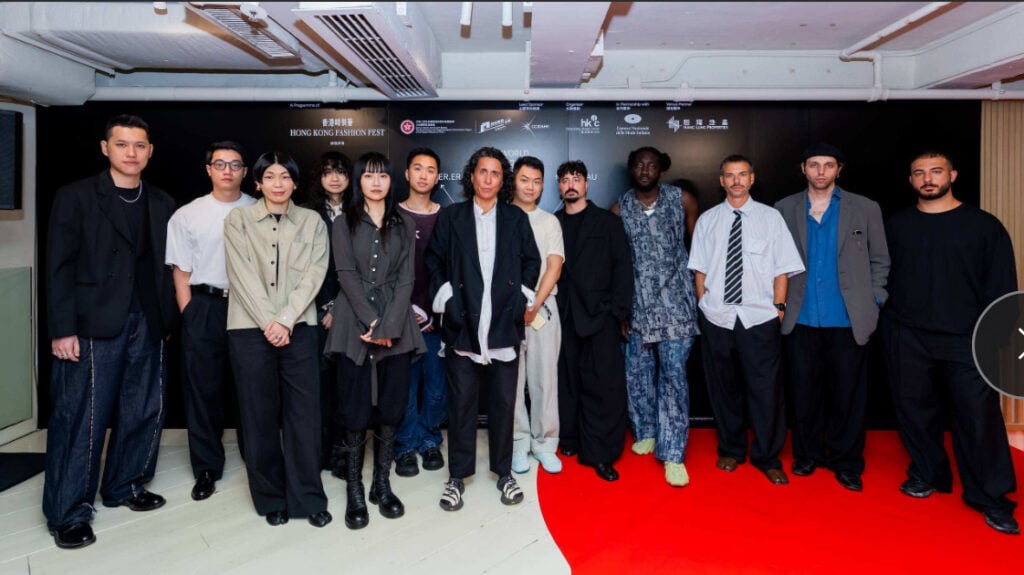
While Sozzani Maino has spent much of her career creating opportunities for emerging talent, she recognises that exposure alone is insufficient to build a lasting career. A successful exhibition or a moment of industry attention can open doors, but young designers must also learn how to build relationships and navigate the opportunities that follow.
Her advice is practical: remain curious, ask questions and make the most of every encounter.
“Never be afraid to ask,” she says. “If you see someone who can help you, ask. The worst-case scenario is that they say no.”
At the same time, she cautions against allowing commercial pressures to dilute the principles that first defined a designer’s work.
“Stick to your values and your vision,” she says. “If you begin to compromise on your values, it’s easy to get lost.”
The responsibility, however, cannot rest entirely with young creatives. Fashion institutions, established brands and industry platforms must also provide sustained support beyond awards, exhibitions and temporary visibility.
“There have been changes, but still not enough,” she says. “Fashion weeks and brands have to look at the new generation more and more because they are our future. If we don’t invest in them, who do we invest in?”
This commitment increasingly informs her work at Fondazione Sozzani, where projects span fashion, design, photography, education and social responsibility. The foundation’s Sozzani Award, which this year focuses on women in design and craft, reflects her continued interest in supporting creative voices across disciplines.
Looking ahead, Sozzani Maino sees education and awareness becoming even more central to her work. As creative industries confront the rapid development of artificial intelligence, she believes access to technology alone cannot replace the knowledge and cultural understanding needed to use it meaningfully.
“AI is still a machine,” she says. “If you don’t have education, heritage and values, what are you going to ask AI?”
It is a question that brings the conversation back to the principles underlying much of her career. Discovering new talent matters, but so does ensuring that the next generation has access to the knowledge, relationships and cultural foundations needed to develop its own voice.
For Sozzani Maino, that responsibility ultimately extends beyond any single institution or generation.
“We’re all passing through this life, and someone else will come,” she says. “We have to leave something behind when we’re no longer here.”