
A bi-weekly snapshot of the China consumer market, tracking financial results, retail closures, strategic investments, and cross-border M&A.
This week’s developments underscore a more selective phase in the China consumer market. Chanel returned to growth, Amer Sports delivered another standout quarter, and Swire Properties posted double-digit gains across its mainland retail portfolio. At the same time, Galeries Lafayette confirmed the closure of its Beijing store after 12 years, while The Estée Lauder Companies reached a $210 million settlement tied to the daigou crackdown. The message is increasingly clear: China is no longer a market of broad-based growth, but one defined by operational precision, strategic positioning, and long-term investment.
Financial Results: Luxury, Sportswear, and Retail
Chanel returned to growth in fiscal 2025. Global revenue reached $19.3 billion, up 2 percent, with operating profit of $4.7 billion, up 5.2 percent. The Asia-Pacific market dipped 0.8 percent due to weaker sentiment in China. But management revealed that China returned to expansion in the second half of 2025, with continued improvement into early 2026. Chanel is not waiting. The brand plans to reopen its Shanghai boutique, add five new beauty stores, and open a second private salon. In a contracting industry, Chanel is expanding.
Amer Sports had a standout first quarter of 2026. Revenue surged 32 percent to $1.95 billion, with operating profit jumping 50 percent to $321 million. Greater China led the way: revenue rose 44.5 percent to $645 million, leading both in scale and growth. Arc’teryx, Salomon, and Wilson are all growing in sync. The company has raised its full-year guidance. China is no longer just a growth engine for Amer Sports — it is becoming a global operating template.
Swire Properties also delivered. First-quarter retail performance in mainland China was strong across the board. Shanghai HKRI Taikoo Hui surged 81.5 percent year-on-year. Beijing Sanlitun Taikoo Li jumped 56.2 percent. Guangzhou and Chengdu grew 17.6 percent and 18.4 percent, respectively. Even Hong Kong’s Pacific Place grew 13.9 percent. Premium retail destinations are leading the recovery.
Retail Reality Check: Expansion and Contraction
This week offers two contrasting data points on physical presence in China.
On the expansion side, Swire’s numbers show that the right locations are thriving. Brand mix adjustments and luxury event marketing are driving double-digit growth at top-tier malls.
On the contraction side, Galeries Lafayette will close its Beijing store on May 27, 2026, after 12 years of operation. The 47,000-square-meter space opened in 2013. After the closure, the French department store will have just two locations left in mainland China: Shanghai and Shenzhen. The takeaway? Physical retail in China is not dead — but it is unforgiving. Legacy and scale no longer guarantee survival.

The Daigou Aftermath: A Costly Blind Spot
The aftershocks of China’s daigou crackdown continue to reverberate across the beauty industry. The Estée Lauder Companies has agreed to pay $210 million to settle a shareholder class action lawsuit related to its failure to disclose the impact of China’s daigou crackdown. The preliminary settlement was filed on May 7; the company admitted no wrongdoing.
The original 2023 lawsuit alleged that Estée Lauder over-relied on daigou channels, particularly in Hainan, during the pandemic. When the government crackdown began in 2022, the company failed to disclose the impact, leading to a 19 percent stock drop and an $8.7 billion loss in market capitalization. The company has already booked an $84 million net loss provision. The daigou era is over. Brands that have not diversified their China strategies are now paying the price.
Investment and M&A: Small Bets, Big Signals
Three deals this week point to very different strategic logics in beauty and fashion.
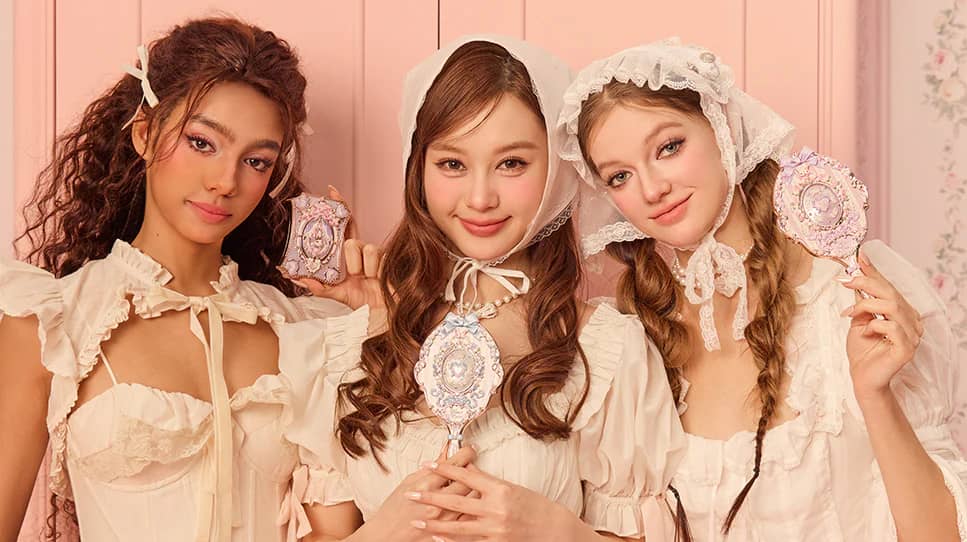
First, a major consolidation play. Proya, China’s largest domestic beauty group with annual revenue of RMB 10.6 billion in 2025, has increased its stake in Flower Knows, a girly aesthetics makeup brand, to 51 percent with a RMB 351 million investment, bringing the brand into its consolidated financial statements. Flower Knows generated RMB 1.73 billion in revenue in 2025, with net profit of RMB 280 million, and RMB 675 million in the first quarter of 2026 alone. The deal values Flower Knows at RMB 2.83 billion — a 596 percent premium. The rationale is twofold: Flower Knows fills a gap in Proya’s portfolio in the “girly aesthetics” color cosmetics segment, and with 11.5 percent of its sales coming from overseas, the acquisition also supports Proya’s international expansion strategy.
Second, a small but strategic bet. Eternal Group has invested RMB 97.5 million for a 15 percent stake in domestic aromatherapy skincare brand AromeManpo. This is Eternal’s first investment since it went public. The funds will be used for offline store expansion, basic research, and overseas development starting with Hong Kong. AromeManpo’s GMV exceeded RMB 600 million in 2025. Eternal sees strong growth potential in the aromatherapy skincare segment.

AromeManpo, an emerging Chinese beauty brand, lands nearly RMB 100 million in funding. Image: AromeManpo
Third, a rumored cross-border move. SHEIN is reportedly planning to acquire US sustainable apparel brand Everlane for $100 million. According to Puck News, L Catterton, the LVMH-backed fund, has approved the sale. Neither party has confirmed the deal. Everlane, once a darling of “radical transparency,” has struggled in recent years. Analysts suggest the acquisition would give SHEIN access to Western brand IP and consumer data. But for Everlane, a brand built on environmental ethics, a sale to SHEIN could seriously damage its credibility.
Market Developments: Data, Regulation, and Cultural Depth
On the macro front, China is now the world’s largest cosmetics consumption market. In 2025, total cosmetics imports and exports reached RMB 171.6 billion, up 2.7 percent year-on-year. Imports accounted for RMB 115.7 billion, exports RMB 55.9 billion.
On the regulatory front, the Chinese General Administration of Customs has launched a pilot program for electronic labels on imported cosmetics in Shanghai. New regulations take effect on December 1, 2026. QR-code labels will enable traceability, anti-counterfeiting checks, and dynamic updates – a meaningful operational change for beauty brands.
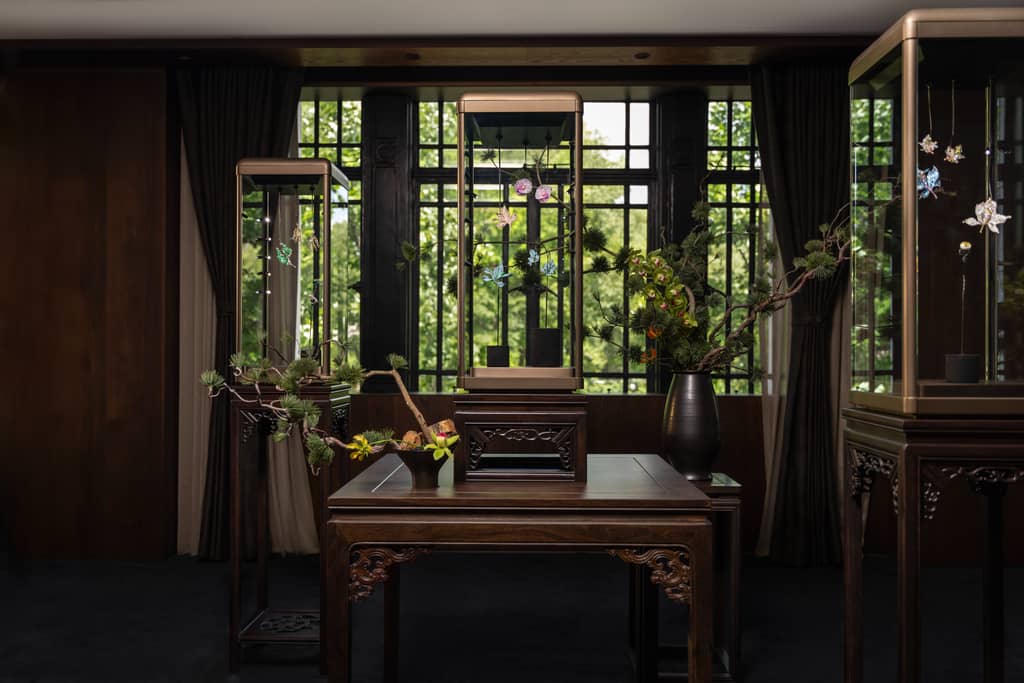
On the cultural front, CINDY CHAO The Art Jewel has reopened its annual art crossover project at its Shanghai Maison. Titled “The Sculptural Garden,” the installation blends Eastern garden aesthetics into spatial narrative, collaborating with international artists including Tom Postma.
Conclusion: China Consumer Market Remains Strategically Important
This week’s developments reflect a market entering a more disciplined phase. Prime retail continues to outperform, leading brands are doubling down on China, and strategic investments remain active. But Galeries Lafayette’s closure and The Estée Lauder Companies’ settlement also highlight a harsher reality: legacy positioning and past momentum are no longer enough. For brands with long-term vision, the China consumer market remains strategically important, but the days of easy wins are gone. In today’s China consumer market, resilience increasingly depends on operational discipline, differentiated positioning, and long-term commitment.