As China’s beauty market shifts from volatility toward more rational growth, L’Oréal is recalibrating how it defines leadership in the AI era.
At its 2025/2026 Development Strategy Communication Meeting, the group outlined a strategy centered on AI, local innovation, and long-term ecosystem investment — signaling how the beauty giant intends to compete in a market increasingly defined by quality rather than scale.
The larger question facing L’Oréal is increasingly clear: as China’s beauty market shifts from a race for scale to one defined by quality, and as AI reshapes the relationship between consumers and brands, how does the company maintain its leadership position?
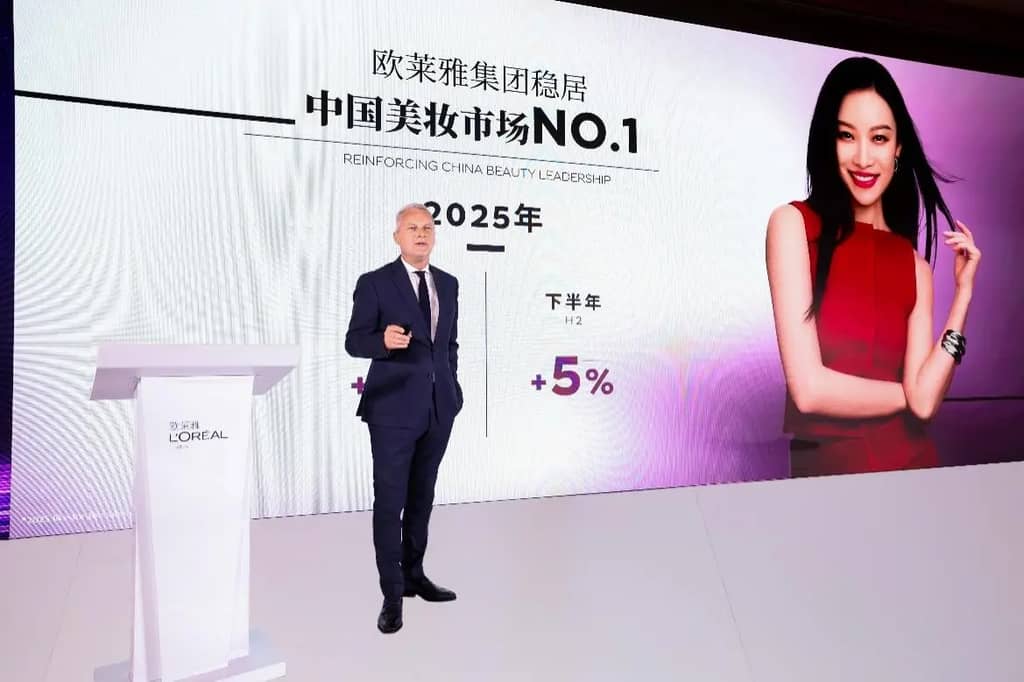
Recent results suggest the strategy is holding. L’Oréal reported first-quarter 2026 sales of €12.15 billion, continuing to outperform the broader global beauty market. In China, the group delivered mid-to-high single-digit growth, remaining ahead of the market’s recovery cycle.
In an industry still navigating adjustment, that performance matters. But the more revealing story is not simply growth itself — it is the structure supporting it.
A Balanced Growth Engine
L’Oréal’s resilience in China comes partly from the balance of its portfolio. Its four divisions — spanning luxury beauty, dermatological skincare, consumer products, and professional haircare — allow the group to address increasingly fragmented demand across both mass and premium segments.
The same logic shapes its channel strategy. While e-commerce traffic growth has slowed, L’Oréal continues expanding offline, adding more than 150 stores over the past year while extending its consumer-products network across more than 1,700 Chinese cities. The result is a more balanced ecosystem combining digital efficiency with physical experience and trust.
If this explains L’Oréal’s present, the more important signal from the briefing was how the group defines its future.
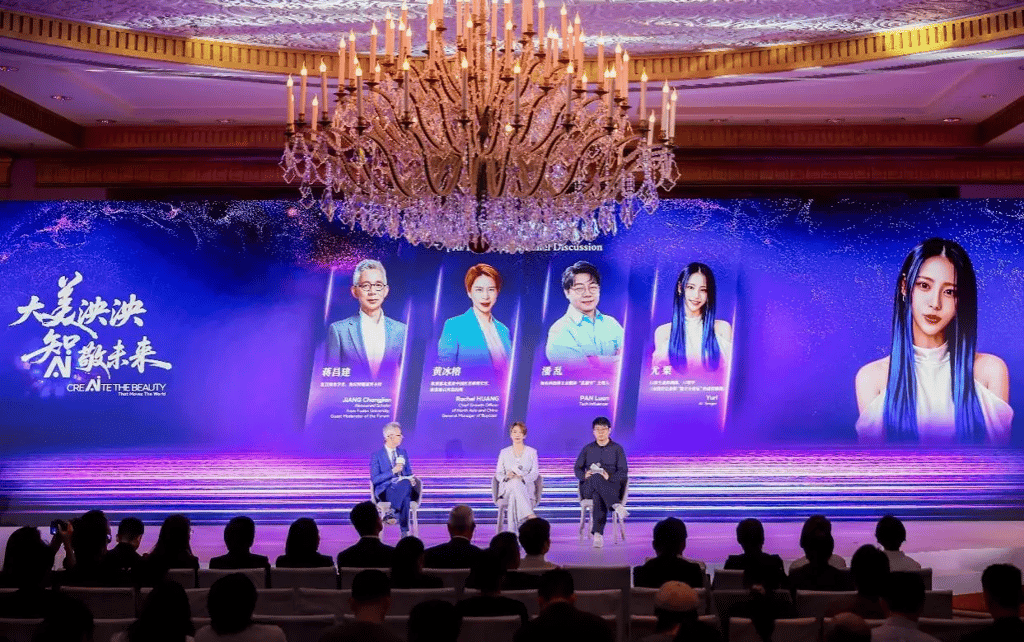
At the center of that strategy is what L’Oréal calls “AI for Beauty.”
AI Should Serve Beauty, Not Replace It
In recent years, AI has expanded across nearly every layer of the beauty industry — from skin analysis and recommendation systems to R&D, content production, and operations. AI itself is no longer the differentiator.
For L’Oréal, the bigger question is what remains distinctly human.
“AI for Beauty” is less a technology slogan than a strategic principle: AI should deepen the relationship between consumers and brands rather than reduce beauty to pure efficiency.
That thinking closely reflects L’Oréal’s view of today’s Chinese consumer. The group argues that consumers have entered a more mature phase — one that still values efficacy and price, but increasingly also seeks emotion, identity, and experience.
As a result, the old growth model built around hero products and traffic-driven visibility is becoming less effective. Brands are now judged not only by performance, but by their ability to create trust, relevance, and emotional connection over time.
Against this backdrop, L’Oréal is building its strategy around four pillars: brand, category, channel, and experience. The group is investing in emerging segments such as longevity science, high-end fragrance, and specialized haircare, while expanding omnichannel reach and strengthening emotional connection through culture and brand storytelling.
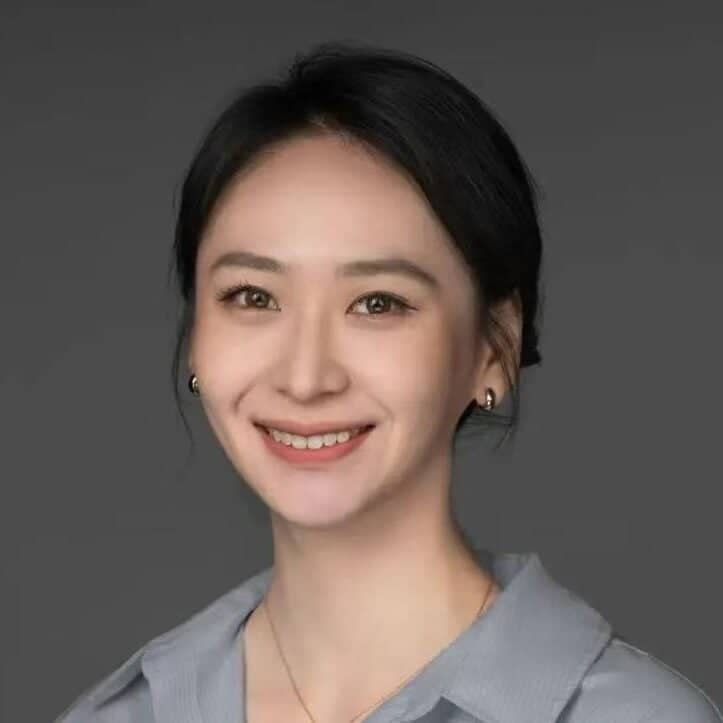
With more than 70% of Chinese consumers now using AI during the decision-making process, according to Fabrice Megarbane, President of North Asia Zone and CEO of L’Oréal China, AI is becoming an increasingly important layer within that strategy — though not necessarily its center.
China’s Role Is Changing
A closer look at L’Oréal’s strategy reveals a broader shift in how the group views China within its global system. The market is no longer positioned simply as a source of scale, but increasingly as a source of innovation.
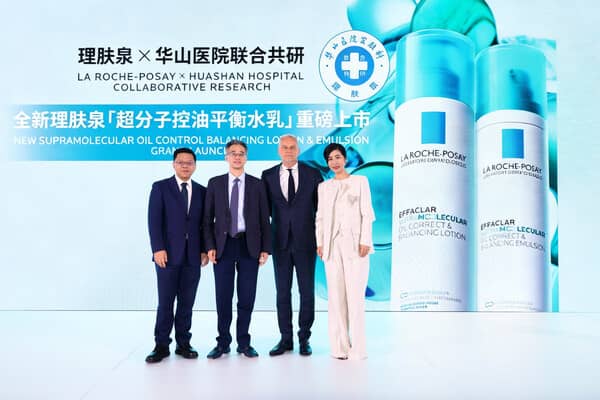
At the briefing, L’Oréal introduced a new La Roche-Posay product developed with the dermatology department of Huashan Hospital and launched globally for the first time. Built around skin concerns specific to Chinese consumers, the product reflects how local research is beginning to shape the group’s international pipeline.
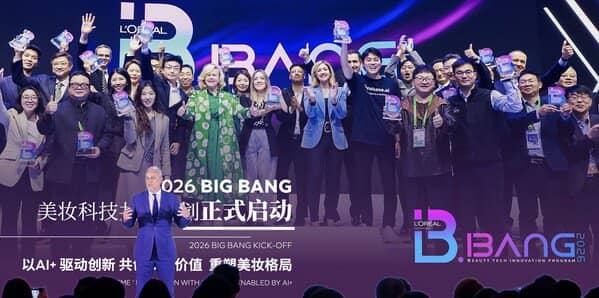
The shift is also visible operationally. L’Oréal’s Suzhou facility has become the company’s largest production base worldwide, while its Nantong Intelligent Fulfillment Center is designed to strengthen supply-chain and e-commerce responsiveness. At the same time, initiatives such as the BIG BANG Beauty Tech Innovation Challenge connect local startups and technology teams more directly into L’Oréal’s broader innovation ecosystem.
Taken together, these investments suggest that L’Oréal’s long-term commitment to China is no longer defined only by market opportunity, but by the strategic role the country increasingly plays in the group’s global innovation network.
Beyond Technology: Why Humanity Still Matters
Notably, L’Oréal’s long-term strategy is not built entirely around technology. Alongside investment in AI, R&D, and operations, the group continues expanding programs tied to women’s empowerment, youth development, and sustainability.
One example is its upgraded “For Girls in Science” initiative, under which L’Oréal China will invest RMB 10 million over five years to support female talent in science and technology.
In the short term, these initiatives may not translate directly into financial performance. But in an industry shaped as much by emotion and cultural meaning as by efficacy, such investments can become an important source of long-term trust and relevance.
As China’s beauty market enters a more rational phase of growth, L’Oréal is betting that long-term leadership will depend not only on technology, but on its ability to combine innovation, cultural relevance, and human connection.