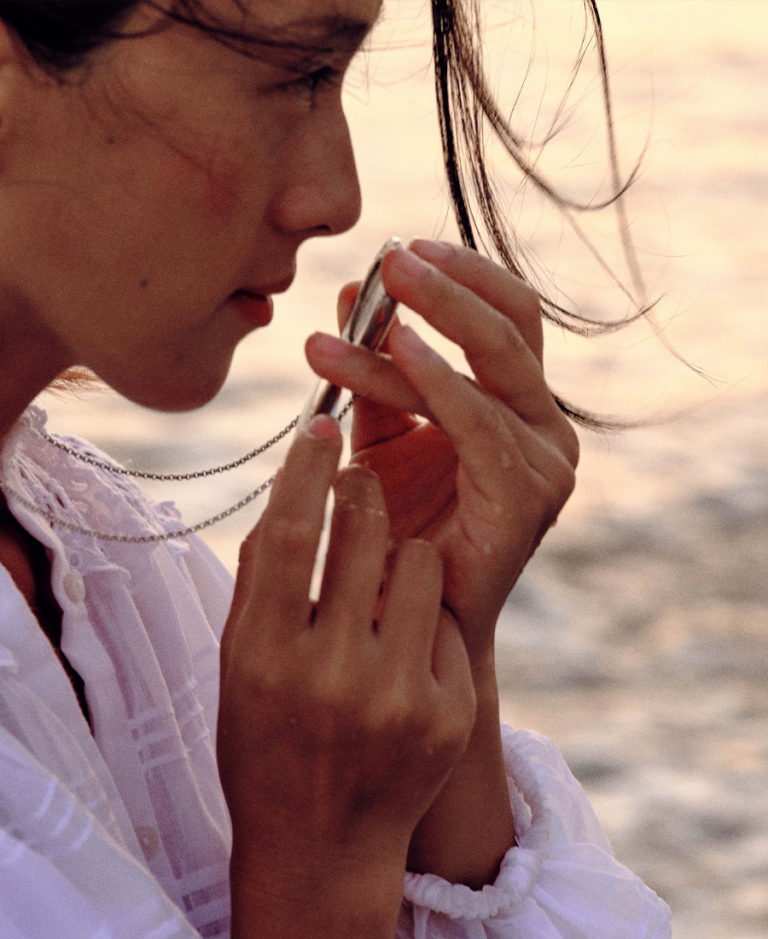

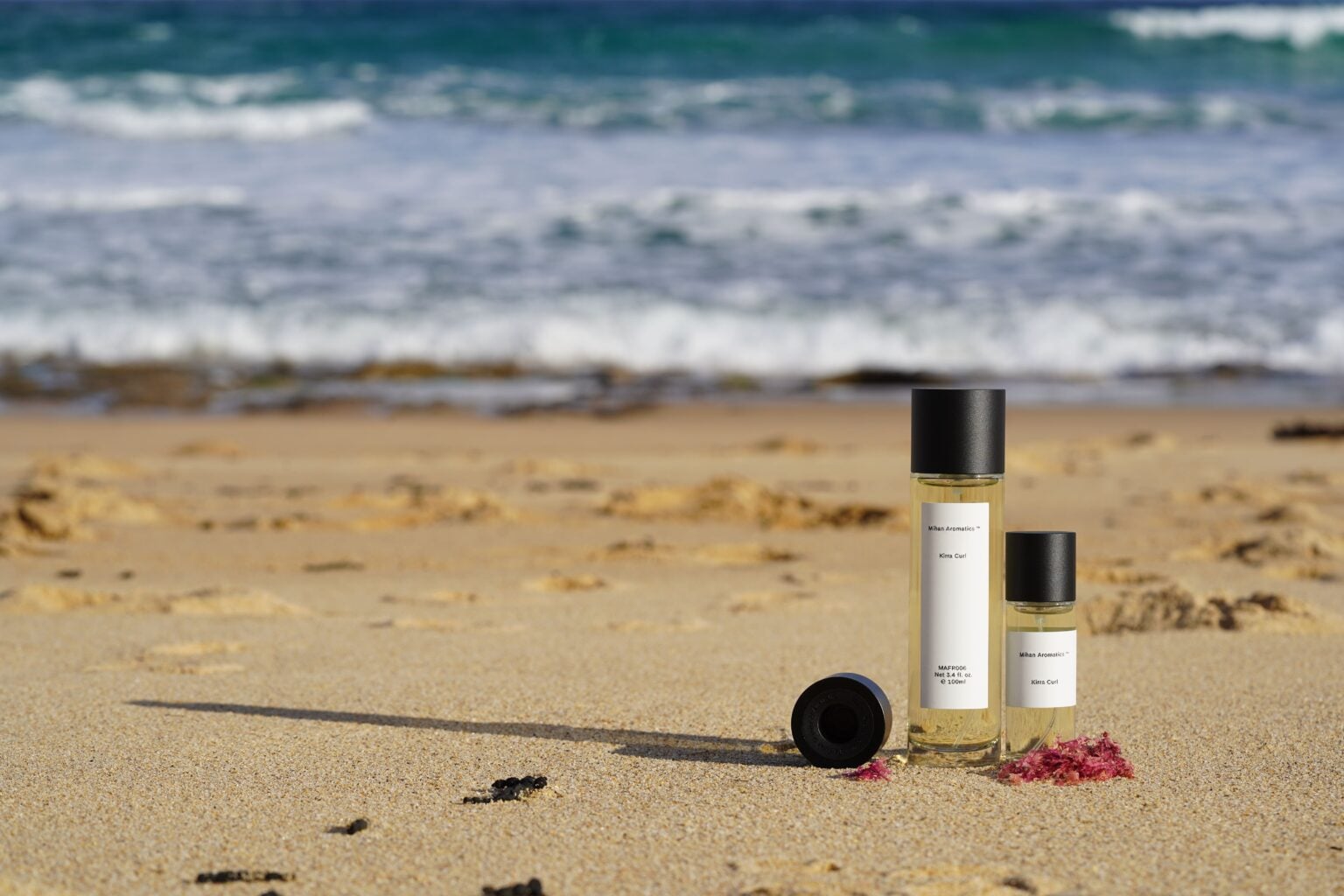
Founded by Joshua Mihan and Julia Brown, the Australian parfum house transforms homeland, family legacy, and intimate memory into poetic, genderless scents. After making its China debut at Notes Shanghai, Mihan Aromatics is finding a new audience for a fragrance language rooted in Australia but emotionally universal.
When Joshua Mihan and Julia Brown speak about fragrance, they sound less like founders explaining a product than poets tracing the contours of a feeling.
They speak of afternoon light, rain falling on a hot dry plain, the ease of a Sunday beside a public pool, and the strange ache of being far from home. Founded in 2017 after the couple returned from London to lay down roots in Melbourne, Australia, Mihan Aromatics grew out of that longing. Their time away had sharpened their attachment to the sensory memories of home: the light, the weather, the landscapes, and the emotional textures of the places that had shaped them.
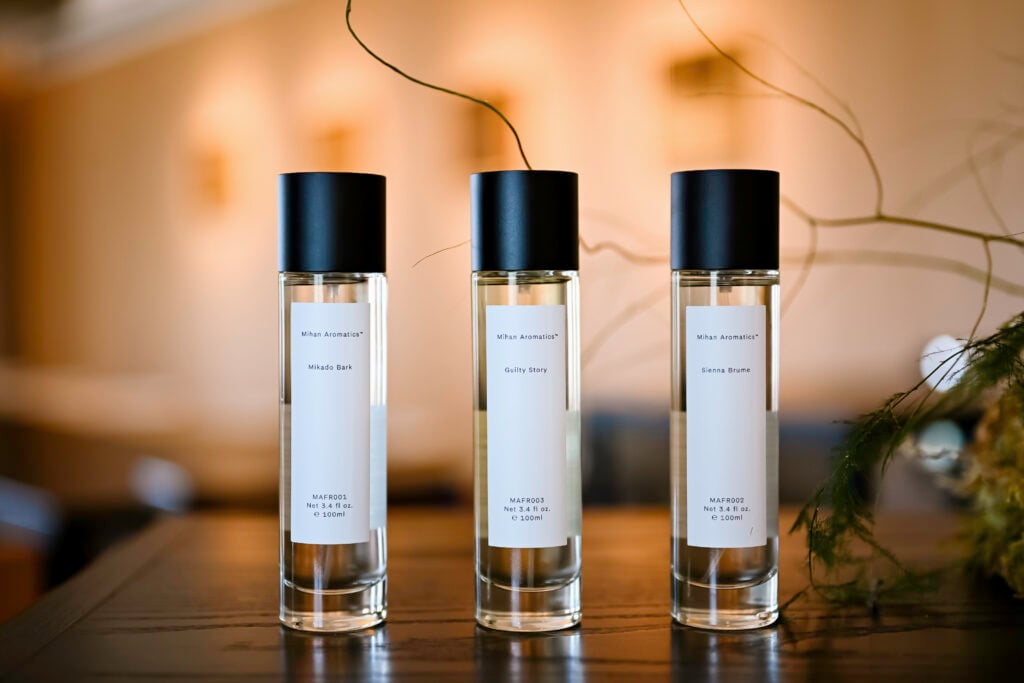
At the same time, the two founders were approaching scent from different worlds. Brown, then working as a neurophysiotherapist, had observed how a single inhalation could reach patients in ways that other forms of communication could not. Mihan was immersed in barbershop culture, where scent was tied to ritual, presence, and care. Together, they began building what they describe not as a label, but as a house: small batch, hand filled, genderless in creation, poetic in language, and precise in chemistry.
In that sense, Mihan Aromatics is not only a fragrance brand. It is a collection of love letters written in scent.
A Love Letter to Australia
The first love letter was to Australia.
Rather than approaching Australia through its most recognizable images, Mihan Aromatics begins with the country as it is remembered from within: heat on skin, rain after dryness, the communal ease of a public pool in summer, and the hush of old-growth bush at first light. It is Australia as atmosphere rather than emblem, built from the smaller, more intimate traces that remain in memory after one has left.


Its fragrances are built from place, but also from distance — from what happens when home becomes something remembered rather than simply lived in every day. That sense of displacement gives the brand its tenderness. Australia, in Mihan’s world, is not an image to be consumed. It is a homeland to be missed, honored, reimagined, and held close.
The name itself deepens this feeling. “Mihan” suggests origin, belonging, and home. For the founders, it sits at the center of the brand not as decoration but as a promise: that those who wear the parfums are invited into a sense of kinship and emotional belonging.
Writing Memory Before Formula
Mihan’s creative process begins not with a trend, a commercial brief, or even a raw material. It begins with a moment.
A texture. A light. A temperature. A feeling that refuses to leave. From there, the founders develop what they call a character, giving that character four words that describe its psychology. This becomes an internal compass for the fragrance. Mood boards, colors, images, and music often follow. Only after the emotional world is fully formed do they begin choosing notes.
“The chemistry comes last. The story always comes first,” the founders explain.
That sequencing reveals much about Mihan. The brand’s fragrances are not built merely to smell beautiful. They are constructed like emotional scenes. Each parfum has a world around it, a character inside it, and a memory beneath it.
This is why the founders’ language feels so central to the product experience. Their poetic sensibility is not a layer added after formulation. It is the method of formulation itself.
Sienna Brume and the Memory of Summer
Among Mihan’s creations, Sienna Brume offers perhaps the clearest expression of this philosophy.
The fragrance is rooted in the memory of Fitzroy Pool, an outdoor public pool in Melbourne. For the founders, the local pool is where Australian city summers unfold: Sundays spent lying on towels, catching up with friends, closing one’s eyes in the sun, hearing someone jump into the water, with chatter and laughter drifting across the deck.
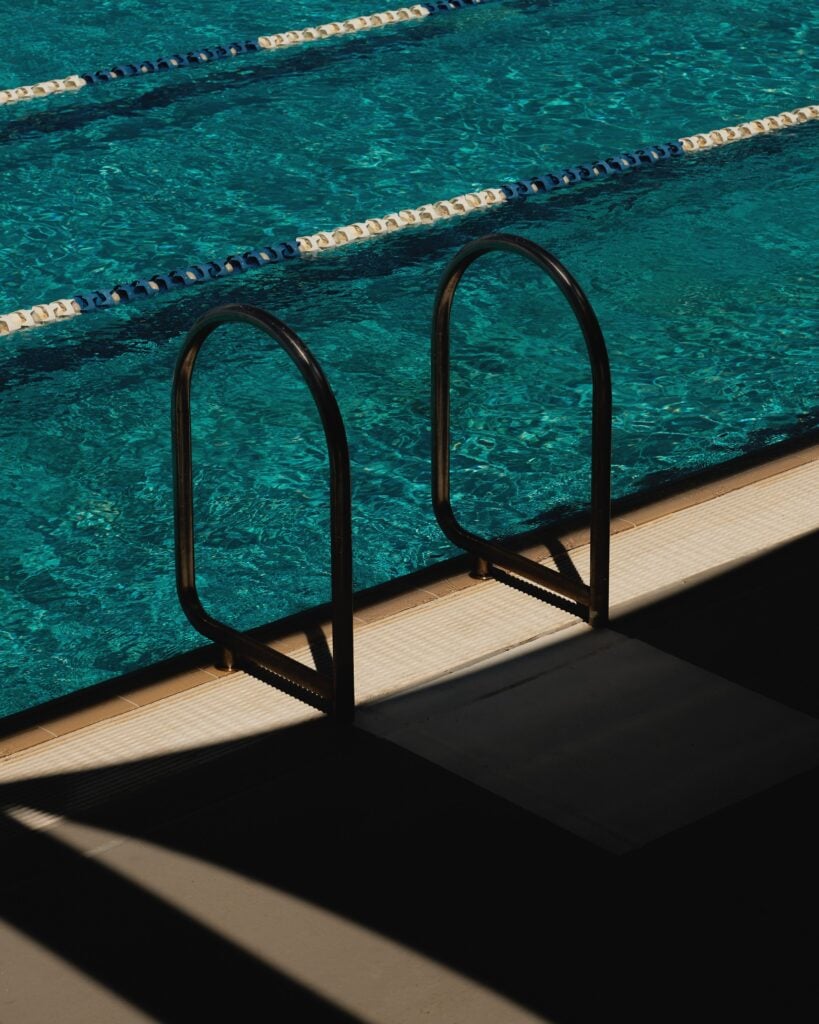
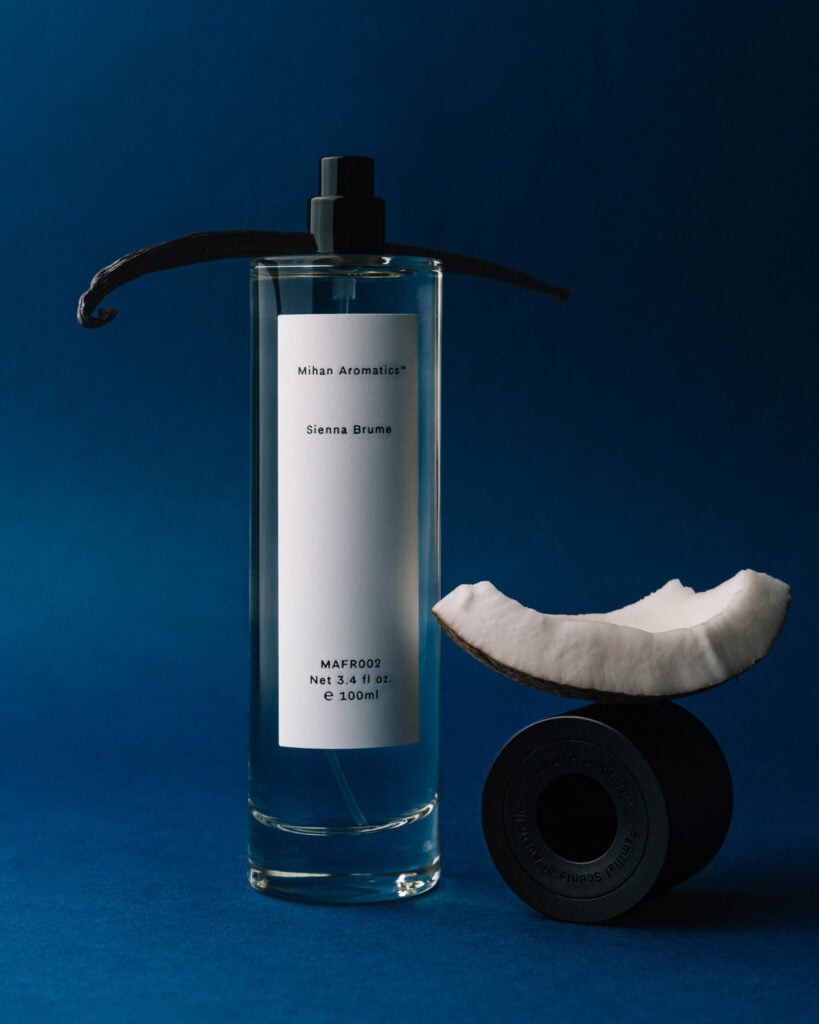
The result is not a literal “pool” fragrance. It is a composition of ease.
Soft coconut brings warmth. Cucumber brings coolness. Together, they capture what the founders describe as pure contentment: careless in the best sense, romantically alone in a crowd.
This is where Mihan’s specificity becomes universal. A wearer in Shanghai, London, or New York may never have been to Fitzroy Pool. But the feeling is legible: summer, rest, friendship, sun on skin, and the rare comfort of belonging somewhere without needing to explain oneself.
The original memory might belong to Mihan and Brown, the emotional doorway belongs to anyone.
Family Legacy in the Formula
If Mihan’s fragrances are love letters to place, they are also love letters to inheritance.
One of the brand’s most distinctive formulation choices is its use of Australian organic sugarcane alcohol. In technical terms, it serves as the base of each fragrance, with Mihan’s parfums formulated at 30% concentrate and 70% sugarcane alcohol. But for the founders, the material carries more than functional value. It carries family memory.
Julia Brown’s grandparents and earlier generations farmed sugarcane near Gordonvale in Far North Queensland. In every bottle, the base material becomes “heritage made liquid,” connecting the final product back to land, labor, and lineage.

This is what gives the brand’s sustainability and ethical language more depth than a simple checklist. The founders describe their approach as rooted in care: care for the wearer, care for the land, and care for the object that carries their name. The brand maintains vegan and cruelty-free standards, while its high concentration is positioned as part of a slow, lasting approach to fragrance — less disposable, more considered, and designed to be returned to over time.
In this sense, Mihan’s product philosophy mirrors its emotional philosophy. Nothing is meant to be fleeting. A scent should last. A memory should endure. A family story should be carried forward.
A Love Letter That Travels
Mihan Aromatics began as a love letter to Australia — to its afternoon light, dry heat, public pools, rain-soaked plains, and family histories embedded in the land. But as the brand enters China, the question becomes less about geography than emotional translation: can a love letter to one homeland find resonance in another? For Joshua Mihan and Julia Brown, the original memories are deeply personal. Yet the emotions beneath them — longing, belonging, inheritance, intimacy, and the desire to carry home across distance — are universal.
This is why Mihan’s China debut feels like a meaningful next chapter, but not a departure from its origin story.
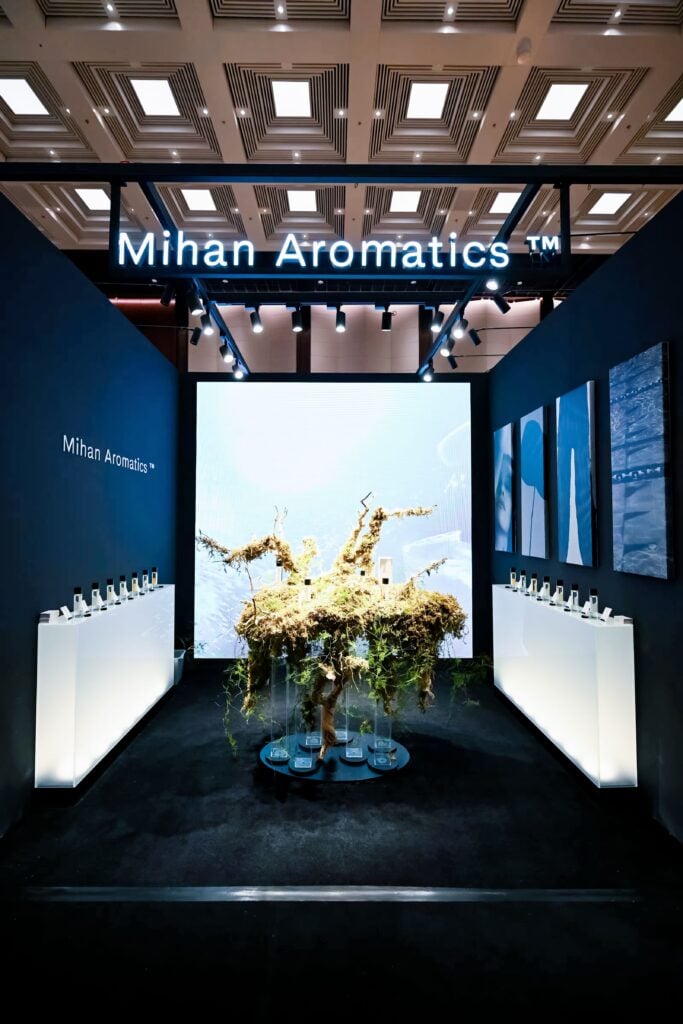
The brand made its first appearance in China at the 2026 Spring Edition of Notes Shanghai, which closed on April 5 at the West Bund International Convention and Exhibition Center. The event gathered around 200 exhibiting brands and 17,661 visitors from 37 represented markets, with 60% of participating brands coming from outside China and nearly half making their debut in the Chinese market.
For Mihan, the setting was fitting. Notes Shanghai sees its role as more than a commercial platform. According to Alex Wu, founder of Notes Shanghai, the fair aims to introduce more international independent fragrance houses to Chinese consumers, buyers, and media, while helping global brands gain a more direct and nuanced understanding of the Chinese market beyond data or second-hand information. Because niche and artistic fragrance depends heavily on in-person discovery, the platform also uses exhibitions, forums, and publications to help audiences understand the creative expression behind each brand.
According to Yuang Chua, co-founder of Astrologue, Mihan Aromatics’ distributor in China, the brand’s appeal lies in its “minimalist branding, attention to detail, and the authenticity of its fragrances.” For Chinese consumers, he believes Mihan’s quiet emotionality may feel especially resonant.
“There is a strong cultural affinity in China for a minimalist, quiet, inward-looking approach — something close to the beauty of Jiangnan,” said Chua. “Mihan feels quiet but powerful, minimal yet full of emotion, modern yet deeply connected to stories, nature, and the wilderness.”
For the founders, the response in Shanghai confirmed that China’s niche fragrance audience is not simply chasing novelty. In their words, people at Notes Shanghai cared about the story, the presentation, the object, and the whole world a fragrance house is trying to build. They were struck by what they described as the individualism of Chinese fragrance lovers and the sense of community forming around perfume as a mode of self-expression.
“Today, when Chinese consumers choose a fragrance, they are not only choosing a scent; they are also using fragrance as a way to understand the world,” said Wu from Notes Shanghai. “More consumers want to know where a brand comes from, why it creates in a certain way, and what it wants to express. Fragrance is not only a product, but also a medium through which people encounter different cultures, lifestyles, and creative perspectives.”
That observation aligns with Mihan’s own instincts. The brand does not ask Chinese consumers to remember Australia. Instead, it offers them a form through which they might remember themselves.
The Poetry of Home
Mihan Aromatics may have begun with longing, but it has evolved into a broader language of devotion — to homeland, family, craft, and the shared creative life of two founders building a brand together.
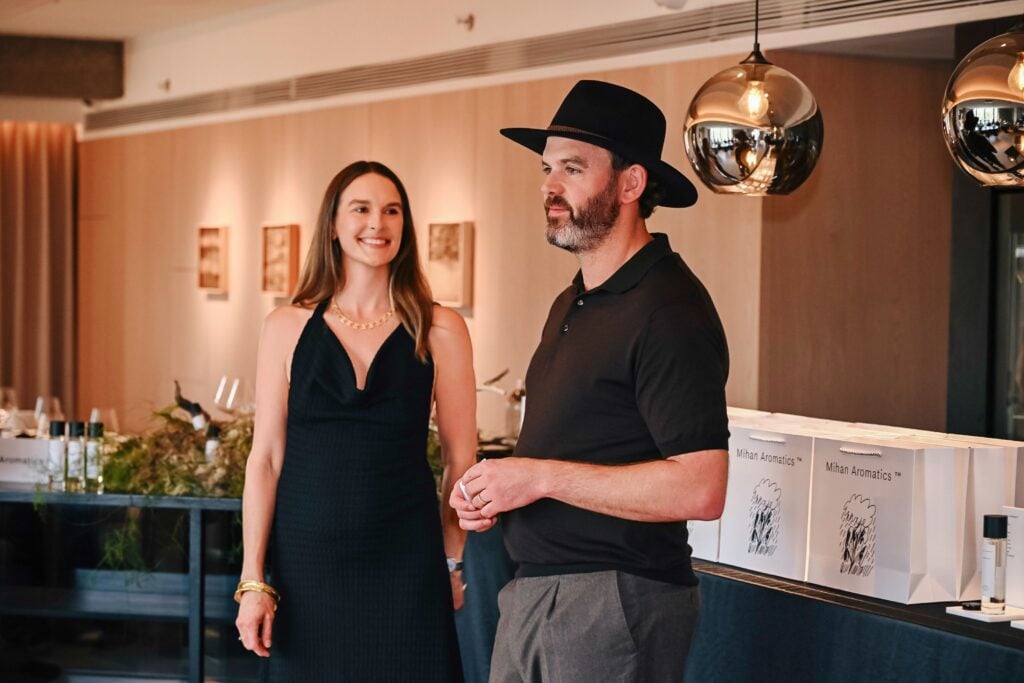
Its love story is layered: a tribute to Australia, a continuation of family memory through material and making, and a series of scented poems offered to others. Each parfum begins with Josh and Julia’s own emotional geography, but it does not ask the wearer to inhabit their memories exactly. Instead, it opens a path back to one’s own.
As Mihan enters China, that may be its most powerful proposition. An Australian memory does not need to be imported unchanged to be understood. Through scent, it can become something more intimate and portable: a key to another homeland, another love story, another place that made us.