
September 21–27, 2026
Global luxury and fragrance brands continued to invest in China through destination shows, upgraded stores and large-scale market entries, while Chinese brands pushed premiumization at home and tested more ambitious routes abroad.
China’s premium consumer market offered few signs of standing still last week. Dior put Shanghai on its global runway calendar, Hermès expanded one of its key regional stores, and Shanghai Fashion Week sharpened its role as a commercial bridge for Chinese design. Beyond traditional luxury, the same pursuit of higher-value consumers was visible in sportswear, fragrance and retail—from Li-Ning’s new premium format to KAYALI’s China launch and Flower Knows’ U.S. expansion.
1. Dior Sets Its Cruise 2028 Show for Shanghai
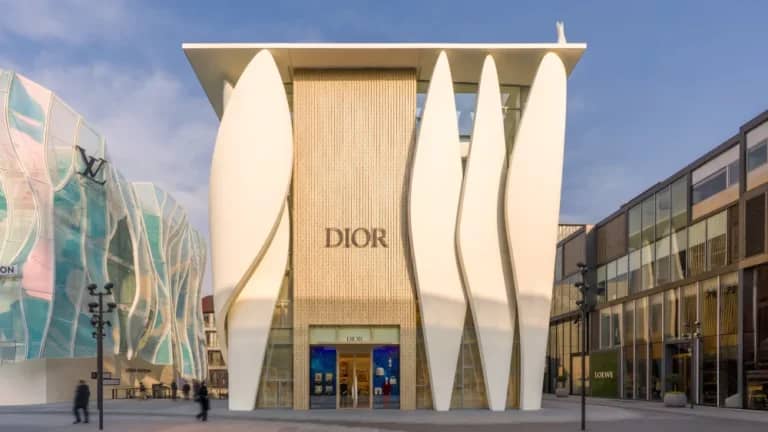
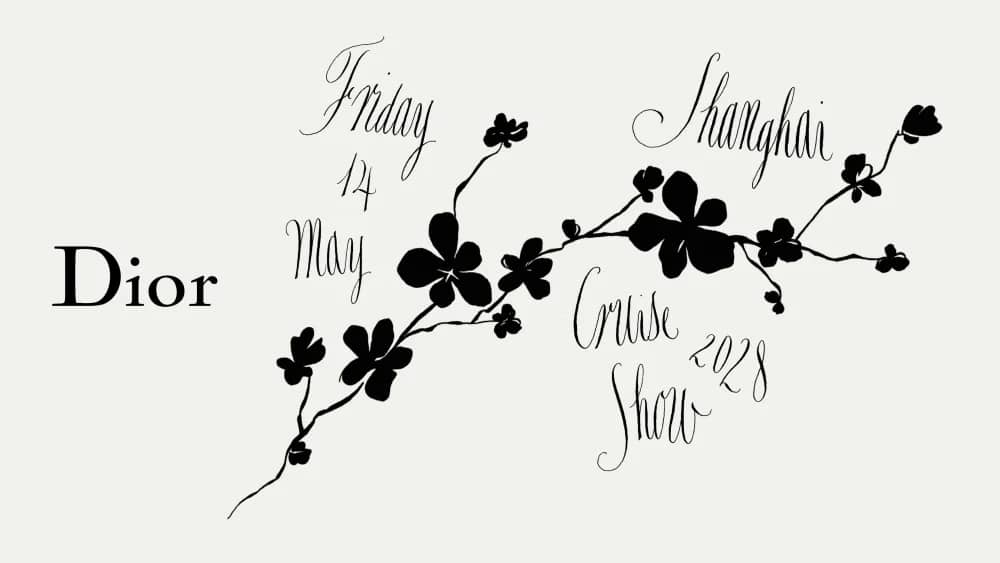
Dior announced that Jonathan Anderson will present the house’s Cruise 2028 collection in Shanghai on May 14, 2027. It will be one of Anderson’s most significant activations in Asia since taking the creative reins at Dior. The house previously staged a cruise show in Shanghai under John Galliano in 2010 and returned to the city for its Pre-Fall 2021 presentation. (Source)
The choice puts China back into luxury’s destination-show circuit at a time when houses are becoming more selective about where they deploy large-scale experiential investment. Rather than being merely a retail market, Shanghai is again being used as a global stage for brand image and cultural visibility.
2. Hermès Expands Its Chengdu Taikoo Li Store
Hermès reopened its renovated and expanded Chengdu Taikoo Li boutique on September 23. The house has operated at the location since 2014; the redesigned store now presents all 16 Hermès métiers across two levels, with an interior by Paris architecture studio RDAI drawing on Sichuan craft and architectural references. (Source)
The investment illustrates a more targeted phase of luxury retail development in China. Expansion is increasingly less about adding doors indiscriminately and more about upgrading high-value locations into complete brand environments. Chengdu’s continued ability to justify that investment also reinforces the importance of regional luxury centers beyond Shanghai and Beijing.
3. Shanghai Fashion Week Builds a Broader Commercial Platform for SS27
Shanghai Fashion Week published its Spring/Summer 2027 calendar last week, with the main schedule running from October 8 to 16. Hemu will open the runway program, while brands including Xiaoli, Staffonly, Comme Moi and Shuting Qiu return. Commercial platforms including MODE Shanghai and Ontimeshow will run alongside the shows, while Adidas is among brands staging extended programming during the season. (Source)
The notable development is the increasingly porous line between runway visibility and business infrastructure. Shanghai Fashion Week is positioning itself not simply as a showcase for domestic creativity, but as a place where Chinese designers, international brands, buyers and distributors can meet—a more useful role as Chinese fashion labels look toward sustainable international expansion.
4. Li-Ning Takes Its Premium Push to Nanjing East Road
Li-Ning opened the first global flagship for its Loong Store format on Shanghai’s Nanjing East Road on September 21. The store places particular emphasis on LI-NING PRIMUS, or Gold Label, a premium product line built around functional business and commuting apparel and designed to transfer technologies and brand equity from elite sport into everyday use. (Source)
The strategy is notable because Li-Ning is attempting to move into a higher price and lifestyle tier largely through its existing master brand, rather than acquiring an established premium label. Its annual reporting has already highlighted Gold Label alongside product upgrading and channel optimization as part of the group’s broader brand strategy. (Source)
That makes the Shanghai flagship more than another store opening: it is a physical test of whether professional-sports credibility can support a distinctly more elevated proposition in urban clothing.
5. On Makes “Premium” the Center of Its 2029 Growth Plan
At its September 22 investor day, On introduced a 2026–2029 strategy explicitly built around what it calls its “Premium Playbook.” The Swiss sportswear company is targeting high-teens constant-currency annual sales growth, net sales of at least CHF 5.6 billion by 2029, a gross margin of 65% or above, and expansion into football and golf alongside running, sneakers and apparel. (Source)
China matters to that strategy. In its second-quarter results, On said Asia-Pacific accounted for more than 20% of global sales, with momentum in Greater China among the drivers; first-half APAC sales rose 43.7% year on year, or 58.1% at constant currency.
On’s trajectory captures one of the clearest structural changes in China’s premium market: technical sports products can now operate simultaneously as performance equipment, fashion and identity, putting brands such as On into competition for spending once associated more narrowly with fashion and luxury.
6. KAYALI Plans a 300-Store China Debut With Sephora
Fragrance brand KAYALI announced on September 25 that it will formally enter China on October 15 through an exclusive partnership with Sephora. The rollout will span more than 300 stores alongside Sephora’s Chinese digital channels, with global bestsellers including Vanilla | 28 and Yum Boujee Marshmallow | 81 in the initial assortment. (Source)
The scale is unusually large for an incoming fragrance label and points to rising confidence in China’s perfume category. KAYALI is also bringing experiential elements of its international playbook to the market, including KAYALI Café activations and a Shanghai Scent Lab hosted by founder Mona Kattan.
Rather than treating China as a gradual test market, the brand is entering with national distribution, founder engagement and physical discovery built in from the beginning.
7. Flower Knows Moves Into 450 Ulta Beauty Stores
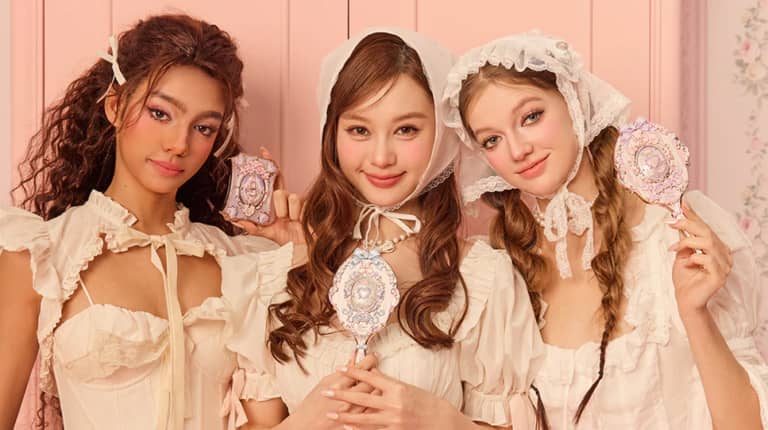
Flower Knows announced on September 23 that a curated range of five products will be available across 450 Ulta Beauty stores through the retailer’s “Just Dropped Beauty” program. The in-store placement follows the Chinese brand’s December 2025 debut on Ulta.com, where more than 60 products are available. (Source)
For Chinese consumer brands, international social-media awareness has often developed faster than mainstream physical distribution. The Ulta rollout therefore marks a different stage of globalization for Flower Knows: its highly recognizable visual language now has to work on shelves alongside established international beauty brands.
The limited assortment also makes the expansion a useful test of which elements of the brand translate most effectively from online discovery into offline purchase.
8. Chicmax and PharmaResearch Team Up to Localize Rejuran Cosmetics
Shanghai Chicmax Cosmetic signed a memorandum of understanding with South Korea’s PharmaResearch on September 21 to develop Rejuran Cosmetics in China. Both companies say the partnership will extend beyond product supply into localization, product development and brand operations. (Source)
For Chicmax, whose portfolio includes Kans, Newpage and other domestic brands, the partnership represents another route into premium efficacy skincare without building every proposition internally. For PharmaResearch, it provides a local operator with product-development, manufacturing and brand-building capabilities.
The model is worth watching as Chinese beauty groups mature: globalization is no longer moving only outward. Domestic platforms are also becoming partners through which overseas brands and technologies are adapted for China.
9. The Beast Turns Fragrance Personalization Into a Traveling Retail Experience
Chinese lifestyle brand The Beast operated its “Beast Express” perfume train at Shanghai’s Xiangyang Park through September 27, combining fragrance sampling with a transparent on-site laboratory where consumers could have selected 8 ml perfumes filled, inspected, coded and packaged within the activation. Twelve fragrances were offered, including four exclusive to the physical experience. (Source)
The format demonstrates how domestic premium brands are experimenting with a form of retail that is less dependent on conventional stores. Product, theater, personalization and social-media content are compressed into the same encounter.
For fragrance in particular, where smell remains difficult to communicate digitally, experience itself is becoming part of the product proposition—and potentially a way for Chinese brands to build distinction without relying on inherited luxury codes.
10. Qingpu Bailian Outlets Adds a Second Phase—and a Different Idea of Outlet Retail
The second phase of Qingpu Bailian Outlets opened on September 21, taking the overall complex to roughly 200,000 square meters and more than 500 brands. The expansion adds local designer labels, lifestyle categories, riverside public spaces and cultural programming alongside its traditional outlet offer. (Source)
More revealing than the additional floor space is the repositioning of the format itself. Bailian is explicitly moving from a pure discount-shopping proposition toward what it describes as a “micro-vacation” destination, incorporating leisure, cultural IP, food and extended dwell time into the retail experience.
That evolution mirrors a wider shift in Chinese commercial real estate: attracting consumers increasingly requires giving them reasons to visit that go beyond access to merchandise or price.
Across these ten developments, premiumization is becoming less synonymous with simply raising prices. Dior and Hermès are investing in place and experience; Li-Ning and On are extending technical authority into lifestyle; beauty brands are using distribution partnerships to cross borders; and Chinese retailers are experimenting with personalization and cultural programming. The common challenge is increasingly whether brands can create enough distinctive value—through product, environment, culture or community—to earn consumers’ attention as well as their spending.