Chinese New Year is more than a ritual of family reunion; it is a moment when urban memory converges with everyday life. During this period, streets, plazas, gardens, and public spaces assume a different rhythm. Lights linger a little longer. Footsteps slow. People pause, gather, and move on. Fleeting encounters trace invisible paths across the city.
For luxury brands, the holiday has long functioned as a concentrated commercial window. Zodiac capsules, limited-edition drops, festive films, and synchronized media pushes reliably reappear within a predictable timeframe. But as macroeconomic pressures tighten and consumers grow more discerning, Chinese New Year marketing has begun to show signs of fatigue. Iterations of similar motifs and product treatments struggle to drive meaningful purchase intent, let alone cultivate long-term emotional equity.
This year, however, a subtle but notable shift has emerged. Increasingly, brands are moving beyond product-led storytelling and two-dimensional campaign imagery. Instead, they are stepping into public space—embedding themselves into the lived rhythms of the city.
From Product Capsules to Public Space Activations
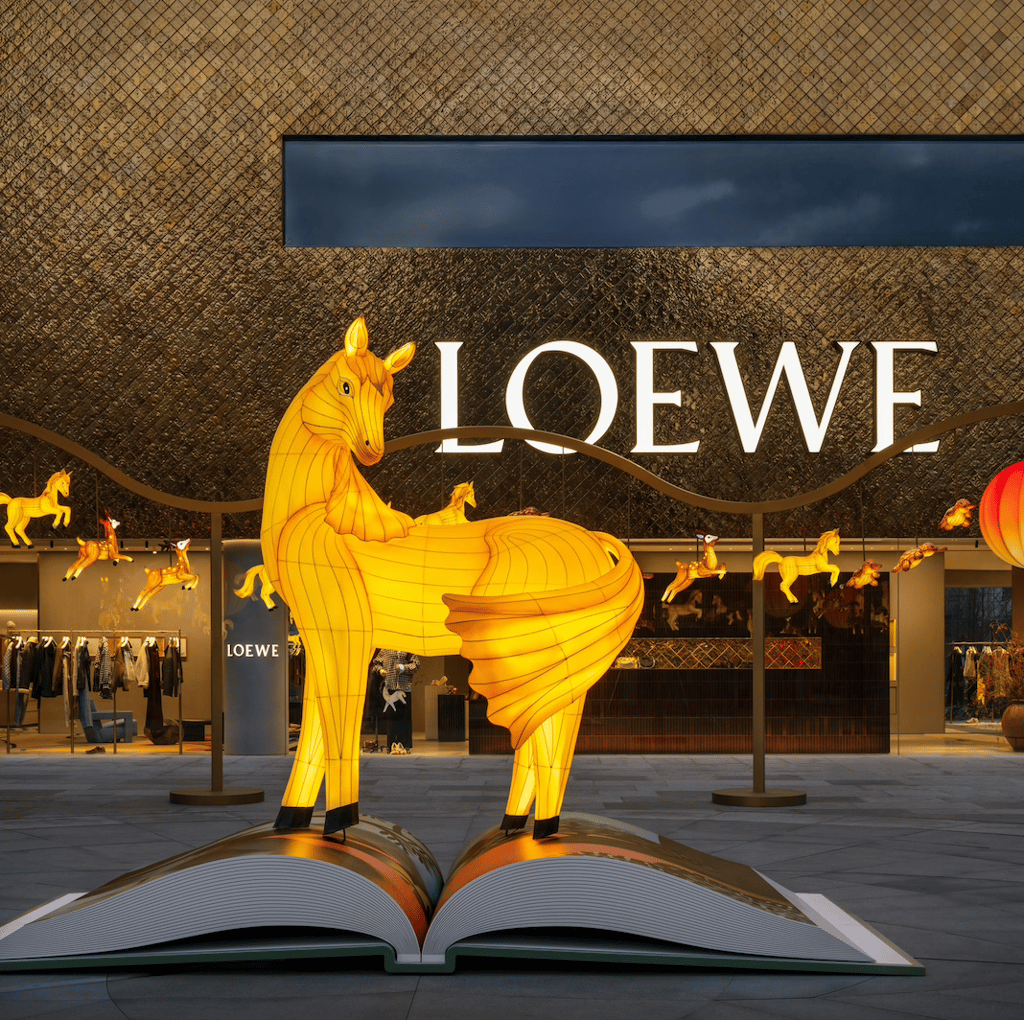
Loewe’s “Bright New Year” initiative exemplifies this evolution. The project extends the brand’s collaboration with the Shanghai Animation Film Studio, reimagining the classic tale Little Horse Crossing the River for a contemporary festive audience. Online, a newly produced animated short—performed by global brand ambassador Wang Yibo—translates the familiar narrative into a modern Chinese New Year story. Offline, the animated world materializes through a lantern festival that transforms characters into walkable, experiential installations.
Loewe’s Lantern Festival Strategy in Nanjing
From January 22 to March 3, Loewe staged the activation at Nanjing’s Yuyuan Garden, working with lantern artisan Lu Min to craft intricate light sculptures inspired by the film’s characters. A water-screen “cinema,” interactive blessing rituals, and couplet-writing stations paid homage to the Qinhuai Lantern Festival’s folk heritage. The lantern itself—an enduring symbol of illumination and reunion—carries strong cultural resonance. Its craft-based production also echoes Loewe’s longstanding emphasis on artisanal savoir-faire. Rather than constructing a temporary spectacle, the installations were integrated into the garden’s existing architecture—waterways, rock formations, pavilions, and historic structures forming a natural scenography for the celebration.
Miu Miu’s Neighborhood Activation Model in Shanghai
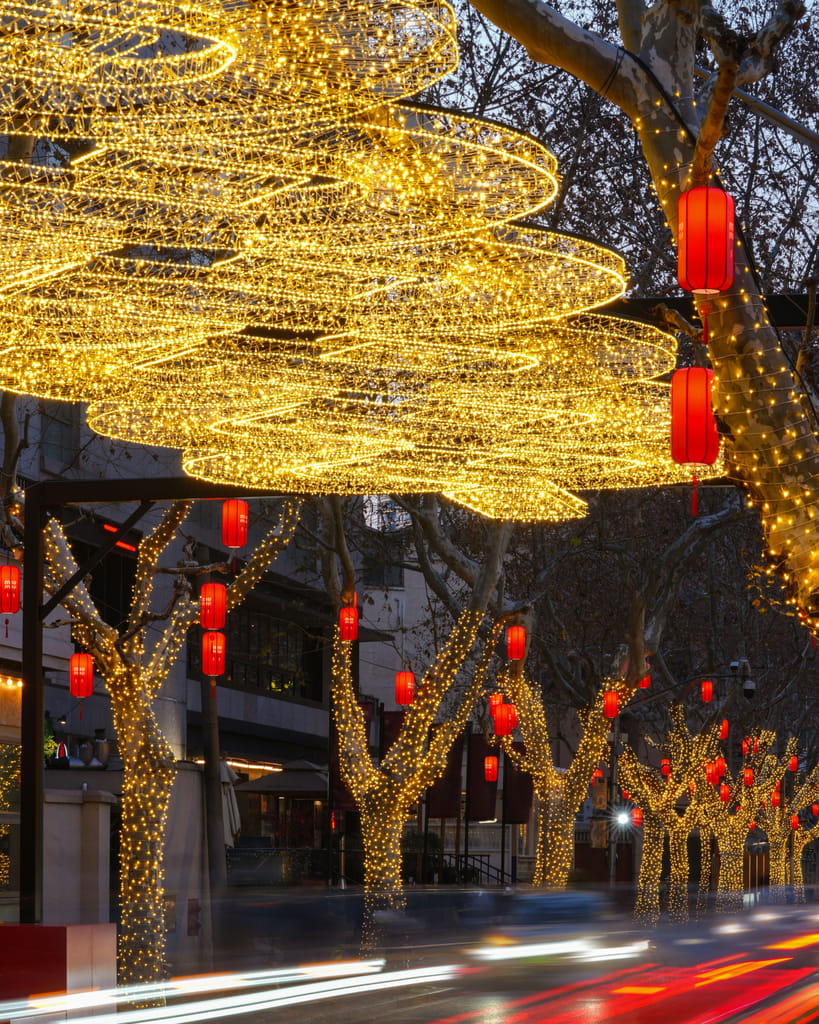
Miu Miu adopted a different spatial strategy in Shanghai with “Miu Miu Encounters,” activating the Donghu Road neighborhood through a dispersed series of lifestyle touchpoints. Instead of anchoring the program to a single venue, the brand created a network: a large-scale light installation suspended above the street, alongside partnerships with FUFU Shanghai, BLAZ, and Sugar Plum, hosting dining, music, and social gatherings. The format lowered the threshold for participation. Whether through a brief stop, an incidental encounter, or even passive exposure via social media, audiences could access the festive atmosphere without formal ceremony. The brand’s boutique at Shanghai’s Iapm Mall simultaneously refreshed its façade and hosted a New Year music event featuring ambassador Lexie Liu. The result felt less like a staged event and more like a city-wide mood.
Valentino’s Cultural Narrative Along Suzhou Creek
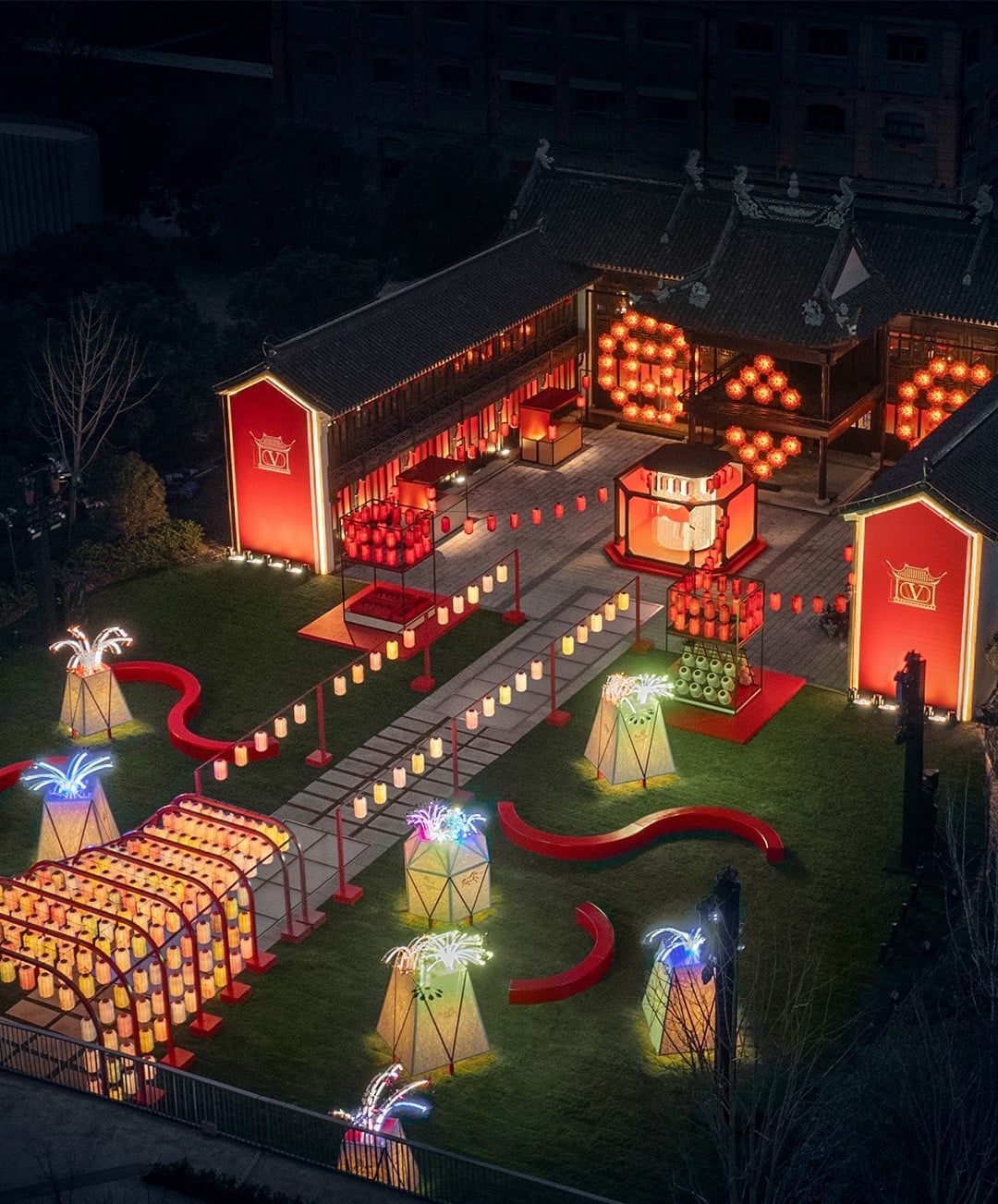
For its 2026 Chinese New Year marketing initiative, Valentino extended a similar logic with its “Radiant Lights, Dream in Motion” lantern festival along Shanghai’s Suzhou Creek, staged at the historic Tianhou Temple. The choice of location—steeped in the city’s maritime history—shifted the lantern fair from temporary spectacle to urban narrative. Curated by Youyi Creation Center with advisory support from Rockbund Art Museum director Zhu Xiaorui, the project invited seven Chinese artists, including Li Wentao, Xu Mingyu, and studio slow, to reinterpret the Year of the Horse through contemporary light installations. Intangible heritage craftsmanship, local artistic voices, and historical architecture converged to create an experience that encouraged reflection on cultural identity and belonging.
The Rise of Spatial Brand Marketing in China
The broader shift in Chinese New Year marketing is unlikely to be incidental. Over the past year, luxury brands have shown growing interest in localized spatial engagement. By entering public environments, brands expand their narrative reach beyond transactional moments. Even without immediate conversion, individuals encounter brands organically along their daily routes. Social media responses suggest that appreciation increasingly stems from atmosphere—comfort, ease, and natural integration—rather than product alone.
In a constrained consumption climate, consumer expectations are recalibrating. Short-term stimulation carries less weight than sustained emotional alignment. And that alignment is built through cumulative presence, not singular spectacle. Chinese New Year, in this sense, becomes not only a sales milestone but a strategic moment for long-term localization.
Festivities fade. Cities endure. Rather than maximizing noise within a compressed window, brands appear to be investing in slower resonance—allowing narratives to settle into everyday life. This year’s activations may mark the beginning of that recalibration.
Other Noteworthy Chinese New Year Marketing Activations
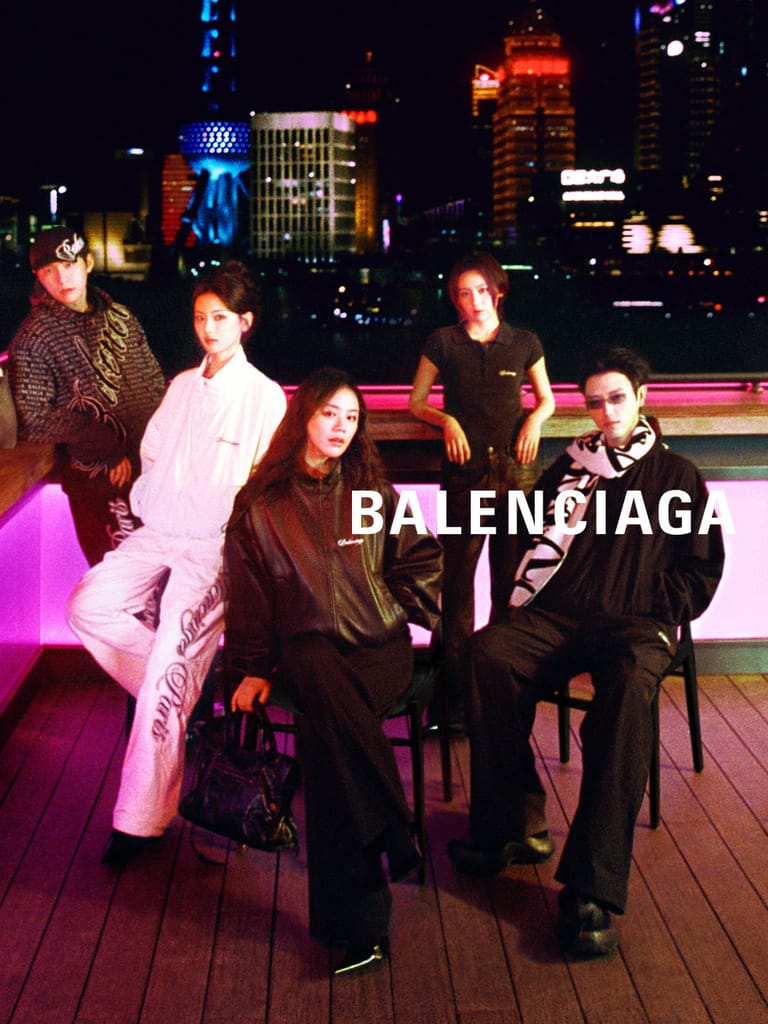
Balenciaga launched its 2026 Chinese New Year capsule on January 6, accompanied by a Shanghai-shot campaign by artist John Yuyi. Featuring brand friends Ma Sichun, Yang Chaoyue, Chen Feiyu, and digital creators, the montage juxtaposed candied hawthorns, red lanterns, rooftops, and youthful gatherings. Rather than foregrounding overt festive symbolism, the campaign positioned Chinese New Year as a subtle backdrop woven into urban life. The product assortment—tracksuits, hoodies, scarves, and the Le City East-West bag—retained the house’s street-inflected codes, with red accents and symbolic motifs introduced as nuanced cues.
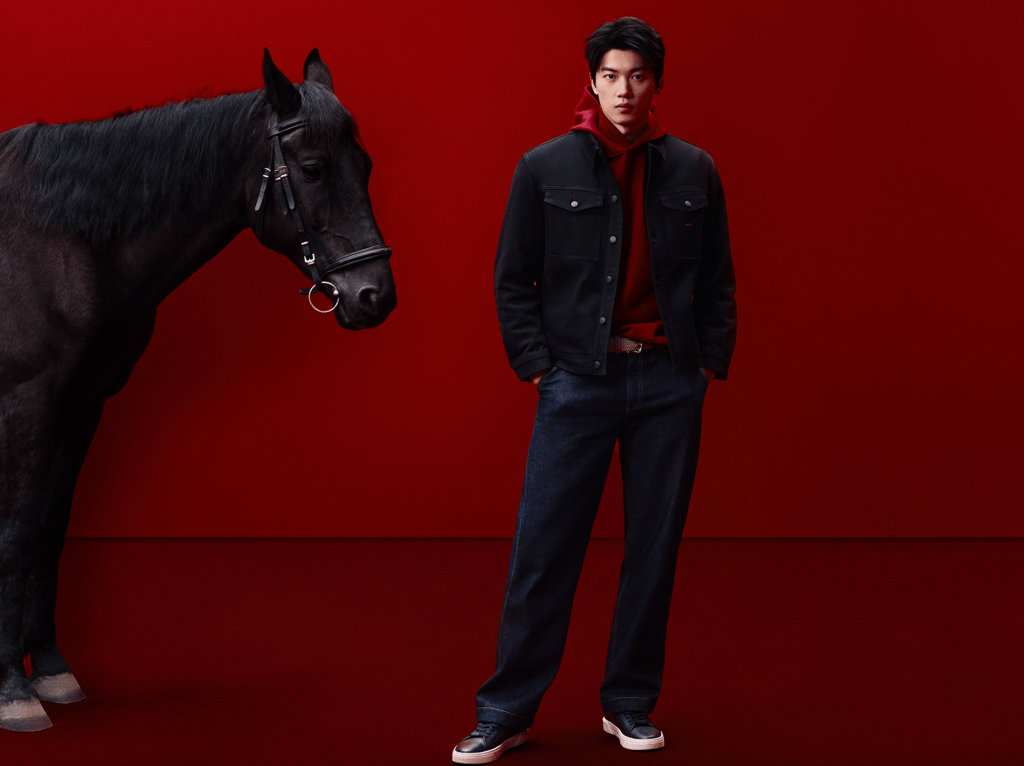
BOSS unveiled a Year of the Horse capsule inspired by traditional Chinese gold craftsmanship, translating techniques such as chasing, filigree, and granulation into ready-to-wear detailing. The collection spans tailoring, knitwear, denim, and accessories in a red, white, and black palette punctuated by metallic gold. Olympic swimming champion and brand ambassador Wang Shun fronts the campaign, where equine imagery, metallic textures, and athletic dynamism converge in a narrative of forward momentum. Select pieces incorporate laser engraving and jacquard methods to embed heritage motifs structurally into the garments.
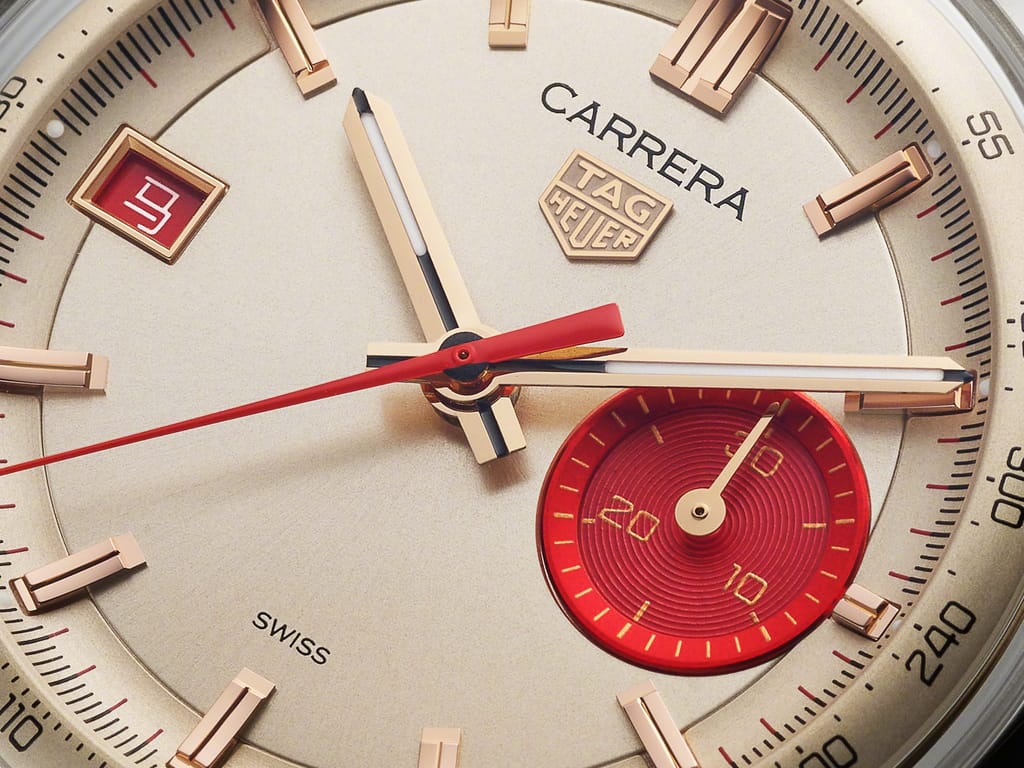
TAG Heuer introduced a limited-edition Carrera Year of the Horse chronograph based on its Glassbox design language. A red-to-champagne gradient dial incorporates the Chinese character for “horse” in place of a numeral, aligning with zodiac symbolism. The 39mm steel case houses the in-house TH20-07 movement with an 80-hour power reserve. Limited to 250 pieces globally, each watch is individually numbered and accompanied by bespoke festive packaging.
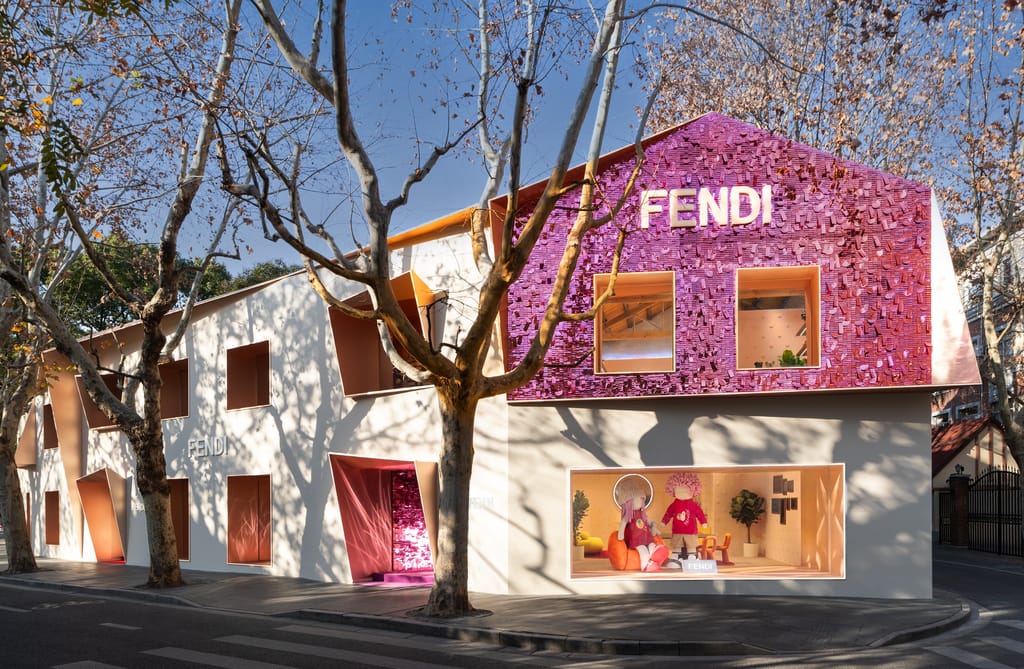
Fendi opened a four-day New Year experiential space on Shanghai’s Wukang Road, presenting its 2026 Chinese New Year capsule alongside the Spring/Summer 2026 Peekaboo Inner Beauty bag. The pink-and-purple sequined façade echoed the bag’s visual codes, while immersive installations and a two-level Fendi Caffè extended the brand’s narrative into hospitality and social interaction—shifting engagement from display to lived experience.