
Welcome to China Weekly Brief by Jingzhi Chronicle. Each week, we curate key developments shaping China’s consumer market—from brand strategy and retail moves to beauty, tech, leadership shifts, and capital signals—so you can scan what matters fast, then go deeper where needed.
China’s consumer market is sending unusually clear signals this week: legacy operators are retreating, flagship retail is doubling down on experience, and local champions are moving into premium territory with speed. From Mannings’ full mainland shutdown to Dior and Zara raising the bar in Beijing and Shanghai, the competitive landscape is reorganizing around fewer, stronger formats—while Chinese brands in jewelry and beauty push into categories once dominated by international players.
Retail exits accelerate in China’s consumer market
A structural reset is unfolding across China’s consumer-facing channels, and this week’s developments make it hard to ignore. Mannings, the health-and-beauty chain that entered mainland China in 2004, announced it will shut down all mainland offline stores, with final operations ending on January 15, 2026. Its own online mall will also stop operating on December 28, 2025, while major platform stores will cease operations earlier in late December. The breadth of the shutdown—offline plus multiple digital storefronts—signals a decisive exit rather than a tactical pullback.
Fashion is seeing similar pressure points. Etam has shut down its Tmall flagship and stores on Douyin and Xiaohongshu as of November 30, following earlier clearance activity. For many consumers, Etam is part of the “first-generation” international brand memory in China; its retreat underscores how unforgiving the current environment has become for brands that lose relevance, channel leverage, or cost discipline.
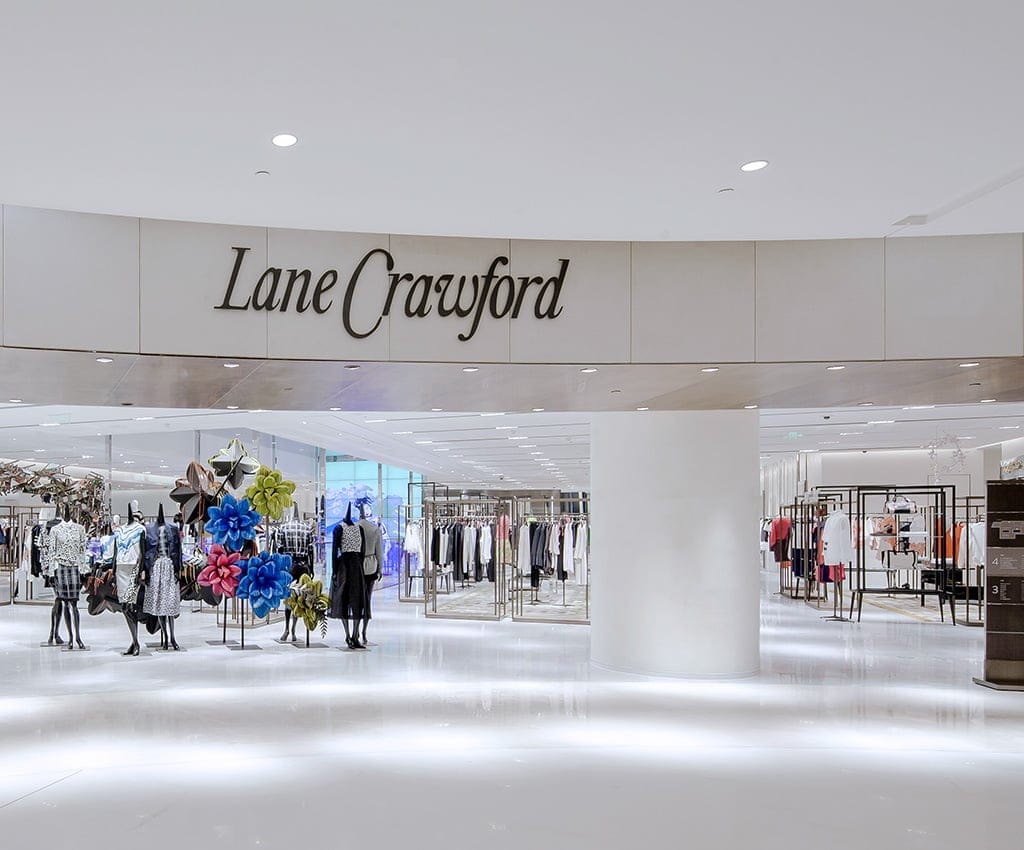
Department store retail is also tightening. Lane Crawford confirmed it will close its Chengdu IFS store from February 28, 2026, citing the non-renewal of its lease. While the company emphasized continued service through online channels, the move reflects a broader reality: physical presence is increasingly reserved for formats that either deliver clear productivity or offer something meaningfully differentiated.
Travel retail faces restructuring as airport duty-free dynamics shift
In travel retail, the friction is more dramatic. A public power struggle surfaced between China Duty Free Group and its majority-owned subsidiary Sunrise Duty Free (Shanghai), framed by market observers as a fight over who controls the bidding—and the profits—of Shanghai airport duty-free operations. In a market already facing demand volatility and tightening competitive constraints, distribution power is becoming as consequential as consumer demand.
Flagship store investments signal confidence in China’s top-tier cities
While some operators exit, others are making the opposite bet: that the right flagship can function as brand theater, community space, and sales engine at once.
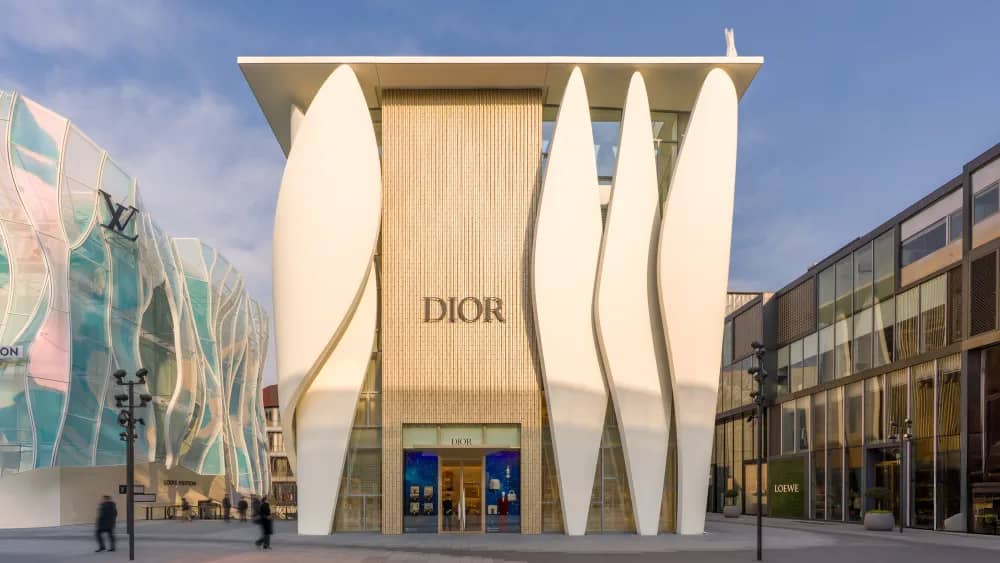
Dior unveiled the House of Dior Beijing in Sanlitun as a five-story landmark designed by Pritzker Prize–winning architect Christian de Portzamparc. Positioned beyond conventional retail, the project blends fashion, art, and hospitality, introducing the Monsieur Dior restaurant led by Anne-Sophie Pic and featuring installations and artworks that echo the maison’s Parisian codes—adapted with cues intended to resonate locally.
In Shanghai, Zara reopened its East Nanjing Road flagship with a new concept and an expanded footprint of roughly 2,400 square meters across four floors. The refreshed store brings in multiple key product lines and strengthens omnichannel capabilities such as online ordering with in-store pickup, while adding a personalization service for selected items. For a mass leader, the message is straightforward: China remains too important to serve with a “standard” store format.
Luxury jewelry is also leaning into China-first flagships. Boucheron opened its first flagship in China at Shanghai Xintiandi, housed in a historic Shikumen building and designed to fuse French heritage with Shanghai cultural references. Beyond the symbolism of the address, the store highlights how maisons are using architecture, storytelling, and VIP experience design to defend their position amid rising local competition.
Newcomers continue to plant flags as well. Polène opened its first China flagship in Beijing’s Sanlitun Taikoo Li, leaning into craftsmanship language and spatial design that blends French minimalism with Eastern elements—an increasingly common formula for brands courting China’s style-driven, detail-oriented consumer.
Chinese brands scale globally as overseas expansion gathers pace
Perhaps the most consequential shift is happening in the center of the market: Chinese brands are no longer only competing on speed and price. They are increasingly competing on premium narratives, product depth, and cultural positioning.
A standout signal comes from Laopu Gold. A report cited this week claims the brand is on track to surpass Richemont’s jewelry business in China in 2025 revenue—an eye-catching benchmark given Richemont’s portfolio includes Cartier, Van Cleef & Arpels, Buccellati, Vacheron Constantin, and Montblanc. The same report highlights rapid growth metrics and an expanding member base, alongside strong offline performance that positions the brand as a serious high-end retail force. Whether viewed as a single-company story or a category signal, the implication is clear: Chinese gold and jewelry brands are being re-rated—from “local players” to premium incumbents.
Global luxury deepens capital ties with Chinese brands
Capital is validating that shift. Kering participated in a Series A round for Chinese gold brand Borlan, whose differentiation is framed around modern interpretations of traditional craftsmanship techniques. The funding is positioned toward brand-building, omnichannel expansion, supply chain resilience, and talent—an investor playbook typically associated with scaling premium brands, not short-term trend businesses.
In beauty, the outward expansion of Chinese brands continues. Flower Knows has launched on Ulta Beauty’s website, marking entry into a major U.S. beauty retail channel and signaling a higher level of international distribution readiness for a Chinese color cosmetics brand.
Meanwhile, L’Oréal-linked funds invested RMB 105 million for a minority stake in Chinese skincare brand Forest Cabin (Lin Qingxuan), framed as a strategic investment as the brand advances toward an IPO process—another indicator that China’s local beauty ecosystem is increasingly being treated as investable infrastructure, not just a competitive threat.
Leadership appointments reflect China’s growing influence on global brands
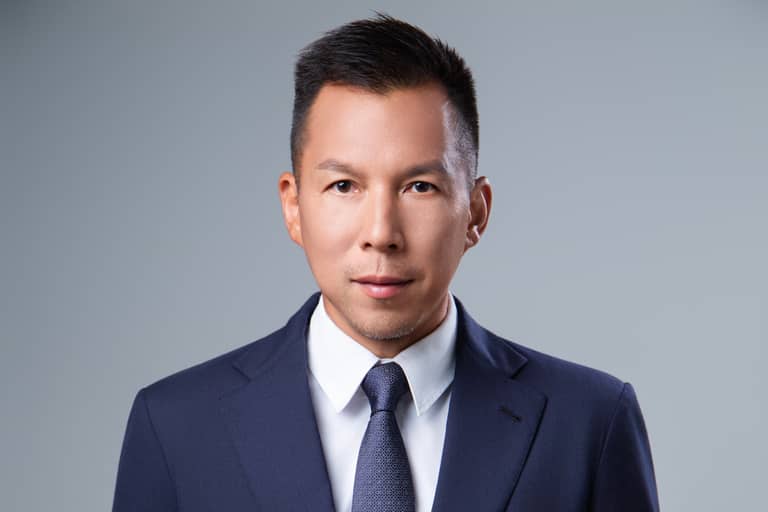
On the executive move front, Pop Mart appointed Andrew Wu, President of LVMH Greater China, as a non-executive director, with compensation disclosed as a mix of cash and equity-based remuneration. The appointment reflects a broader convergence: luxury increasingly borrows the playbook of pop culture and IP, while pop culture platforms become more disciplined, global, and investment-grade.
Commercial real estate and retail infrastructure consolidate in core cities
On the real estate front, Hang Lung signed to take over operations of the former Westgate Mall site at 1038 West Nanjing Road under a 20-year operational lease, expanding its footprint on the corridor by roughly 44% to more than 312,000 square meters. In a week defined by exits and channel reshuffles, this move reads as a conviction bet on prime-location retail—and on operational control as a competitive advantage.
What this week tells us
China’s consumer market is reorganizing around fewer—but more powerful—formats. The middle is thinning: weaker legacy channels are stepping back, while brands that can justify scale through experience, productivity, or cultural resonance are pushing forward. At the same time, local champions—especially in jewelry and beauty—are moving into premium positions with enough speed that global capital is beginning to treat them as partners, not only competitors.