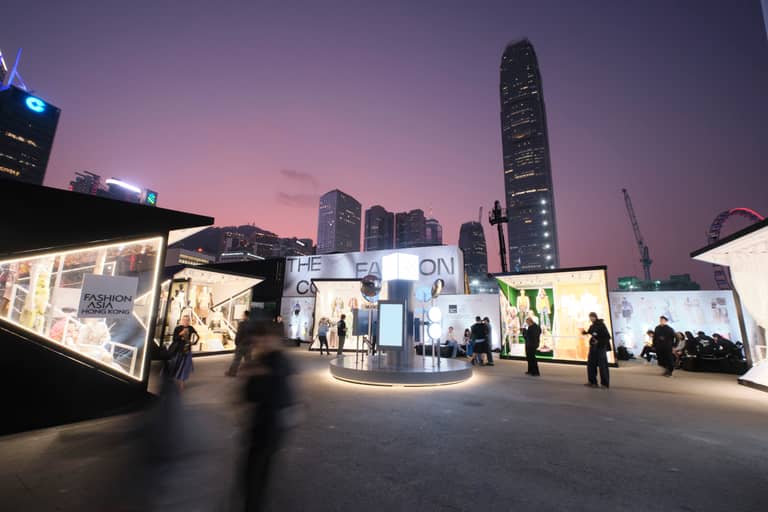
This October, Beauty Shanghai 2025—a boutique beauty fair tailored to storytelling and design—offered a refreshing contrast to China’s crowded exhibition scene. Held at the brand new West Bund Convention Center, the show welcomed over 100 skincare, fragrance, and personal care brands, including more than 50 C-Beauty brands, intentionally distanced from suppliers and raw materials to create a more editorial, experience-focused format.
Rather than focusing on traffic or transaction, discussions shifted to product philosophy, aesthetic codes, and how Chinese consumers are actively reshaping value in the C-beauty landscape.
Within this more concentrated environment, several trends became clear—particularly the rise of a new domestic beauty movement built on design literacy, cultural roots, and slower, more intentional product philosophies. And among the exhibitors, five Chinese brands stood out for articulating these shifts in distinct ways: through herbs, scent, ecology, spatial design, or new interpretations of efficacy.
1. Herbeast — The Wild Grace of Chinese Herbal Wisdom
“We care not only about becoming more beautiful, but about becoming healthier, happier, and more complete.”
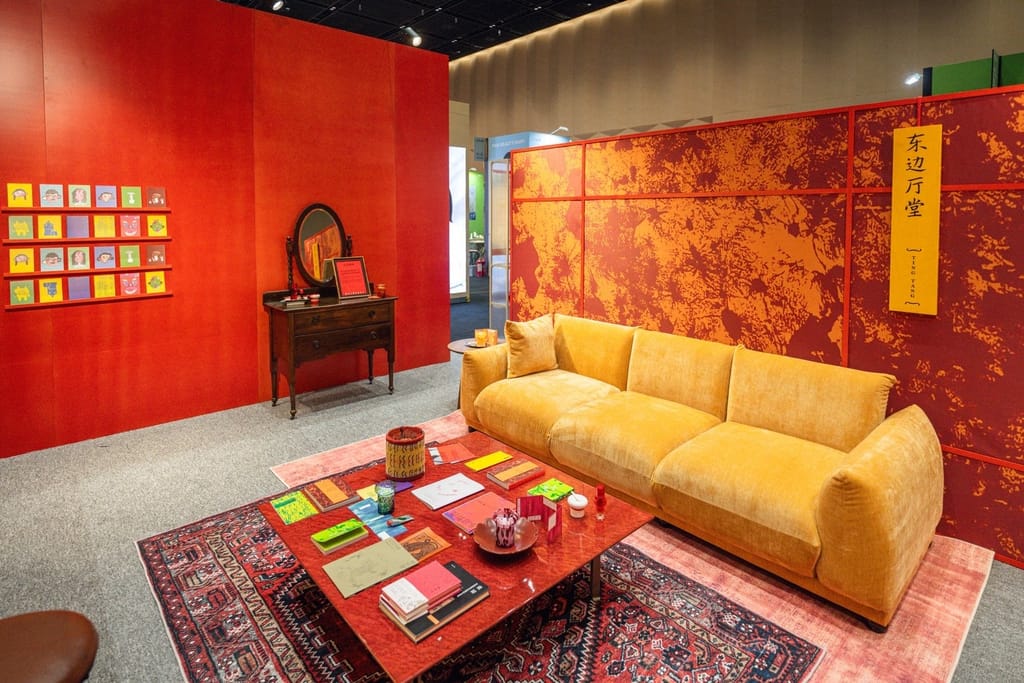
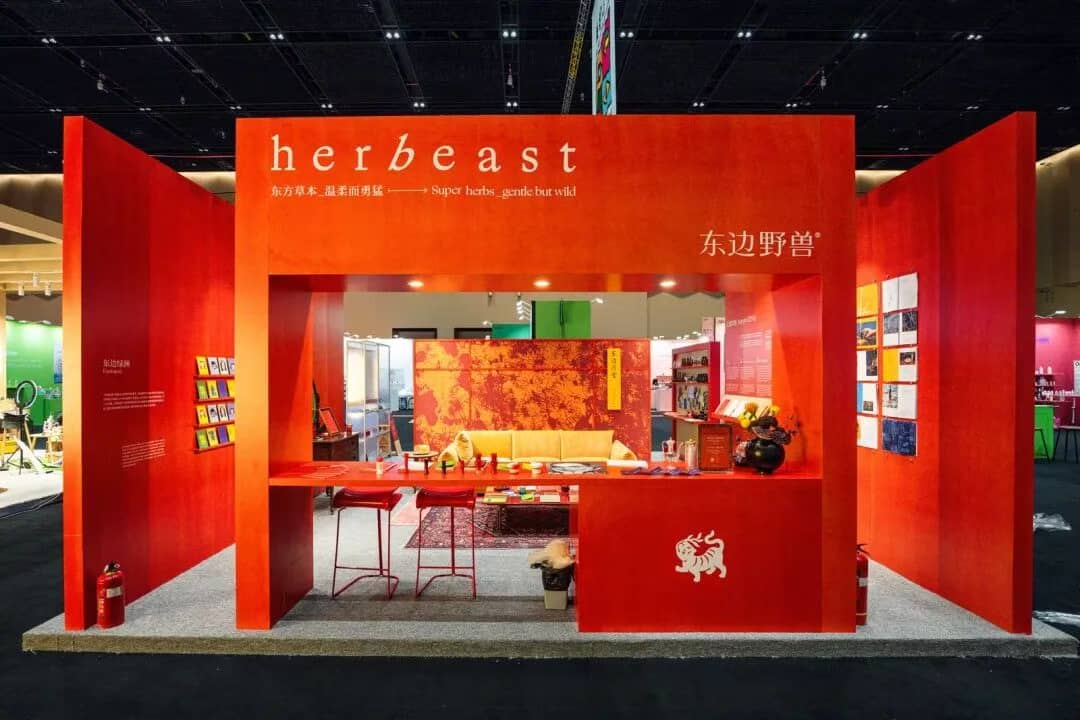
Among all the new voices in China’s neo-luxurybeauty scene, Herbeast stands apart for its belief that skincare begins with philosophy. Founded in Shanghai with twin labs—Herb_Lab for biotechnology and Media_Lab for cultural research—the brand turns Chinese herbal traditions into contemporary design.
Its Eastern Oasis Cooperative in Yunnan transforms an abandoned school into a living ecosystem where villagers, travelers, and plants coexist—a tangible reflection of Herbeast’s idea that beauty is cultivated, not manufactured.
In a market dominated by speed and algorithmic trends, Herbeast moves with quiet patience. It represents the new face of C-beauty: rooted in culture, guided by science, and committed to slow, meaningful growth.
2. Maison de SIT.E — Art, Philosophy and the Anti-Standard Beauty
Few C-beauty brands blur the line between fashion and makeup as boldly as Maison de SIT.E. Founded by designer Cong Liang, the brand describes its vision as “anti-standard” beauty—a dialogue between rebellion and ritual.
Rooted in art and cultural theory, Maison de SIT.E translates traditional symbols—like Nüshu (script for women) and Mongolian ritual patterns—into modern objects of self-expression. Its freckle cushion and lip powder became viral icons of China’s neo-luxury makeup movement: conceptual, provocative, and deeply local.
By treating cosmetics as a medium of thought rather than decoration, Maison de SIT.E offers a new aesthetic proposal for China’s creative generation — one where beauty is not a standard to fit into, but a philosophy to live by.
3. EIOS — Precision, Philosophy, and Every Inch of Skin
“Beauty begins with awareness—of touch, of proportion, of self.”
Walk into an EIOS store and you’ll first notice the silence. Stainless mirrors, sculptural curves, and a single yellow measuring tape looping across the space—everything reflects the brand’s philosophy of precision and restraint.
Founded by designer Nick in 2023, EIOS (short for Every Inch of Skin) redefines C-beauty minimalism through body care that feels both architectural and intimate. Guided by a Bauhaus sense of order, each formula and gesture asks consumers to slow down, to observe their own skin like a landscape.
In a market driven by noise and novelty, EIOS offers stillness. It turns routine into ritual, and transforms care into a quiet, modern luxury.
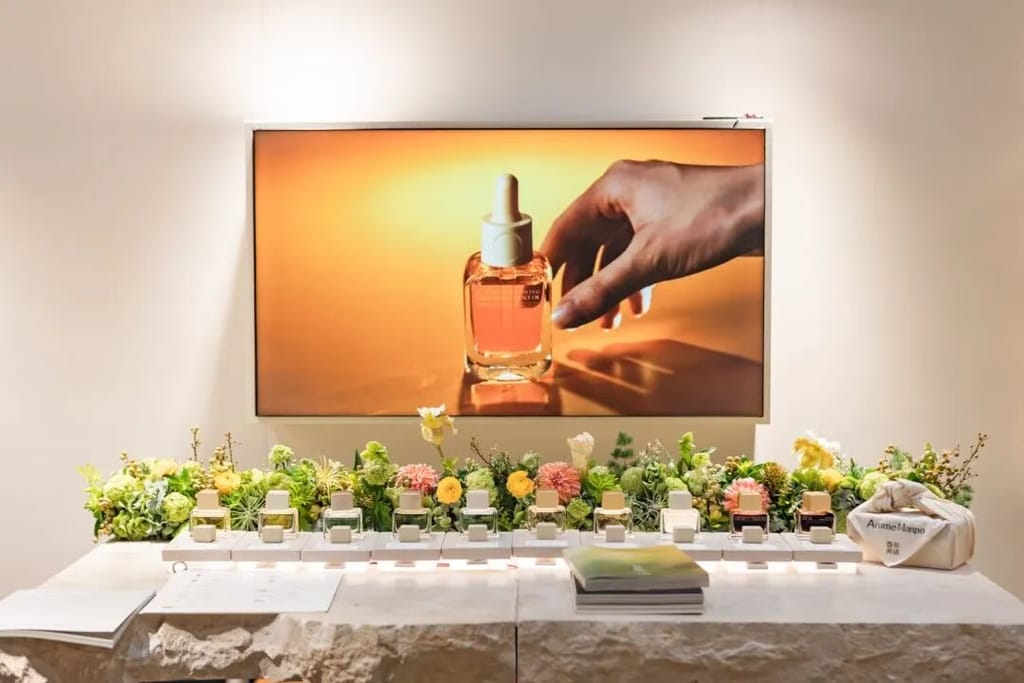
4. AromeManpo — The Scent of Emotion and the Aftertaste of Beauty
“Beauty is half in the object, half in the beholder.”
Founded in Hangzhou, AromeManpo describes itself as an emotional skincare brand of aromatherapy—a house where scent becomes language. Drawing from founder Jiang Teng’s background in botanical therapy, the brand explores how fragrance, memory, and touch intertwine to shape perception.
Its immersive spaces—such as the Late Tuberose Corridor in Tianmuli or the Cloud Weaving Pavilion in Nanjing—treat architecture as a vessel for feeling. Every curve, material, and scent note is designed to linger, echoing the brand’s belief that beauty should unfold slowly, with time and presence.
Where many brands speak of function, AromeManpo speaks of feeling. Its work sits at the intersection of scent, memory, and Chinese sensibility—a reminder that beauty is not a task to complete, but a state to inhabit.
5. Simply This — Ecology, Science, and the Poetics of Sustainability
As China’s first advocate of an “ecological view of skincare,” Simply This treats the skin as a living system—sensitive, intelligent, and deeply connected to nature. Guided by the Eastern philosophy of holistic balance, the brand integrates full-cell fermentation with ingredients like highland black pomegranate from Liangshan, creating its proprietary Time Sequence Factor—a bio-fermented complex designed to support cellular renewal.
Long before carbon neutrality became an industry buzzword, Shifuli launched its own Zero-Carbon Program, establishing pomegranate orchards in Sichuan that offset the brand’s entire production footprint. In 2023, it became China’s first skincare brand officially certified for complete carbon neutrality.
With its Clean Beauty standards, recyclable packaging, and commitment to gentle efficacy, Simply This represents a new direction for neo-luxury sustainability in C-beauty—where science, ecology, and poetry coexist in quiet harmony.
C-Beauty’s Next Chapter: Beauty as Reflection, Not Display
What links these five brands is not a single formula, but a shared shift in posture. Each approaches beauty with clearer intent—focusing on process, materials, and consumer experience rather than speed or volume. In their hands, skincare, scent, and design become tools for building trust and relevance in a market that is becoming more selective by the year.
Their work reflects a broader change inside C-beauty: a move toward brands that are culturally grounded, operationally disciplined, and attentive to how consumers actually use and interpret products. It is a quieter form of differentiation—less about statements, more about substance.
If Beauty Shanghai 2025 showed anything, it is that the next stage of China’s beauty market will be shaped not by louder claims, but by new standards. And these five brands offer an early view of how that future is being built.