
In early December, Hong Kong once again became a meeting point for designers, executives, and global observers as Fashion Asia Hong Kong and the Fashion Challenges Forum convened across the city. The gatherings marked both a moment of recognition for Asian creative talent and a pause to consider the challenges that lie ahead.
After years of acceleration, exposure, and cultural momentum, a quieter question began to surface in panels and private conversations alike: what comes after the breakout moment?
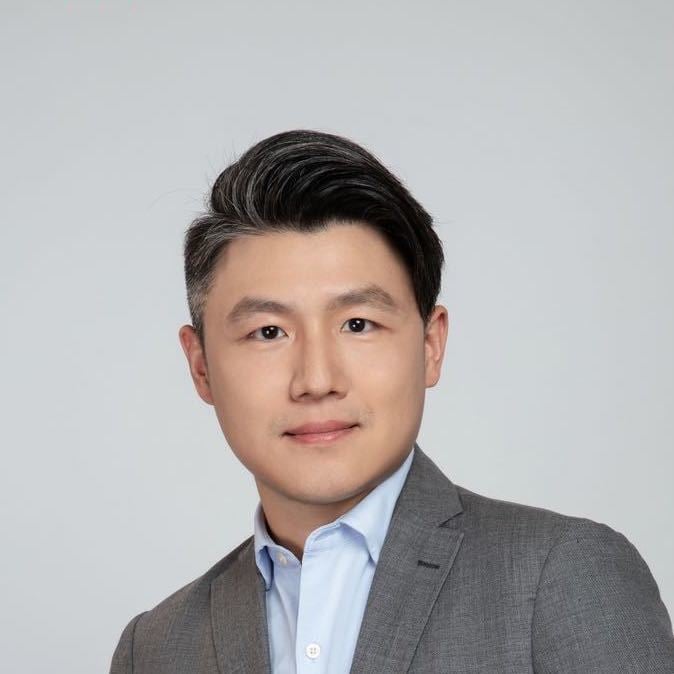
It was in this context that Jingzhi Chronicle sat down with André Hou, former APAC president of Boucheron, during the forum. From the outset, Hou is careful to distinguish between two conversations that are often conflated: the evolution of luxury brands operating in China, and the far slower emergence of Made-in-China luxury itself.
Having spent decades inside the global luxury system—and now working as a researcher, educator, advisor and documentary producer—Hou occupies a rare position. He understands how the system works, but no longer needs to defend it. That distance lends his observations both clarity and patience, particularly when it comes to the long, unfinished project of building luxury brands that originate in China.
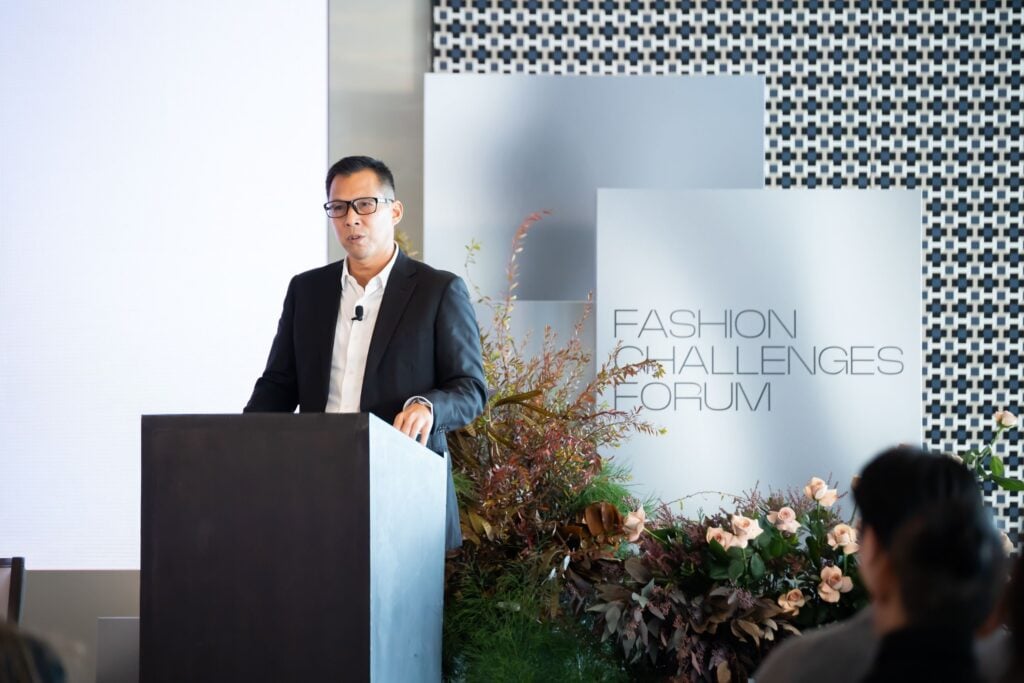
From Daigou to Domestic Intimacy
To understand why China’s luxury market now feels both more mature and more conflicted, Hou points first to the structural reset of the past five years.
Before the pandemic, China’s luxury market was still largely defined by a price game. Consumers flew to Europe or Japan, benefited from price differentials, and returned home with goods. COVID-19 abruptly closed that chapter. Borders shut for nearly three years, forcing brands to rebuild their relationship with Chinese consumers on local ground.
What followed was not a temporary workaround. Boutiques were transformed into private spaces. WeChat evolved into a concierge channel. Brands experimented with city-exclusive collections, cultural programming, heritage workshops, and intimate dinners. Luxury shifted from a transaction to an experience—and increasingly, to a relationship.
Two lasting changes emerged from that period. At the top end, elite clients discovered they could receive more attentive service at home than abroad: private previews, direct access to global allocation, and personal interaction with brand leadership. Many never fully returned to the large-scale European buying trips that once defined luxury consumption.
At the same time, a broader affluent audience encountered luxury in a new way—not just as a product, but as a cultural and emotional journey. When travel resumed, the old compulsive buying model did not simply snap back into place. Values had shifted. Selectivity replaced volume.
What looks like a downturn today, Hou sees instead as a moment of correction—and quietly, of maturation.
The Paradoxes That Follow Growth
That reset, however, did not simplify the market. It made it more complex.
At the very top, Hou observes a growing desire for radical discretion: no logos, made-to-order pieces, quiet craftsmanship. Among younger consumers, especially Gen Z, the impulse often runs in the opposite direction—toward visibility, participation, and belonging within tightly defined micro-communities.
Clients, he notes, no longer ask first about price. They ask what ownership says about who they are now. Meanwhile, the middle of the market—brands without strong identity or emotional pull—is thinning rapidly.
“Master the paradox,” Hou said. “China is the market that gives you the biggest highs and the deepest lows in the shortest time.”
For him, this volatility cannot be managed by strategy alone. “Success is 20 percent strategy,” he said, “and 80 percent human relationships.” Organization, trust, and cultural fluency increasingly matter more than scale.
Much of what defines today’s Chinese luxury market reflects how global maisons have adapted to local consumers. But understanding how luxury behaves in China does not answer a different, more demanding question: what it takes for luxury brands from China to earn lasting global legitimacy.
Time, History, and Perspective
Much of the anxiety surrounding Chinese luxury, Hou believes, stems from misplaced timelines.
“European luxury is only about 200 years old,” he said. “China really opened up in the 1980s. So we still have time.”
From Hou’s perspective, China’s trajectory is not delayed so much as misread. Expectations shaped by mature European houses are often applied too quickly to a market still in the early stages of its own institutional development.
Speed, in this sense, is secondary. What matters is not how quickly visibility is achieved, but whether the underlying foundations are given enough time to take hold.
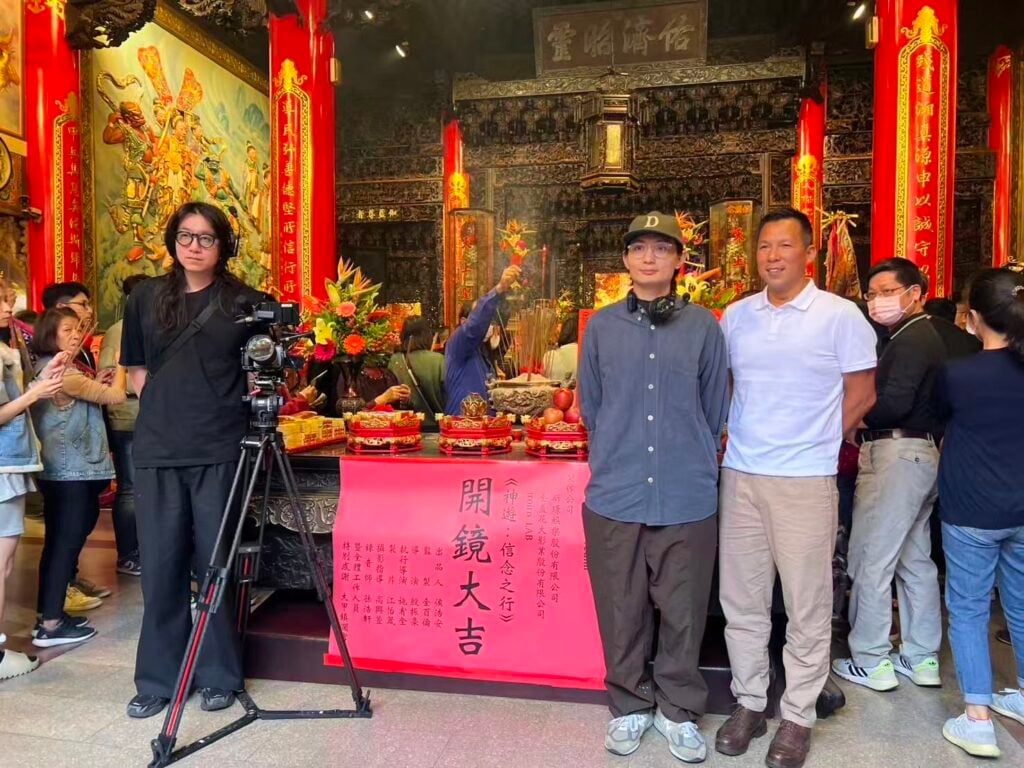
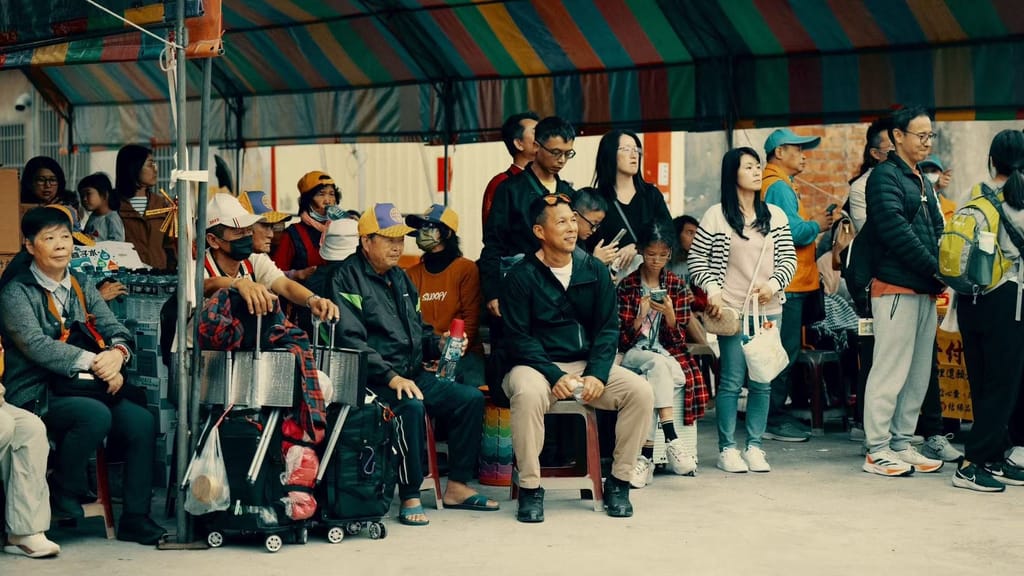
Why Made-in-China Luxury Takes Time—and How Chinese Brands Should Go Global
This is where Hou draws a line that is often overlooked in public conversations. Creative recognition and durable brand-building are not the same thing.
“There’s no magic potion,” he said.
A true luxury house, Hou argues, requires four elements to align: tradition, creativity, quality, and innovation. Creativity may arrive early. Innovation can be accelerated. But tradition and quality cannot be fabricated. They demand time—sometimes decades—of consistent proof.
This is why expectations of a “Chinese Hermès” emerging within a few years are unrealistic. Even the most respected European and Japanese houses took generations to reach scale and legitimacy. China already has designers and artists recognized on the global stage. What remains is the slower work of institution-building.
When brands begin to look outward, Hou is unequivocal about where the real opportunity—and the real risk—lies. “There is no shortcut,” he said. “There will not be a Chinese Hermès in five years. That is a fantasy.”
For Hou, the path forward is neither uniquely Chinese nor fundamentally different from the Western success stories that came before. It is the same demanding road: absolute authenticity, obsessive craftsmanship, a compelling founder’s story, and flawless long-term execution supported by a professional management team capable of protecting the brand’s vision over time.
What distinguishes China, he argues, is not a compressed timeline, but a different set of accelerants. Technology, in particular, offers Chinese brands a way to bridge tradition and modernity more fluidly than previous generations of luxury houses ever could. Used well, it can amplify—not replace—craft, narrative, and identity.
The danger comes when brands mistake international expansion for validation. Softening identity to appeal to an imagined global taste, or expanding abroad before product, service, and organization are fully mature at home, often undermines the very differentiation that makes a brand worth discovering in the first place.
“The magic of every iconic house,” Hou said, “is that it created its own universe that the world eventually joined.”
Going global, in his view, is not a unilateral act of export. It requires both conviction and cultural intelligence—the ability to impose a clear identity while remaining deeply attentive to how that identity is received and experienced across markets.
“When we talk about being global,” he added, “it’s not unilateral. We also have to understand other cultures.”
Building for a Longer Horizon
Hou’s conviction about time is not abstract. It has shaped how he understands his own role in the evolution of Chinese luxury.
“I realised I will probably not create the next great Chinese luxury house myself,” he said. “That will be the privilege of the next generation.”
The admission is not a retreat, but a reality check—one that aligns closely with his insistence that luxury houses are built over decades, not cycles. Rather than positioning himself as the author of that future, Hou has chosen to work on the conditions that might make it possible.
“What I can do,” he continued, “is accelerate their journey—by teaching, by researching ‘Made in China Luxury,’ by connecting exceptional young designers with the right investors and managers.”
In academia, Hou has found a different kind of leverage. The distance from commercial competition creates space for unusually candid exchange. “Academia opened doors that industry kept closed,” he said. “In one week in Tokyo with my students, we had 16 lectures and company visits. CEOs openly shared problems they would never discuss with a competitor. That purity of knowledge transmission is addictive.”
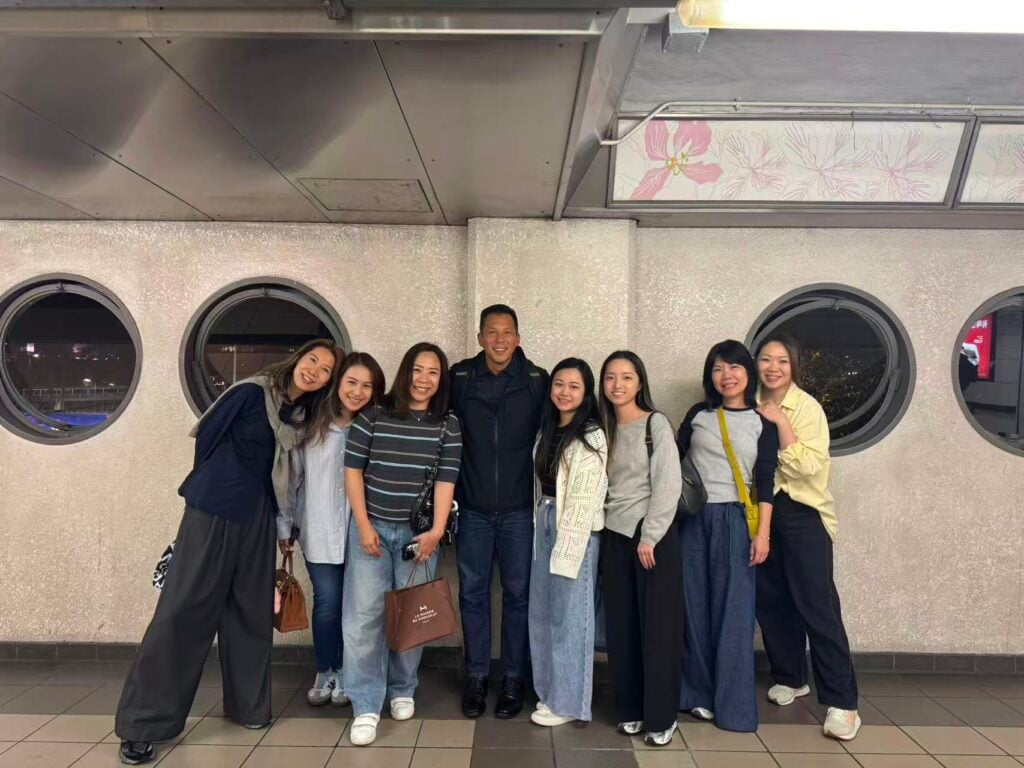
If building Chinese luxury is a generational project, then education, research, and mentorship become a form of infrastructure—less visible than brands or boutiques, but essential to what comes next.
After the Breakout
The conversations unfolding in Hong Kong suggest that Chinese fashion and luxury have entered a new phase. Visibility has been achieved. Momentum is no longer the problem.
What lies ahead is slower, less glamorous work: building institutions, transmitting knowledge, and sustaining conviction over time. After the breakout moment comes endurance—and endurance is built long before results become visible.