

In a climate marked by tightened budgets and increasing uncertainty, brands are no longer satisfied with “making noise”—they want results. PR and communications firms in China are evolving rapidly to meet this shift, moving from one-off executors to long-term growth partners.
Jingzhi Chronicle sat down with leaders from three PR firms in China: Gusto Collective, FleishmanHillard, and Switching-Time to explore how these firms are reimagining their roles—balancing measurable outcomes with emotional value, and using AI, data, and creative storytelling to navigate a new communications landscape.
From Reach to Relevance
It’s easy to blame tighter budgets for the mounting pressure on PR firms—but that’s only part of the story. According to Yisi Liu, Managing Director of FleishmanHillard China, the real shift lies in clients’ evolving expectations. “Return on investment is now the starting point for nearly every conversation,” he explained. “Clients don’t just want buzz or reach anymore. They expect communications to directly support business growth, customer retention, or long-term brand equity.”
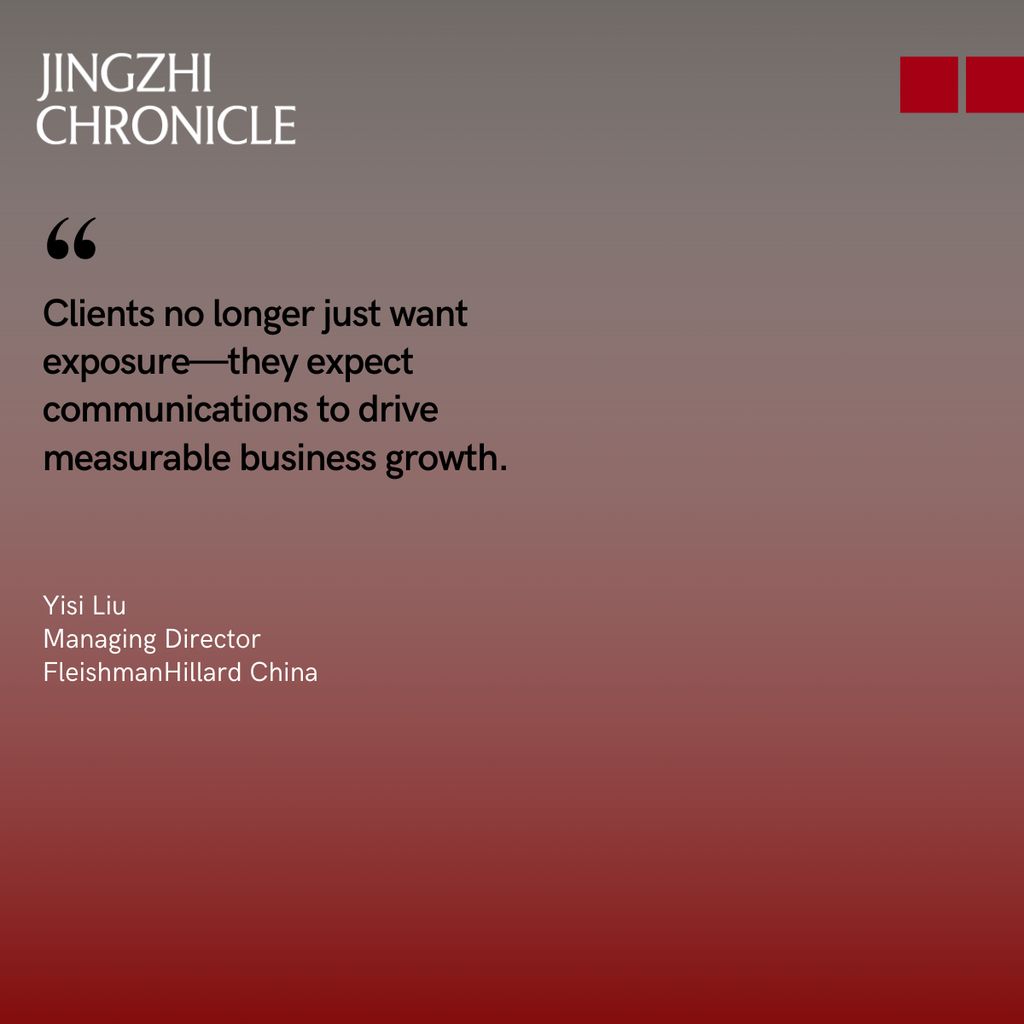
He describes the new reality as a kind of “mission-critical trust,” where brands hand over not just messaging but also business KPIs and user loyalty to their agency partners. As a result, familiar buzzwords like “performance-brand integration” and “attributable impact” are no longer optional—they are core to every brief.
A product launch, for instance, might be tasked not just with driving PR impressions, but also increasing product searches, boosting conversion on e-commerce platforms, and shifting brand perception. “It’s not about how wide your message goes,” Liu says. “It’s about how deep it lands—and whether it closes the business loop.”
Switching-Time co-founder Taiwing Tian calls this shift a move toward “adaptive partnership.” Their agency now incorporates brand-building and business metrics into every project blueprint, delivering modular content tailored to different platforms and communities, while staying agile enough to respond to real-time trends.
From Generating Buzz to Building Trust
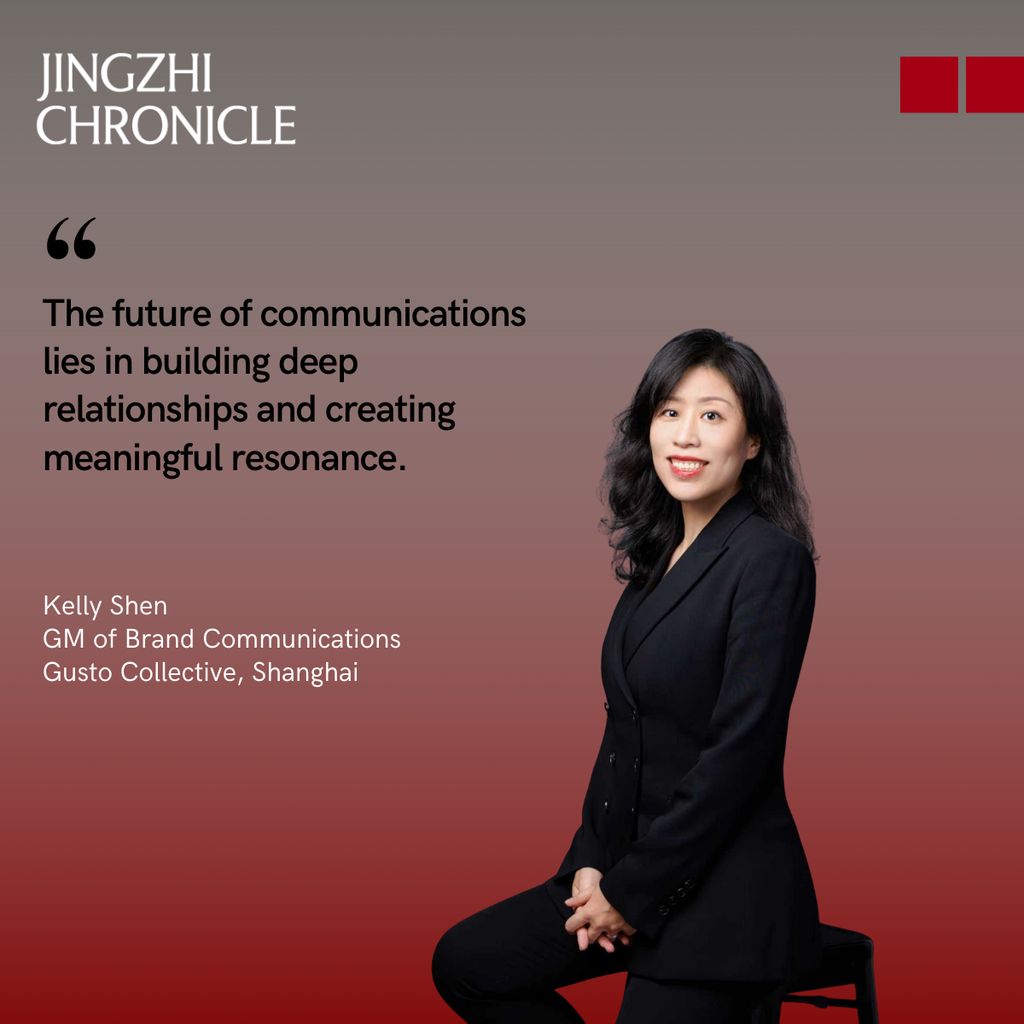
But even as ROI becomes a guiding star, brands aren’t willing to trade off emotional resonance. In fact, the opposite is true. Gusto Collective’s Head of Communications, Kelly Shen, has observed a growing skepticism toward short-term “hype culture.”
“The age of creating a viral campaign just for visibility is over,” she said. “Brands have realized that momentary attention doesn’t equal lasting trust. Without depth, you can’t build resilience.”
Instead, today’s clients want communication strategies that foster emotional loyalty and cultural relevance. That means crafting stories that go beyond superficial messages—and resonate with a brand’s core community over time.
Shen breaks this down into two major shifts:
First, brands are rediscovering the value of cultural and professional depth. “They’re no longer rushing to define themselves with a single splashy campaign,” she said. “Instead, they want to build sustained credibility—demonstrating expertise and taste through long-term, consistent content output.”
Second, brands are redefining what resonance means. “They’re looking for more than impressions,” Shen explained. “They want to connect with the public on a deeper emotional and values-based level—to be seen not just as functional or stylish, but as meaningful, human, and warm.”
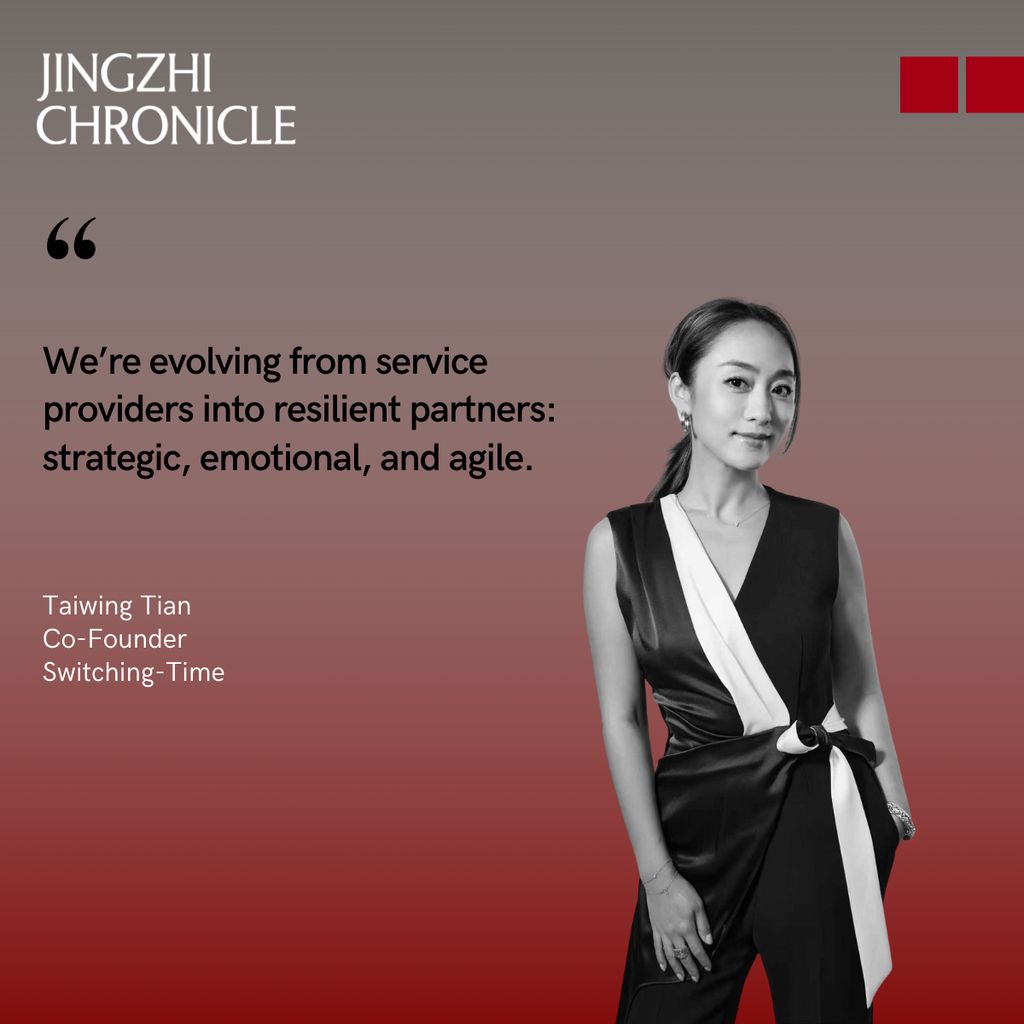
According to Switching-Time’s Taiwing, this reorientation is reshaping expectations for what communications can—and should—deliver. “It’s no longer just: Did we generate buzz? It’s: Did we move hearts? Did we strengthen trust?”
Continuing on the theme of trust-building, Shen pointed to a key shift in how brands evaluate creative value itself.
“In the past, everyone was chasing a loud enough ‘Big Idea,’” she said. “Now, what matters more is a credible set of proof points—substantive touchpoints that reflect the brand’s real values.”
This doesn’t mean creativity is no longer important. Rather, it’s about anchoring creativity in authenticity. “Brands still want great ideas,” Shen clarified, “but they want those ideas to be grounded—rooted in truth. They’re asking us not just to package narratives, but to extract meaningful essence and transform it into unembellished stories, tangible experiences, and lasting content assets.”
In other words, the goal isn’t just attention—it’s accumulation. Brands are looking for storytelling that can be built upon over time, not just spark a one-off reaction.
From Service Providers to Strategic Allies
As brands demand communications that are not only effective but also impactful, their closest collaborators—PR and communications agencies—are proactively rethinking their structure and role.
At FleishmanHillard, this starts with a fundamental reset of the service model. Rather than executing campaigns in isolation, the firm now embeds communications strategy into clients’ business growth pipelines from day one.
“We aim to align early on with the commercial teams,” said Lewis Liu, Managing Director of FleishmanHillard China. “That way, we’re not just supporting awareness, but helping drive action across the entire user journey.”
This shift, Liu explained, reflects a broader reality: “One-size-fits-all service models simply no longer work in today’s complex environment. Brands need more than an executor—they need a long-term partner who can anticipate risks and grow with them.”
How PR Firms in China Stay Competitive in the Future
Looking ahead, Liu sees two core areas where communications capabilities must deepen:
- Proactive Reputation Risk Management – using AI to monitor social media, competitive environments, and sentiment in real time, allowing agencies to shift from reactive crisis response to predictive risk forecasting.
- Ecosystem Collaboration – adopting a more open approach to connect with media platforms, data providers, tech partners, and even cross-industry IP, in order to build resilient, co-creative networks.
At Switching-Time, the agency is “adding layers where it counts.” Co-founder Taiwing shared that they’ve expanded their data strategy team to translate social, sales, and sentiment data into actionable insights. Meanwhile, a new creative-tech function explores how AI can streamline production while supporting personalized storytelling.
The goal: to modularize and productize capabilities so they can be more flexibly embedded into the client’s operational flow.
This type of innovation aligns with Switching-Time’s future-forward ethos of “intelligent enablement”—using technology to handle repetitive, foundational work so that human creativity can shift toward higher-order strategy and emotional insight.
But Taiwing is quick to emphasize that productivity is not the end goal. “Efficiency creates space,” she said, “space for us to craft the kinds of stories that actually move people—to forge emotional and values-based bonds between brands and consumers.”
That principle leads to what she describes as Switching-Time’s ultimate aspiration: becoming a resilience partner.
“It means we’re not just a service provider,” she explained. “We’re an agile extension of the brand, helping them navigate uncertainty while holding onto emotional depth. Through intelligent enablement, we ensure precision and speed. Through emotional craftsmanship, we build the brand’s long-term value. And through both, we evolve from executor to conductor.”
As Kelly Shen added, the future of brand storytelling will be value-driven, not volume-driven.
“The real competitive edge will be the ability to build deep relationships and meaningful resonance,” she said. “Even in an age of AI, what gives communications its soul is still human judgment, emotion, and values.”